
Annual FeesUSD 49,500 - USD 60,000
Yeshiva University
LocationUS
Entry RequirementIELTS 6.0 overall
Visa Success Rate70%
Campus Photos
Yeshiva University

About Yeshiva University
Yeshiva University: Courses, Admissions, Tuition Fees, Scholarships and Student Life
Introduction
Yeshiva University is a private university located in New York City, United States. It combines academic education with Jewish intellectual, cultural and religious traditions. The institution offers undergraduate, graduate and professional programmes across disciplines including business, science, technology, law, medicine, psychology, social work, education and Jewish studies.
The university has a distinctive academic structure that brings together general university education and Jewish learning. Its undergraduate colleges include Yeshiva College, Stern College for Women, Sy Syms School of Business and the Mordecai and Monique Katz Associate Programs. Students can explore academic interests while participating in a university community shaped by scholarship, personal development and cultural engagement.
Yeshiva University operates several campuses across Manhattan and the Bronx. This gives students access to different academic environments while placing them within one of the world's major centres for business, healthcare, culture and professional activity.
For international students considering higher education in the United States, Yeshiva University offers a specialised educational experience. This guide covers its academic programmes, admission requirements, tuition considerations, scholarships, accommodation, campus life and international student support.
About the University
Yeshiva University's history dates back to 1886, when its educational roots were established in New York. It developed into a university integrating traditional Jewish scholarship with modern academic disciplines and professional education.
The institution's main administrative address is at 500 West 185th Street in New York City. Its academic structure includes undergraduate colleges, graduate schools, professional institutions, research centres and affiliated educational resources.
The university's educational philosophy emphasises intellectual development, ethical responsibility, academic achievement and engagement with Jewish heritage. Its programmes bring together subject-specific education and opportunities to explore broader questions involving society, culture, values and professional responsibility.
Yeshiva University has four principal New York City campus locations:
- Wilf Campus: Located in Washington Heights, Manhattan, and home to Yeshiva College and several other academic and Jewish studies institutions.
- Beren Campus: Located in Midtown Manhattan and home to Stern College for Women and other academic facilities.
- Brookdale Center: Located in Manhattan's Greenwich Village area and associated with Benjamin N. Cardozo School of Law.
- Resnick Campus: Located in the Bronx and associated with medical and psychology education.
These locations serve different academic communities and have their own facilities, services and student resources.
The university also provides opportunities for undergraduate students to study in Israel through its S. Daniel Abraham Israel Program, which connects students with partner institutions while allowing them to remain part of Yeshiva University's academic community.
Why Choose Yeshiva University?
Students considering Yeshiva University should evaluate its distinctive educational approach, academic programmes and New York City location.
A distinctive educational philosophy: Yeshiva University combines modern academic education with Jewish scholarship and traditions. Students interested in this integrated approach can explore opportunities for intellectual and personal development.
Multiple academic disciplines: The institution offers programmes across business, computer science, science, healthcare, law, education, psychology, social work and humanities. This variety allows students to consider different academic and professional pathways.
Specialised undergraduate colleges: Yeshiva College, Stern College for Women and Sy Syms School of Business provide different academic environments and programme options for undergraduate students.
New York City location: The university's campuses provide access to a major metropolitan environment with businesses, hospitals, cultural institutions, professional organisations and educational resources.
International student assistance: The Office of International Services helps eligible international students understand immigration procedures, arrival arrangements and university requirements.
Graduate and professional pathways: Students can explore advanced education in areas such as law, medicine, business, psychology, social work and science through the university's graduate and professional schools.
Study opportunities in Israel: The S. Daniel Abraham Israel Program gives eligible undergraduate students an opportunity to study at partner institutions in Israel while earning university credit.
Students should also consider the university's campus structure, academic expectations, tuition costs and the specific learning environment of their intended school before making an application decision.
Academic Programmes and Courses
Yeshiva University offers undergraduate, graduate and professional programmes through its colleges and schools. Academic options differ by campus and degree level.
Yeshiva College
Yeshiva College provides undergraduate education for men, combining general academic study with Jewish learning. Students can explore disciplines such as biology, chemistry, computer science, mathematics, physics, economics, psychology, political science, history and English.
The college's academic environment supports students interested in scientific investigation, technology, social sciences and humanities. Students can develop analytical, communication and research skills while pursuing their selected majors.
Stern College for Women
Stern College for Women offers undergraduate programmes for women in Manhattan. Its academic options include subjects across natural sciences, social sciences, humanities and related disciplines.
Students can explore areas such as biology, chemistry, mathematics, computer science, psychology, economics, English, history and political science. The college also integrates academic study with opportunities for Jewish learning and campus engagement.
Sy Syms School of Business
Sy Syms School of Business offers undergraduate and graduate business education. Areas of study include accounting, finance, marketing, management and business-related disciplines.
Students develop an understanding of organisational operations, financial decision-making, business communication and management principles. Coursework may involve case studies, group projects, presentations and analytical assignments.
The school operates academic divisions on the Wilf and Beren campuses, serving different undergraduate student communities.
Mordecai and Monique Katz Associate Programs
The Katz Associate Programs provide undergraduate associate-level academic options. Applicants interested in these pathways should review the current programme directory for available subjects, admission conditions and degree requirements.
Katz School of Science and Health
The Katz School offers graduate and professional education in science, healthcare and technology-related fields. Its academic offerings include areas such as data analytics, computer science, cybersecurity, biotechnology, health sciences and related disciplines.
Students interested in technology and healthcare can explore programmes designed to develop specialised knowledge and practical capabilities.
Benjamin N. Cardozo School of Law
The Cardozo School of Law offers legal education at the graduate and professional level. Its programmes include the Juris Doctor and selected advanced legal qualifications. Applicants should check the school's specific academic and professional admission requirements.
Albert Einstein College of Medicine
Albert Einstein College of Medicine is a medical institution associated with Yeshiva University historically and now operates as an independent institution following its 2024 transition. Applicants should check its current institutional status and admission process separately rather than assuming that all medical programmes remain directly administered by Yeshiva University.
Other Graduate Schools
Yeshiva University also includes graduate education in Jewish studies, Jewish education, psychology and social work. Schools such as the Bernard Revel Graduate School of Jewish Studies, Azrieli Graduate School of Jewish Education and Administration, Ferkauf Graduate School of Psychology and Wurzweiler School of Social Work offer specialised academic pathways.
Applicants should consult the current university catalogue to confirm programme availability, degree requirements and the academic school responsible for their chosen qualification.
Admission Requirements
Yeshiva University's admission requirements depend on the applicant's educational background, intended programme and degree level. International applicants should carefully review the requirements of their chosen undergraduate college or graduate school.
Undergraduate Admission
International first-year applicants generally need to submit:
- An online application through the Yeshiva University application or Common Application.
- Official secondary-school transcripts and academic records.
- Two letters of recommendation.
- An application essay and any additional personal statements requested.
- A résumé or extracurricular activity list.
- An admissions interview.
- English-language proficiency results, if required.
Applicants should provide academic documents in accordance with the university's international admissions instructions. Records issued in another language may require official English translations.
SAT and ACT scores are optional for most undergraduate applicants, although the Honors programme has separate standardised testing requirements. Students should check the current admissions policy before deciding whether to submit test scores.
Graduate Admission
Graduate admission requirements vary according to the school and programme. Applicants generally need a recognised bachelor's degree or equivalent qualification.
Depending on the course, the application may require:
- Official university transcripts.
- A statement of purpose or personal essay.
- Letters of recommendation.
- A résumé or curriculum vitae.
- English-language proficiency evidence.
- Standardised examination results, where applicable.
- Additional academic or professional documents.
Professional programmes such as law, psychology and social work may have specialised prerequisites and selection procedures.
English-Language Proficiency
International undergraduate applicants whose primary language of instruction was not English generally need to demonstrate English proficiency.
Yeshiva University's published international undergraduate minimums include:
- TOEFL: 82
- IELTS: 7.0
- Duolingo English Test: 115
Official scores should be sent directly by the testing organisation. Graduate programmes may have different requirements, so applicants should verify the applicable standards with their intended school.
Tuition Fees and Cost of Studying
The cost of studying at Yeshiva University varies by academic school, degree level, programme and enrolment status. Undergraduate tuition, graduate tuition and professional programme charges may be calculated differently.
International undergraduate applicants should review the university's tuition schedule for the academic year in which they intend to enrol. The standard undergraduate rate should not automatically be applied to specialised programmes such as nursing or graduate courses.
Students should distinguish tuition from the full cost of attendance. Their annual budget may include:
- Tuition and mandatory academic fees.
- University accommodation.
- Meals and dining expenses.
- Books and learning materials.
- Health insurance.
- Local transportation.
- Personal expenses.
- Other programme-specific charges.
New York City living expenses can be an important part of the overall budget. Housing costs may differ significantly depending on whether students live in university residence halls or private accommodation.
Graduate students should check the tuition structure of their particular school. Professional degrees, specialised courses and programmes with different credit requirements may have separate rates.
International applicants should also prepare for travel and immigration-related expenses. Before accepting an offer, they should obtain the latest cost estimate and confirm the financial documentation needed for their intended programme.
Scholarships and Financial Aid
Yeshiva University provides financial assistance through institutional scholarships, grants and other funding opportunities. International students may be considered for merit-based scholarships and institutional need-based assistance, subject to eligibility and available funding.
Merit-Based Scholarships
Merit scholarships recognise academic performance and other achievements. Eligibility and award amounts depend on the university's scholarship policies and the applicant's admission profile.
Some applicants may be considered automatically during the admission process, while particular awards may require additional information or separate applications.
Need-Based Institutional Aid
International applicants may also be considered for institutional need-based assistance. The university provides information about the international financial aid application through the applicant's admission portal.
Students should submit the required financial information accurately and within the stated deadlines. Aid is not guaranteed and depends on the university's assessment and available resources.
Graduate Funding Opportunities
Graduate students should investigate funding opportunities offered by their individual schools and departments. Depending on the programme, these may include scholarships, grants, assistantships or other forms of academic support.
External Scholarships
Students can also research funding offered by organisations, foundations and government programmes in their home countries. External sponsorship may help cover tuition, living expenses or other education-related costs.
Applicants should review the conditions attached to every award, including renewal requirements, academic performance expectations and whether the funding covers tuition only or additional expenses.
Campus Facilities and Accommodation
Yeshiva University operates multiple campus locations across Manhattan and the Bronx. Each campus serves different academic communities and provides facilities relevant to its students.
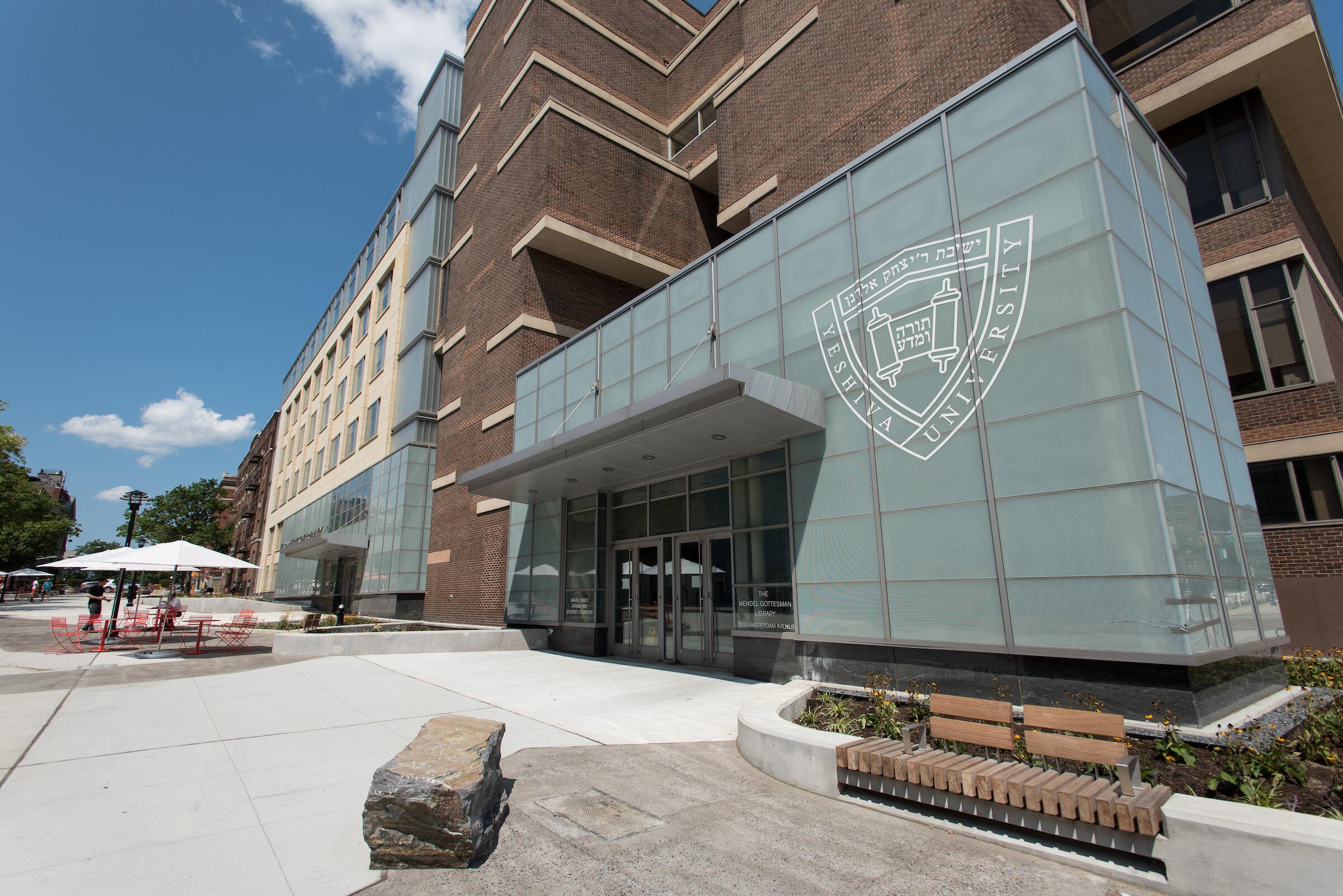
The Wilf Campus in Washington Heights includes academic buildings, libraries, residence halls, dining facilities, athletic spaces and student gathering areas. The Mendel Gottesman Library supports academic study and research, while the Max Stern Athletic Center provides recreational and sports facilities.
The Beren Campus in Midtown Manhattan includes academic classrooms, science laboratories, residence facilities, dining spaces and student common areas. Its location provides access to public transportation and the wider resources of central Manhattan.
Brookdale Center houses the Benjamin N. Cardozo School of Law and provides facilities associated with legal education. The Resnick Campus in the Bronx supports medical and psychology-related academic activities.
On-Campus Accommodation
University residence halls provide students with opportunities to live near their academic facilities and connect with other members of the university community.
Housing options differ by campus and student category. Undergraduate dormitory spaces are primarily reserved for undergraduate students. Graduate housing is more limited and includes options such as the Benjamin residence.
Students should review residence policies, room arrangements, meal options, prices and availability before applying for accommodation.
Off-Campus Accommodation
Students who are eligible to live outside university housing can explore private apartments and shared accommodation in New York City.
Before choosing a property, applicants should consider monthly rent, utilities, transport costs, distance from campus, lease terms and personal safety. New York accommodation costs can be substantial, so careful financial planning is important.
Student Life
Student life at Yeshiva University reflects its academic environment, Jewish traditions, campus activities and location in New York City.
Students can participate in clubs, cultural programmes, academic societies, sports, volunteering and community activities. These experiences help students develop friendships, explore interests and build skills outside the classroom.
Jewish learning and community activities form an important part of the university experience. Students may participate in religious study, campus gatherings, Shabbat programmes and cultural events, depending on their campus and personal interests.
Athletics and recreation also contribute to student life. The university offers athletic facilities and opportunities to participate in intercollegiate and recreational sports.
The New York City location gives students access to museums, libraries, theatres, restaurants, parks and cultural institutions. Students can explore the city's different neighbourhoods while balancing academic responsibilities.
Participation in student organisations and campus events can help international students become familiar with the university community and develop connections with people from different backgrounds.
International Student Support Services
Yeshiva University's Office of International Services (OIS) assists eligible international students and scholars with immigration-related guidance and university procedures.
The office helps students understand the requirements associated with studying in the United States and provides information throughout different stages of their academic journey.
Pre-Arrival Assistance
International students can receive guidance about immigration documents, arrival dates, accommodation arrangements and preparation for university life. Students should follow the instructions supplied after admission and complete all required documentation before travelling.
Visa and Immigration Guidance
Eligible international students generally require F-1 student status for full-time study. Certain exchange students may qualify for J-1 status.
The Office of International Services provides guidance related to immigration sponsorship, I-20 or DS-2019 documentation and relevant student responsibilities. Students should contact the office before making decisions that could affect their immigration status.
Orientation and Adjustment
New international students can access information about university procedures, campus locations, transport and available support services. Orientation activities help students become familiar with the academic environment.
Student Support and Community Engagement
International students can explore academic resources, student activities, cultural programmes and other university services. These opportunities can help them adjust to life in New York and establish a supportive network.
Students should communicate with the Office of International Services if they have questions about travel dates, employment authorisation, programme changes or immigration requirements.
Research Opportunities and Experiential Learning
Research and practical learning are important parts of the academic experience at Yeshiva University. Opportunities vary according to the student's programme, academic level and department.
Undergraduate students may be able to participate in faculty-guided research, laboratory activities, independent academic projects and subject-related presentations.
Students studying science and technology can explore research and project work connected to areas such as biology, chemistry, computer science, data analytics and health sciences.
Graduate students may undertake advanced research through coursework, dissertations, professional projects and specialised academic activities. The nature of these opportunities depends on the degree and school.
Students in business, law, social work, psychology and other professional disciplines may also gain practical exposure through internships, supervised learning, case studies or professional projects where available.
Applicants interested in research should contact their intended department to understand faculty interests, available projects and eligibility requirements.
Career Opportunities and Employment Prospects
Yeshiva University provides career-related resources to help students prepare for employment and further education. Career development may include professional guidance, résumé preparation, interview support, networking and internship information.
Students can explore career pathways based on their academic specialisation.
Business graduates may pursue opportunities in accounting, finance, consulting, marketing, management and business analysis. Computer science and technology graduates may explore roles involving software development, cybersecurity, data analytics and information systems.
Students in social work, psychology, education and health-related disciplines can consider professional pathways relevant to their qualifications. Some occupations require additional licensing, certification or postgraduate education.
Law students can explore legal practice, public service, corporate law and related professional areas after fulfilling the necessary qualification and licensing requirements.
New York City provides access to a wide range of employers and professional organisations. Students can use networking activities and eligible internships to understand their chosen industries.
International students must follow the employment conditions associated with their immigration status. Work opportunities such as Curricular Practical Training (CPT) and Optional Practical Training (OPT) have specific eligibility and authorisation requirements. Students should consult the Office of International Services before beginning employment.
A university qualification does not guarantee a particular job or salary. Career outcomes depend on academic performance, relevant experience, professional requirements and the employment market.
Studying in New York City
New York City is one of the most internationally recognised cities in the United States. It offers a diverse environment with opportunities in finance, healthcare, technology, media, education, law, arts and culture.
Yeshiva University's campus locations allow students to experience different parts of the city. Washington Heights in Upper Manhattan has a strong community identity and is home to the Wilf Campus. Midtown Manhattan offers access to business districts, cultural institutions and public transportation. The Bronx campus provides a different urban environment with access to local educational and community resources.
Students can explore museums, libraries, parks, restaurants, cultural events and professional activities throughout the city.
Public transportation, including the subway and buses, helps connect different neighbourhoods. Students should understand their commuting routes and travel costs when selecting accommodation.
New York City can be expensive compared with many other American study destinations. Budgeting for housing, meals, transport, insurance and personal expenses is essential.
Application Deadlines and Important Considerations
Yeshiva University accepts international undergraduate applications for Fall and Spring semesters. Applicants are encouraged to apply early because international admission and visa processing require additional preparation.
Graduate deadlines vary by academic school and programme. Professional programmes may have separate application calendars and selection requirements.
Before applying, international students should consider the following:
- Confirm that the chosen programme accepts applications for the intended semester.
- Review academic qualifications and English-language requirements.
- Prepare transcripts and required recommendation letters.
- Complete the application essay and interview requirements.
- Check scholarship and financial aid deadlines.
- Review tuition and estimated living expenses.
- Confirm accommodation availability.
- Allow sufficient time for immigration documentation and visa arrangements.
- Review the academic calendar and expected arrival date.
Students should also check whether their intended programme is classroom-based and eligible for international immigration sponsorship. Yeshiva University states that students admitted only to online programmes are not eligible for its student immigration sponsorship.
How to Apply as an International Student
International applicants can follow a structured process when applying to Yeshiva University.
Step 1: Select Your Academic Programme
Explore the university's undergraduate colleges and graduate schools. Identify a programme that matches your previous education, interests and professional goals.
Step 2: Review International Admission Requirements
Check the requirements for your chosen college or school. Confirm academic qualifications, English-language scores, application materials and any additional programme conditions.
Step 3: Prepare Your Documents
Collect academic transcripts, certificates, passport details and English-language test results, if required. Undergraduate applicants should also prepare recommendation letters, essays and extracurricular information.
Graduate applicants should prepare the documents requested by their individual school.
Step 4: Submit the Online Application
Complete the Yeshiva University application or Common Application, depending on the programme and applicant category. Provide accurate academic and personal information.
Step 5: Complete Additional Admission Requirements
Arrange recommendation letters, submit official examination scores and complete the required admissions interview. Monitor your application portal for additional requests.
Step 6: Review Your Admission Decision
If admitted, review your offer, academic programme, enrolment conditions and financial aid information carefully.
Step 7: Complete Immigration and Financial Documentation
Once admitted and committed to the university, eligible international students should follow the Office of International Services instructions for immigration sponsorship. Prepare a valid passport, financial affidavit and proof of funds covering one academic year, as required.
Step 8: Arrange Accommodation and Prepare for Arrival
Review campus housing options, confirm your accommodation and plan your journey to New York City. Complete orientation requirements and follow the university's arrival instructions.
Applicants should contact the relevant admissions office or international student services team if they need assistance during the process.
Conclusion
Yeshiva University offers a distinctive higher education environment that combines academic programmes with Jewish scholarship, cultural engagement and professional development. Its undergraduate colleges and graduate schools provide opportunities across business, science, technology, law, medicine-related education, psychology, social work, education and humanities.
The university's multiple New York City campuses provide access to academic facilities, libraries, accommodation, student activities and the wider resources of a major metropolitan environment.
International students should carefully review programme requirements, tuition costs, scholarship eligibility and accommodation arrangements before applying. They should also plan ahead for immigration documentation and confirm that their chosen programme is eligible for international student sponsorship.
For applicants seeking a university experience that integrates academic study with a distinctive educational tradition and access to New York City, Yeshiva University may be an option worth exploring.
Entry Requirements
General Entry Requirement
IELTS 6.0 overall
Fees & Scholarships
Annual Tuition Fees
USD 49,500 - USD 60,000
Ready to Apply to Yeshiva University?
Our advisors guide you from eligibility check to offer letter — at no cost to you.
Join our WhatsApp Community

Scan to join our student community for admission updates & guidance