
Annual FeesUSD 41,000 - USD 60,000
Virginia Commonwealth University
LocationUS
Entry RequirementIELTS 6.5 overall
Visa Success Rate75%
Campus Photos
Virginia Commonwealth University
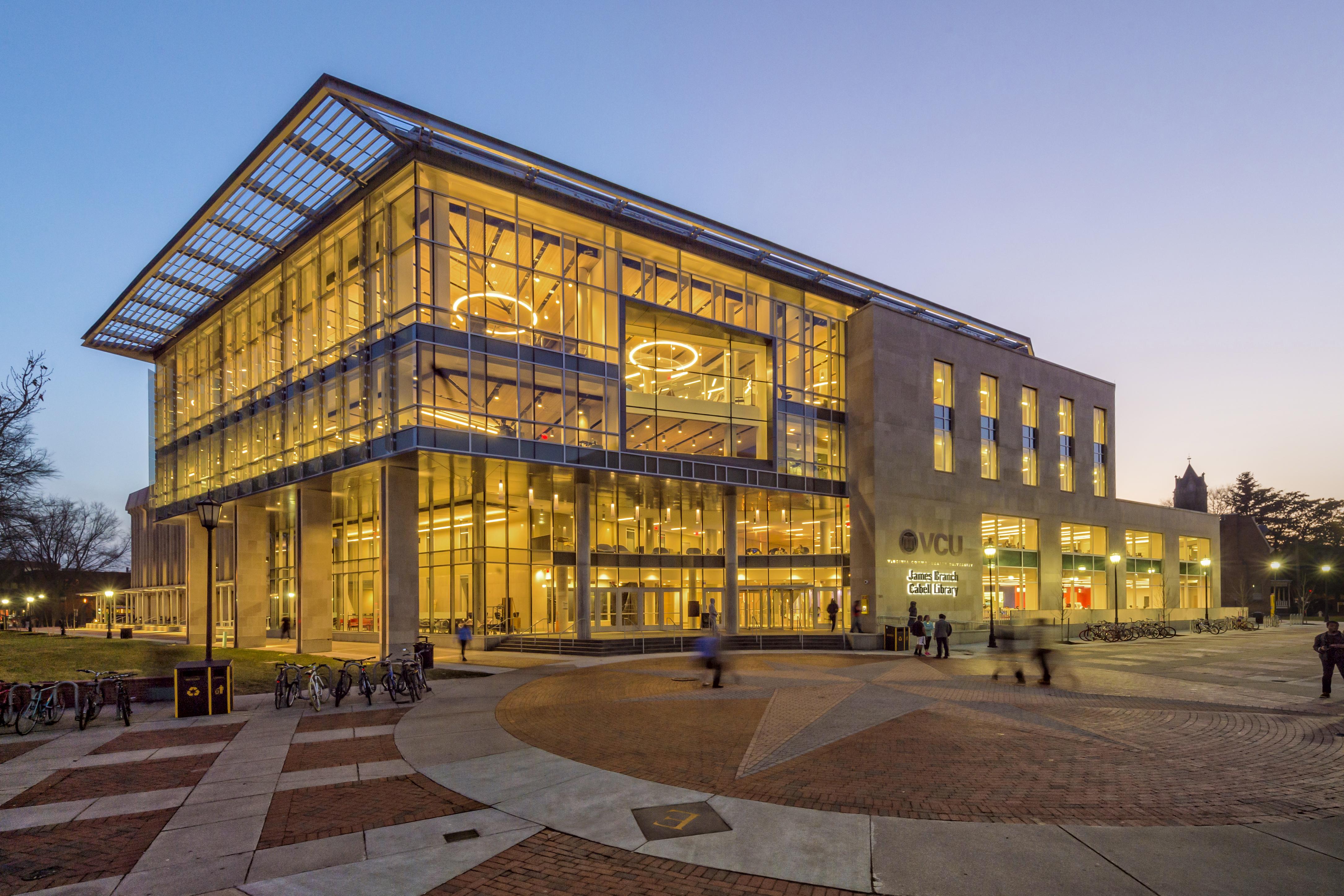

About Virginia Commonwealth University
Virginia Commonwealth University: Courses, Admissions, Fees, Scholarships and Student Life
Virginia Commonwealth University (VCU) is a public research university located in Richmond, Virginia, United States. Known for its wide range of academic programmes, research activities, creative disciplines and professional education, VCU attracts students from across the United States and around the world.
The university offers undergraduate, graduate and professional programmes across fields such as business, engineering, computer science, health sciences, arts, humanities, education and social sciences. Its urban campus provides students with opportunities to connect classroom learning with professional, cultural and community experiences.
VCU is particularly recognised for its health sciences and arts-related education, alongside its broader research activities. International students can access dedicated admissions guidance and immigration support through the university's Global Education Office.
For students considering higher education in the United States, VCU offers a combination of academic options, research opportunities and access to the professional environment of Richmond.
About Virginia Commonwealth University
Virginia Commonwealth University was established in 1968 through the merger of the Medical College of Virginia and the Richmond Professional Institute. Its institutional history includes a long-standing focus on medical education, professional training and the arts.
Today, VCU operates as a public research university with academic programmes spanning multiple disciplines. Its academic structure includes schools and colleges dedicated to areas such as arts, business, education, engineering, humanities, social sciences and health professions.
The university has two main campuses in Richmond: the Monroe Park Campus and the MCV Campus. The Monroe Park Campus accommodates many undergraduate and general academic programmes, while the MCV Campus is home to a substantial part of VCU's health sciences education and clinical environment.
VCU also has a significant research presence. Its research activities include biomedical sciences, public health, engineering, social sciences and other interdisciplinary areas.
Why Choose Virginia Commonwealth University?
Wide range of academic programmes: VCU offers students opportunities to explore different disciplines, from business and technology to medicine, design and the humanities.
Research-focused environment: Students can encounter research opportunities through academic departments, laboratories and faculty-led projects, depending on their programme and level of study.
Professional and practical learning: Many programmes incorporate practical projects, clinical experiences, internships, studio work or other applied learning opportunities.
Arts and creative education: VCU has a particularly visible presence in the arts, design and creative disciplines, making it an option for students interested in visual communication, fine arts and related fields.
International student community: VCU welcomes students from many countries and provides dedicated international admissions and student support services.
Urban location: Richmond provides access to businesses, healthcare institutions, cultural organisations and community activities that can complement academic learning.
Campus facilities: Students can access libraries, recreation facilities, student organisations, dining options and residential communities.
Academic Programmes
VCU offers a broad selection of undergraduate, graduate and professional programmes. The exact degrees and available concentrations depend on the academic school and department.
Business and Management
Business programmes at VCU introduce students to areas such as accounting, finance, marketing, management, economics and business administration.
Students can develop an understanding of organisational operations, financial decision-making, market behaviour and business strategy. Depending on the programme, coursework may include case studies, group projects, presentations and analytical assignments.
These programmes can be relevant to students interested in corporate careers, financial services, entrepreneurship, marketing and management.
Engineering and Technology
VCU provides academic opportunities in engineering and technology-related disciplines. Areas of study include biomedical engineering, chemical engineering, computer science and other technical fields.
Students may develop skills in programming, mathematical modelling, technical problem-solving and engineering design.
Practical learning can involve laboratory work, research projects and collaborative assignments. Students should review individual programme descriptions to understand specialisations and admission prerequisites.
Health Sciences and Medicine
Health sciences are an important part of VCU's academic identity. The university provides professional and graduate education in fields including medicine, dentistry, nursing, pharmacy, public health and allied health disciplines.
These programmes have different entry requirements and may require specific academic backgrounds, examinations, clinical preparation or professional experience.
International students interested in health-related careers should examine each programme carefully, particularly where professional licensing and clinical training requirements apply.
Arts, Design and Creative Studies
VCU has a strong academic presence in the arts and creative disciplines. Students can explore subjects such as fine arts, graphic design, fashion, communication arts and other creative fields.
Learning may involve studio practice, portfolio development, creative experimentation and critical evaluation.
Applicants to selected programmes may need to provide portfolios or complete additional creative assessments. Requirements vary by department.
Humanities and Social Sciences
Students can also pursue programmes in areas such as psychology, sociology, history, political science, English and interdisciplinary studies.
These subjects develop research, communication, critical thinking and analytical abilities. They can prepare students for further academic study or careers in education, public service, research, communications and other sectors.
Education and Professional Studies
VCU provides programmes related to teaching, educational leadership, counselling and other professional fields.
Graduate-level study in these areas may involve practical placements, supervised experiences or specialised academic preparation, depending on the course.
Admissions Requirements
VCU has separate application requirements for undergraduate and graduate applicants. International students should use the university's international admissions guidance to identify the correct application process.
Undergraduate Admission Requirements
International undergraduate applicants generally need to provide:
- Academic records showing completion of secondary education equivalent to US high school graduation.
- Official transcripts and examination results.
- English translations of documents originally issued in another language.
- Evidence of English language proficiency, unless an approved exemption applies.
- Additional programme-specific documents where required.
VCU evaluates applications according to its admissions policies. Meeting minimum requirements does not automatically guarantee admission.
Applicants should check whether their intended major has additional requirements or a separate application process.
Graduate Admission Requirements
Graduate applicants generally need an academic qualification equivalent to a US bachelor's degree from a recognised institution.
Depending on the programme, applicants may need to submit:
- Undergraduate academic transcripts.
- Degree certificates.
- English proficiency test results or an approved waiver.
- Letters of recommendation.
- A statement of purpose or other written materials where required.
- A résumé or curriculum vitae.
- GRE, GMAT or other examination results if requested by the department.
- Portfolio, interview or additional programme-specific materials where applicable.
VCU graduate departments establish their own admission deadlines and requirements. International applicants should consult the relevant graduate programme and Graduate Bulletin before applying.
English Language Requirements
International students whose previous education does not qualify them for an English proficiency exemption may need to submit an approved test result.
VCU lists accepted English language examinations, including TOEFL, IELTS, Pearson Test of English and Duolingo English Test. Minimum scores differ between undergraduate and graduate admissions and may be higher for certain departments.
Students should check the latest score requirements on the relevant admissions page before booking an examination.
Application Process
Applying to VCU involves several stages. International students should allow enough time to prepare academic documents, complete testing requirements and arrange immigration documentation.
1. Select a programme: Explore VCU's academic offerings and identify a course that matches your educational background and career interests.
2. Review eligibility: Check academic qualifications, subject prerequisites, English proficiency requirements and any additional programme conditions.
3. Prepare documents: Gather transcripts, degree certificates, translations, examination results and other required materials.
4. Complete the application: Submit the appropriate online application for your chosen undergraduate or graduate programme.
5. Pay the application fee: Pay the applicable fee and ensure the application is submitted with all required information.
6. Submit supporting documents: Arrange for official academic records, test results and other requested documents to reach the university through the accepted submission process.
7. Monitor your application: Check your application portal and respond promptly to any requests for additional information.
8. Review your admission decision: If admitted, read the offer carefully and follow the instructions for accepting your place.
9. Complete immigration arrangements: International students who require an F-1 or J-1 visa should follow the university's instructions for immigration documentation and prepare for the relevant visa process.
Application deadlines differ by academic programme and entry term. Applicants should not assume that all VCU departments follow the same schedule.
Tuition Fees and Cost of Attendance
The cost of studying at VCU depends on the programme, academic level, residency classification, course load and living arrangements.
For the 2026–2027 academic year, the published undergraduate tuition and mandatory fees for non-Virginia residents are approximately USD 41,127 per year. This estimate is based on 15 credit hours per semester over two semesters.
The university's published undergraduate cost estimates also include:
- Tuition and mandatory fees: USD 41,127.
- Estimated on-campus room: USD 9,259.
- Estimated dining: USD 6,630.
The estimated total of these tuition, housing and dining charges is USD 57,016 annually. Additional expenses such as books, transportation, personal costs, insurance and programme-specific charges may increase the overall budget.
Graduate tuition varies by degree level and programme. For 2026–2027, VCU lists nonresident tuition and fees of approximately USD 33,746 annually for master's programmes based on full-time enrolment of 9–15 credits per semester. Doctoral tuition and mandatory fees are listed separately, with different rates.
Professional programmes may have distinct tuition structures.
Students should use the official tuition and cost-of-attendance information for their specific programme rather than relying on a general university estimate. Tuition and fees may also change between academic years.
Scholarships and Financial Assistance
VCU offers financial assistance opportunities, although eligibility and availability differ between undergraduate, graduate and professional students.
Undergraduate applicants may be considered for scholarships according to the university's eligibility and selection policies. Some awards may depend on academic performance, while others may consider additional criteria.
Graduate students can explore funding opportunities through their academic departments and graduate schools. Depending on the programme, assistance may include scholarships, fellowships, research assistantships or teaching assistantships.
International students should carefully review the conditions attached to each award. Some financial assistance opportunities may have citizenship, residency or programme restrictions.
Applicants should also prepare a realistic financial plan that considers tuition, housing, dining, health insurance, transportation and personal expenses.
Campus Facilities and Accommodation
VCU provides campus facilities designed to support academic learning, research, recreation and student life.
Libraries and Learning Spaces
Students have access to university library resources, study spaces, research materials and academic support facilities.
Libraries support individual study, group projects and research activities. Students can use available academic resources to strengthen their coursework and complete assignments.
Laboratories and Research Facilities
VCU's academic departments operate specialised laboratories and research facilities. Their availability depends on the student's course, department and research involvement.
Students in science, engineering and health-related programmes may have opportunities to gain experience through laboratory activities and supervised projects.
Housing and Dining
VCU offers a range of on-campus residential options, including traditional residence halls, suites and apartment-style accommodation.
Residence facilities generally provide access to shared amenities such as lounges, Wi-Fi, laundry facilities and study spaces. Housing arrangements depend on availability and eligibility.
The university also offers dining facilities across its campuses, with different meal-plan options.
Students who prefer to live outside the university can explore private accommodation in Richmond. They should consider transportation, rent, utilities and proximity to their academic buildings when comparing housing options.
Student Life and Extracurricular Activities
Student life at VCU extends beyond lectures and examinations. The university provides opportunities to participate in student organisations, cultural activities, sports, recreation and community initiatives.
Students can explore organisations related to academic interests, professional development, cultural backgrounds, hobbies and social activities.
Campus events and student-led activities can help newcomers build friendships and become more familiar with the university environment.
VCU's location in Richmond also gives students access to cultural attractions, museums, public events, restaurants and community activities.
Participation in extracurricular activities can help students develop communication, leadership and teamwork skills while creating a more balanced university experience.
International Student Support
VCU has a dedicated Global Education Office that supports international students and scholars.
The office provides guidance related to immigration, student visa requirements, travel documentation and maintaining appropriate immigration status.
International students can also access information about university resources, community activities and ways to connect with other students.
VCU reports an international student community representing numerous countries. This creates opportunities for cultural exchange and interaction with people from different educational and personal backgrounds.
Students who need additional English-language preparation can also explore VCU's English Language Program, subject to its current admission requirements and availability.
International applicants should remember that university admission and visa approval are separate processes. Receiving an offer does not guarantee the issuance of a US visa.
Research and Practical Learning
Research is an important part of VCU's academic environment. The university supports research across health sciences, biomedical research, engineering, public health, social sciences, arts and other interdisciplinary fields.
Undergraduate and graduate students may encounter research opportunities through their departments, faculty projects and specialised programmes.
Practical learning varies by academic discipline. Engineering students may work on technical projects, arts students may develop creative portfolios, and health sciences students may gain supervised experience through approved academic or clinical settings.
The availability of these opportunities depends on the student's programme, academic progress and departmental arrangements.
VCU's research environment can be particularly relevant for students interested in advanced study, innovation and careers that require analytical or technical expertise.
Career Opportunities and Professional Development
VCU provides students with opportunities to prepare for professional careers through academic programmes, experiential learning and career development resources.
Students can explore career guidance, résumé preparation, interview preparation, networking activities and employment-related events through university support services.
Depending on the programme, students may also have opportunities to participate in internships, practical projects, clinical placements or industry-related experiences.
Richmond offers access to employers and organisations in sectors such as healthcare, finance, government, education, technology and creative industries.
International students should understand that employment eligibility in the United States depends on immigration status and applicable regulations. They should consult the university's international student advisers before accepting employment or internship opportunities.
Location: Studying in Richmond, Virginia
Richmond is the capital of Virginia and provides an urban environment with a combination of educational institutions, healthcare organisations, businesses and cultural attractions.
The city's history, museums, public spaces and arts scene offer opportunities for students to explore life outside the classroom.
VCU's campuses are integrated into the city rather than being located in an isolated suburban setting. This gives students access to local services, transport options, restaurants and community activities.
Richmond's location also provides connections to other parts of the East Coast. Students can explore regional travel options while remaining mindful of their academic schedules and personal budgets.
Important Considerations Before Applying
Before applying to Virginia Commonwealth University, students should consider several important factors.
Programme selection: Compare course structures, academic content and career relevance rather than choosing solely on the university's name.
Academic eligibility: Check the specific admission requirements for the selected major or graduate department.
English proficiency: Confirm the accepted examinations, minimum scores and possible exemptions for the relevant application level.
Tuition and living costs: Budget for tuition, accommodation, dining, books, transport, insurance and personal expenses.
Scholarship eligibility: Review the conditions and deadlines for financial assistance before depending on a particular award.
Application deadlines: Undergraduate and graduate programmes may have different application timelines.
Visa preparation: Allow sufficient time for immigration documentation and the US student visa process.
Housing arrangements: Compare university residence halls with private accommodation and consider the cost and distance from campus.
Frequently Asked Questions (FAQs)
1. Where is Virginia Commonwealth University located?
VCU is located in Richmond, Virginia, United States. It operates primarily through its Monroe Park Campus and MCV Campus.
2. Is Virginia Commonwealth University public or private?
VCU is a public research university.
3. What programmes does VCU offer?
The university offers programmes across business, engineering, computer science, arts, design, humanities, education, medicine, nursing, pharmacy and other fields.
4. What is the annual undergraduate tuition for international students?
For 2026–2027, published nonresident undergraduate tuition and mandatory fees are approximately USD 41,127 per year, based on 30 credits. Housing and other expenses are additional.
5. What are the English language requirements?
VCU accepts several English proficiency examinations, including TOEFL, IELTS, Pearson Test of English and Duolingo English Test. Required scores depend on the academic level and programme.
6. Does VCU offer scholarships to international students?
Financial assistance opportunities vary by programme and eligibility. International applicants should check the conditions of each scholarship or funding opportunity.
7. Does VCU provide accommodation?
Yes. VCU offers on-campus residence halls and other housing options. Students can also explore private accommodation in Richmond.
8. Can international students apply for graduate programmes?
Yes. International applicants can apply to eligible master's, doctoral and professional programmes, subject to programme-specific admission requirements.
9. Does VCU provide support for international students?
Yes. Its Global Education Office offers immigration guidance and support for international students and scholars.
10. Does admission to VCU guarantee a US student visa?
No. Admission and visa approval are separate decisions. Students must meet the applicable US immigration requirements.
Conclusion
Virginia Commonwealth University offers a broad academic environment for students interested in undergraduate, graduate and professional education in the United States. Its strengths across health sciences, arts, business, engineering and research provide students with different academic pathways and opportunities to develop specialised knowledge.
The university's urban location in Richmond, international student support and campus facilities contribute to its overall educational experience. Students can also explore research, practical learning and career development opportunities according to their academic programmes.
For international applicants, careful preparation is essential. Reviewing academic eligibility, English proficiency requirements, tuition costs, scholarship conditions and application deadlines can help make the admission process more manageable.
Students considering VCU should compare their intended programme with their long-term academic and career goals before making a final decision.
Entry Requirements
General Entry Requirement
IELTS 6.5 overall
Fees & Scholarships
Annual Tuition Fees
USD 41,000 - USD 60,000
Ready to Apply to Virginia Commonwealth University?
Our advisors guide you from eligibility check to offer letter — at no cost to you.
Join our WhatsApp Community

Scan to join our student community for admission updates & guidance