
Annual FeesUSD 22,900 - USD 40,000
University of North Carolina Wilmington
LocationUS
Entry RequirementIELTS 6.5 overall
Visa Success Rate70%
Campus Photos
University of North Carolina Wilmington
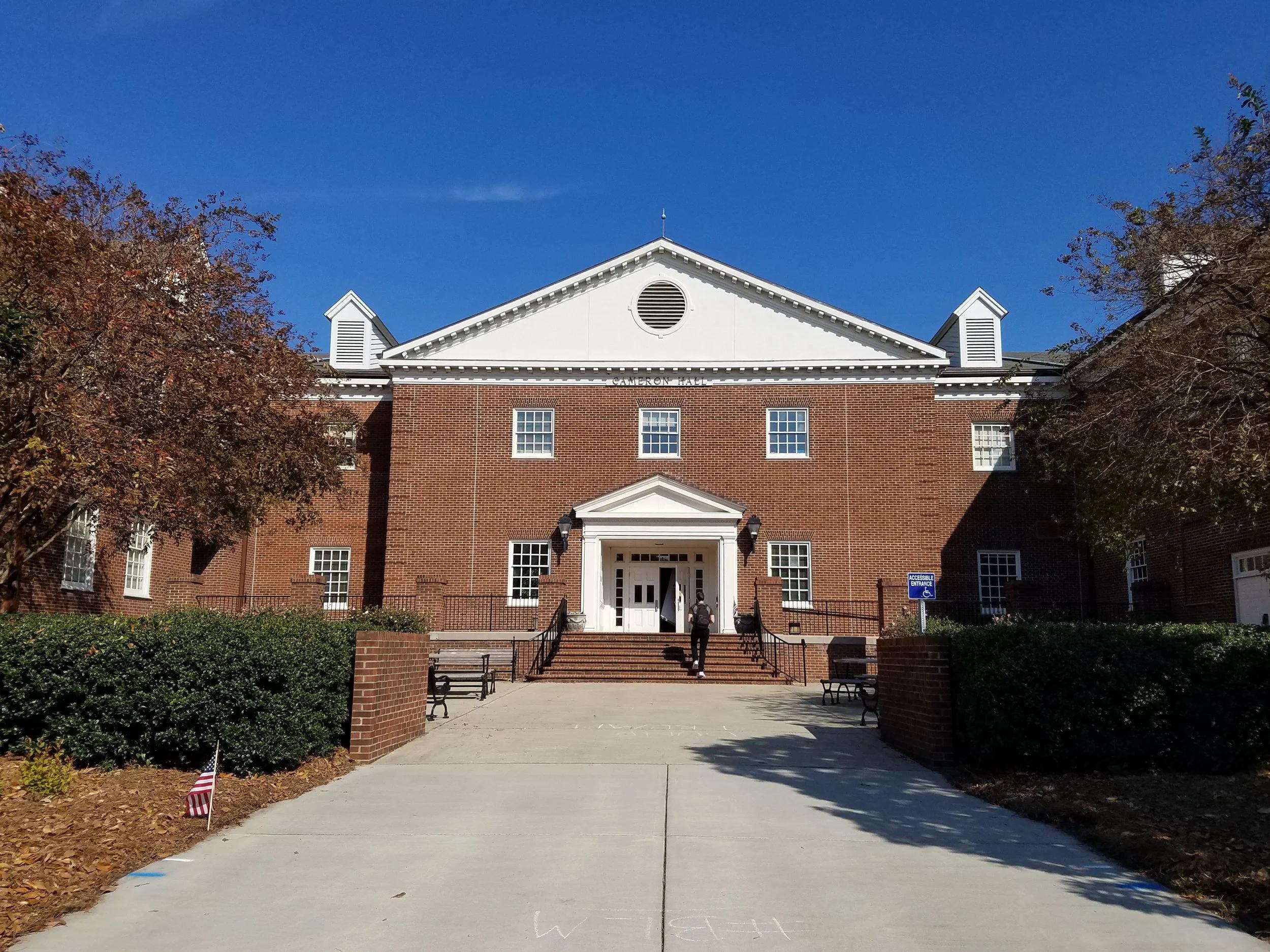

About University of North Carolina Wilmington
University of North Carolina Wilmington: Courses, Tuition Fees, Admissions & Student Life
Introduction
The University of North Carolina Wilmington (UNCW) is a public research university located in Wilmington, North Carolina, in the southeastern United States. Established in 1947, the university has developed into a recognised institution offering undergraduate, graduate, and professional education across a wide range of academic disciplines.
Known as North Carolina's coastal university, UNCW combines academic learning with research, practical experiences, community engagement, and student development. Its academic programmes cover areas such as business, computer science, engineering, marine biology, nursing, health sciences, education, communication, film studies, psychology, and the arts.
The university's coastal location provides a distinctive setting for students interested in marine and environmental sciences, while its broader academic offerings attract students with different educational and professional goals. UNCW also supports international students through dedicated admission guidance, English-language resources, immigration assistance, and campus services.
For students considering higher education in the United States, the University of North Carolina Wilmington offers an opportunity to study at a public research institution with a diverse academic environment and access to the cultural and recreational attractions of coastal North Carolina.
About the University of North Carolina Wilmington
The University of North Carolina Wilmington was founded in 1947 as Wilmington College. It initially provided educational opportunities for students in the region and gradually expanded its academic offerings and institutional responsibilities.
The institution became part of the University of North Carolina System and later adopted its current university identity. Today, UNCW serves a student population of approximately 18,000 and offers a broad selection of undergraduate and graduate programmes.
The university is located at 601 South College Road in Wilmington, North Carolina. Its campus features academic buildings, research facilities, residence halls, libraries, recreational spaces, and student support centres.
UNCW is institutionally accredited by the Southern Association of Colleges and Schools Commission on Colleges (SACSCOC). This accreditation supports its authority to award recognised degrees at different academic levels.
The university emphasises teaching, mentoring, research, and service. Students are encouraged to participate in academic projects, research activities, internships, community programmes, and extracurricular opportunities that complement classroom learning.
UNCW is also recognised for its coastal academic environment. Its location near the Atlantic coast creates opportunities for research and education connected to marine science, coastal ecosystems, environmental sustainability, and related fields.
Courses and Academic Programs
The University of North Carolina Wilmington offers a variety of undergraduate and graduate programmes through its academic colleges and schools. Students can choose from disciplines ranging from business and technology to healthcare, education, science, and creative arts.
Its academic structure includes the College of Arts and Sciences, Cameron School of Business, College of Science and Engineering, College of Health and Human Services, Watson College of Education, and other specialised academic units.
Business and Economics
The Cameron School of Business offers programmes for students interested in business administration, accounting, finance, economics, management, and related professional fields.
Business education at UNCW focuses on developing an understanding of organisational operations, financial decision-making, marketing, management, and business strategy.
Students can explore areas such as:
- Business administration
- Accounting
- Finance
- Economics
- Management
- Marketing
- Business analytics and related areas
These programmes help students develop analytical thinking, communication, teamwork, and decision-making skills. Depending on their chosen specialisation, graduates may explore careers in banking, corporate management, accounting, financial services, marketing, consulting, and entrepreneurship.
Computer Science and Engineering
The College of Science and Engineering provides academic opportunities for students interested in technology, computing, engineering, and scientific disciplines.
Computer Science focuses on programming, algorithms, software development, computational problem-solving, and computer systems. Students develop technical knowledge that can support careers in software engineering, information technology, application development, and related areas.
Engineering-related programmes allow students to explore technical concepts, design principles, mathematical applications, and practical problem-solving.
Students interested in technology should review the individual degree requirements, as some programmes may have specific mathematics, science, or prerequisite coursework expectations.
Marine Biology and Environmental Sciences
One of UNCW's distinctive academic strengths is its connection to coastal and marine research.
The university's location provides an environment for studying marine ecosystems, aquatic organisms, ocean-related processes, environmental change, and coastal conservation.
Marine Biology is particularly relevant for students interested in understanding marine life and the relationship between organisms and their environments.
Students may explore subjects such as:
- Marine ecology
- Ocean science
- Biology
- Environmental science
- Coastal ecosystems
- Conservation and sustainability
Depending on the programme, students may have opportunities to participate in laboratory research, fieldwork, scientific projects, and practical learning activities.
These academic areas can support future interests in environmental research, marine conservation, scientific education, government agencies, and further postgraduate study.
Nursing and Health Sciences
The College of Health and Human Services provides academic pathways for students interested in healthcare, nursing, public health, and human services.
Nursing education combines scientific knowledge with clinical preparation, communication, professional responsibility, and patient-centred care.
Health-related programmes help students understand healthcare systems, human development, public health challenges, and the importance of evidence-based practices.
Students should carefully review programme-specific admission requirements, clinical placements, accreditation, and professional licensing conditions before applying.
Education
The Watson College of Education supports students interested in teaching, educational leadership, and related professional areas.
Its academic programmes focus on learning theories, classroom instruction, curriculum development, educational psychology, and student development.
Students interested in becoming teachers or working in educational organisations can explore relevant degree pathways and professional preparation opportunities.
International applicants should also consider that teaching certification requirements may differ between countries and US states.
Communication, Film Studies, and the Arts
UNCW offers programmes for students interested in communication, creative media, filmmaking, design, music, theatre, and other artistic disciplines.
Communication programmes help students understand media, public communication, digital content, and organisational messaging.
Film Studies and filmmaking-related opportunities allow students to explore storytelling, production, visual communication, and creative development.
These areas can support career interests in media production, journalism, communication, digital marketing, creative industries, and related professional fields.
Psychology and Social Sciences
Students interested in human behaviour, society, and social development can explore psychology and other social science disciplines.
These subjects help students understand individual behaviour, social relationships, mental processes, communities, and broader social issues.
Students may use this academic foundation for further education, research, human services, organisational work, and other related career paths.
Graduate Programs
UNCW also offers graduate-level qualifications for students who want to develop advanced academic knowledge or specialise in a professional area.
Graduate programmes are available across business, science, technology, education, healthcare, communication, and other disciplines.
Admission requirements vary by degree. Applicants may need a recognised undergraduate qualification, academic transcripts, recommendation letters, a statement of purpose, a résumé, or additional programme-specific documents.
Students should review the graduate catalogue and individual department requirements before applying.
Tuition Fees and Cost of Studying
The cost of studying at the University of North Carolina Wilmington depends on the student's residency classification, programme, academic workload, accommodation, meal arrangements, and other expenses.
International undergraduate students are generally classified as nonresidents for tuition purposes.
For the 2026–2027 academic year, the published nonresident undergraduate tuition range is approximately $22,597–$23,275 per academic year. The exact amount depends on the applicable rate and academic classification.
This figure represents tuition and should not be treated as the complete cost of attendance. Mandatory fees and living expenses must be considered separately.
Additional Expenses
University fees: Students may be required to pay additional charges for campus services, facilities, student activities, and other university resources.
Accommodation: Students living in university residence halls should include housing costs in their annual budget.
Meals and food: Meal plans and personal food expenses vary according to the student's housing arrangement and lifestyle.
Books and supplies: Textbooks, software, laboratory materials, and other academic resources may create additional costs.
Health insurance: International students should account for applicable health insurance requirements and coverage expenses.
Transportation: Local transportation, travel to and from campus, and occasional regional trips should be included in the financial plan.
Personal expenses: Communication, clothing, recreational activities, and other daily needs can affect the total cost of living.
The final cost of studying at UNCW can differ considerably depending on accommodation and personal spending choices. Students should review the university's current cost-of-attendance information and international financial documentation requirements before applying.
Scholarships and Financial Aid
The University of North Carolina Wilmington provides scholarship and financial support opportunities for eligible students.
International applicants may explore merit-based awards and other funding opportunities available under the university's current policies. Scholarship availability, eligibility, and award amounts depend on the student's academic profile, application category, programme, and applicable funding rules.
Students should investigate the following areas when planning their finances:
- International student scholarship opportunities.
- Academic merit-based awards.
- Programme-specific funding.
- Departmental scholarship opportunities.
- External scholarships and education funding.
- Renewal requirements and academic performance conditions.
International students should confirm whether a particular award is available to non-US citizens and whether a separate application is necessary.
Students should not assume that every financial aid programme offered to domestic students is available to international applicants. It is important to confirm the applicable rules with the university before including an award in a financial plan.
Admission Requirements for International Students
UNCW welcomes international students applying for undergraduate and graduate education. Admission requirements depend on the applicant's previous academic qualifications, intended programme, and student category.
The university offers international undergraduate admission for first-year and transfer students. Graduate applicants follow the requirements established by their selected graduate programme.
Undergraduate Admission
International first-year applicants generally need to demonstrate successful completion of secondary education equivalent to the required US high school qualification.
Applicants should prepare:
- Completed online application.
- Non-refundable application fee.
- Required essay and short-answer responses.
- Official secondary-school academic transcripts.
- Certified English translations of documents issued in another language.
- English-language proficiency test results, where required.
- Additional academic information requested by the university.
Official secondary-school transcripts must follow the university's submission instructions. Student-uploaded documents may not be accepted as official academic records.
Transfer Admission
Students who have previously attended a college or university may apply as transfer students.
Transfer applicants generally need to submit:
- Completed online application.
- Application fee.
- Official secondary-school transcripts.
- Official post-secondary academic transcripts.
- Certified English translations where necessary.
- English-language proficiency evidence, where required.
- Additional documentation requested by the admissions office.
International academic records may need to be evaluated by an approved credential evaluation organisation. UNCW provides specific instructions for foreign transcript evaluation and transfer-credit consideration.
Transfer credit is reviewed according to the university's academic policies and the content of the previously completed courses.
Graduate Admission
Graduate applicants must meet the academic and documentation requirements of their intended programme.
Common requirements may include:
- Recognised bachelor's degree or equivalent qualification.
- Official university transcripts.
- Minimum academic performance requirements.
- Statement of purpose or personal statement.
- Letters of recommendation.
- Résumé or curriculum vitae.
- English-language proficiency evidence, where applicable.
- Additional programme-specific materials.
Some graduate programmes may require relevant work experience, prerequisite subjects, interviews, portfolios, or standardised test results.
Applicants should check their intended programme's admission requirements because graduate admissions criteria are not necessarily the same across all departments.
English Language Requirements
International undergraduate applicants whose previous education does not qualify for an English-language exemption may need to submit an accepted English proficiency test.
UNCW lists the following minimum undergraduate English-language scores:
- TOEFL iBT: 71
- IELTS Academic: 6.0
- Duolingo English Test: 105
- Pearson Test of English: 54
- iTEP Academic: 3.7
Applicants may qualify for an exemption under certain conditions, such as having English as their native language, completing previous education primarily in English, or meeting specified academic test requirements.
Students who need additional English preparation may also investigate the university's English Language Center and conditional admission opportunities.
English requirements can differ between undergraduate and graduate programmes. Applicants should confirm the current criteria for their specific degree and intended admission term.
Application Process
Applying to the University of North Carolina Wilmington involves selecting an academic programme, preparing the required documents, submitting an application, and completing international student procedures.
Step 1: Choose a Programme
Explore the university's undergraduate and graduate programmes. Compare course content, degree requirements, academic interests, and possible career directions.
Students interested in marine science, business, computer science, nursing, or other specialised areas should examine the curriculum carefully.
Step 2: Review Admission Requirements
Check the requirements for the selected programme and application category.
First-year, transfer, and graduate applicants may have different academic and documentation requirements.
Step 3: Prepare Academic Documents
Collect official transcripts, school certificates, university records, passport details, English-language test results, and other supporting documents.
Documents issued in languages other than English should be translated according to the university's instructions.
Step 4: Submit the Application
Complete the online application and provide the required essay and short-answer responses where applicable.
Pay the non-refundable application fee and review the information carefully before submitting.
Step 5: Submit Supporting Documents
Arrange for official academic records and English-language test scores to reach the university through the accepted submission methods.
Transfer applicants should also follow the university's instructions for foreign transcript evaluation.
Step 6: Monitor Application Status
Check application updates and respond to requests for additional documentation.
Applications are reviewed once the required materials have been received and the file is complete.
Step 7: Receive the Admission Decision
The university communicates the admission decision after reviewing the application.
Admitted students should carefully review their offer and complete any remaining requirements.
Step 8: Complete International Student Procedures
Students requiring F-1 sponsorship should provide the financial information and documentation requested by the Office of International Programs.
After completing the relevant requirements, students can follow the university's instructions for immigration documentation and arrival preparation.
Application Deadlines
UNCW offers international undergraduate admission for both fall and spring entry.
The university publishes the following general international undergraduate deadlines:
- Fall semester: April 1
- Spring semester: October 1
Applications are reviewed on a rolling basis after the required documents have been received and the application is complete.
Graduate programme deadlines may differ by department and degree. Some programmes may have separate priority dates or limited admission periods.
International students should apply well before the published deadline. Additional time may be required for transcript verification, financial documentation, visa processing, and travel arrangements.
Applicants should always verify the current dates for their intended academic term before submitting an application.
Student Visa and Immigration Information
International students who plan to study full-time at UNCW generally need the appropriate US student immigration status.
Students admitted to an eligible programme and requiring F-1 sponsorship must provide evidence of sufficient financial resources to cover projected educational and living expenses.
The university's international office provides instructions for completing the required documentation.
The process generally involves:
- Receiving an admission decision from the university.
- Submitting the required financial documents.
- Completing the university's immigration document process.
- Receiving the relevant Form I-20.
- Paying the applicable government fee.
- Completing the student visa application.
- Attending a visa interview where required.
- Preparing for travel and university orientation.
Students should maintain communication with the Office of International Students and Scholars throughout the process.
Admission to UNCW does not automatically guarantee visa approval. The final immigration decision is made by the relevant United States authorities.
International students should also understand the regulations governing full-time enrolment, employment, practical training, and maintenance of their immigration status.
Student Life at the University of North Carolina Wilmington
Student life at UNCW combines academic activities with cultural events, athletics, recreational opportunities, student organisations, and community engagement.
The university's coastal location and campus environment provide opportunities for students to participate in different activities outside the classroom.
Student Organisations and Clubs
UNCW offers a range of student clubs and organisations connected to academic interests, cultural backgrounds, leadership, professional development, volunteering, and personal hobbies.
Students can explore organisations that support their academic goals or provide opportunities to meet people with similar interests.
Participation in student organisations can help develop teamwork, communication, leadership, and organisational skills.
Athletics and Recreation
The university has an active athletics programme, with its teams known as the Seahawks.
UNCW competes in NCAA Division I athletics and participates in the Coastal Athletic Association.
Students can attend sporting events, follow university teams, and explore recreational activities available through campus facilities.
Sports and recreation can also provide opportunities to maintain an active lifestyle and build connections with other students.
Campus Facilities
UNCW provides a variety of facilities designed to support academic, social, and recreational needs.
These include:
- Randall Library and academic study spaces.
- Science and research laboratories.
- Classroom and lecture facilities.
- Student recreation and fitness facilities.
- Residence halls and dining areas.
- Student activity and engagement spaces.
- Performing arts and creative facilities.
The university's campus infrastructure supports classroom learning, research, collaboration, and student activities.
Coastal Environment and Outdoor Activities
One of UNCW's distinctive features is its location in coastal North Carolina.
Students can explore nearby beaches, coastal environments, parks, and recreational destinations during their free time.
Wilmington and its surrounding region provide opportunities for outdoor activities, water-based recreation, local festivals, and cultural experiences.
The coastal setting also complements the university's academic strengths in marine biology and environmental research.
Accommodation and Living in Wilmington, North Carolina
Wilmington is a coastal city in southeastern North Carolina. It offers students access to beaches, cultural attractions, restaurants, shopping areas, and outdoor recreation.
The university provides on-campus housing options for students who prefer to live close to academic buildings and student facilities.
Living on campus can help international students become involved in university activities and connect with other members of the student community.
Students should review the following details before choosing accommodation:
- Available residence halls and room types.
- Housing costs and payment schedules.
- Meal plans and dining arrangements.
- Application deadlines and availability.
- Distance from classrooms and campus services.
- Housing policies and residence requirements.
Off-campus accommodation may also be an option, depending on availability and individual circumstances.
Students considering private housing should compare rental prices, utility costs, transportation options, lease conditions, and distance from campus.
Daily Living Expenses
Living costs in Wilmington depend on housing arrangements and personal spending habits.
Students should prepare a monthly budget covering:
- Accommodation and utilities.
- Food and groceries.
- Transportation.
- Mobile and internet services.
- Books and academic supplies.
- Health insurance.
- Personal and recreational expenses.
The cost of living may be different from that of smaller inland cities, particularly when students choose private accommodation close to the coast.
International applicants should prepare a realistic financial plan before accepting admission.
Career Development and Employment Opportunities
The University of North Carolina Wilmington encourages students to connect academic learning with professional development.
Students can explore career advising, internships, research opportunities, networking activities, and practical learning experiences.
Career development resources can help students prepare professional résumés, improve interview skills, identify potential career paths, and understand employer expectations.
Academic programmes in business, computer science, engineering, nursing, education, marine biology, communication, and other disciplines can provide foundations for different professional directions.
Students can strengthen their career preparation by participating in:
- Internships and practical experiences.
- Research projects.
- Student organisations.
- Professional development events.
- Faculty-led academic activities.
- Career workshops and networking programmes.
International students must understand the immigration regulations governing employment during and after their studies. Employment opportunities depend on visa classification, eligibility, and the required authorisation.
Students should consult the university's international student services office before accepting employment or participating in practical training arrangements.
Why Choose the University of North Carolina Wilmington?
Students considering UNCW may find several aspects of the university attractive.
Public research university: UNCW combines academic teaching, research, and community engagement across a wide range of disciplines.
Coastal academic environment: Its location in Wilmington offers a distinctive setting for marine biology, environmental science, and coastal research.
Broad academic selection: Students can explore programmes in business, computer science, engineering, nursing, education, health sciences, communication, and the arts.
International student support: The university provides international admissions guidance, immigration assistance, and English-language resources.
Research opportunities: Students may participate in academic research and practical learning activities depending on their programme.
Student organisations: Clubs, professional groups, cultural activities, and campus events create opportunities for personal development.
Athletics and recreation: The Seahawks athletics programme and campus recreation facilities contribute to an active student experience.
Coastal city location: Wilmington offers access to beaches, cultural attractions, outdoor activities, and regional employment opportunities.
Frequently Asked Questions
Is the University of North Carolina Wilmington public or private?
The University of North Carolina Wilmington is a public research university and a member of the University of North Carolina System.
Where is UNCW located?
UNCW is located in Wilmington, North Carolina, in the southeastern United States. The city is known for its coastal environment and proximity to Atlantic beaches.
When was the University of North Carolina Wilmington established?
The university was founded in 1947 as Wilmington College and later developed into its current university status.
What courses are available at UNCW?
UNCW offers undergraduate and graduate programmes in business, accounting, finance, computer science, engineering, marine biology, nursing, health sciences, education, communication, film studies, psychology, and other disciplines.
Does UNCW accept international students?
Yes. The university welcomes international undergraduate and graduate applicants and provides dedicated information about admission requirements, English proficiency, immigration procedures, and student support.
What English-language scores are accepted by UNCW?
International undergraduate applicants can submit accepted scores from TOEFL, IELTS, Duolingo English Test, Pearson PTE, or iTEP Academic. Minimum requirements include TOEFL iBT 71, IELTS 6.0, Duolingo 105, PTE 54, and iTEP 3.7.
How much is tuition at UNCW?
For the 2026–2027 academic year, the published nonresident undergraduate tuition range is approximately $22,597–$23,275 per academic year. Additional university fees, housing, meals, insurance, and personal expenses must be considered separately.
Does UNCW offer scholarships to international students?
The university provides scholarship and funding opportunities, including eligible merit-based options. International applicants should confirm the current awards and eligibility conditions applicable to their student category.
Is accommodation available on campus?
Yes. UNCW offers university housing options. Students should review available residence halls, room types, housing charges, meal plans, and application deadlines.
Is the University of North Carolina Wilmington accredited?
Yes. UNCW is institutionally accredited by the Southern Association of Colleges and Schools Commission on Colleges (SACSCOC).
Can international students work while studying at UNCW?
International students may have certain employment opportunities depending on their immigration status and applicable regulations. They should consult the university's international student services office before beginning employment.
What makes UNCW different from other universities?
UNCW combines a broad academic offering with a coastal research environment. Its location, marine and environmental science opportunities, public university structure, and active campus community distinguish it from many other institutions.
Conclusion
The University of North Carolina Wilmington offers international students an opportunity to pursue higher education at a public research university in coastal North Carolina.
Its academic programmes across business, technology, engineering, marine biology, healthcare, education, communication, and the arts provide different pathways for students with varied interests and career ambitions.
The university's research environment, international student support, campus facilities, and coastal location contribute to its overall educational experience. Students can also explore internships, student organisations, athletics, and other activities that support personal and professional development.
Prospective applicants should carefully review their intended programme, current tuition and living costs, scholarship eligibility, English-language requirements, and application deadlines before applying.
With careful planning and a clear understanding of the admission process, international students can make an informed decision about whether the University of North Carolina Wilmington aligns with their academic goals and long-term career plans.
Entry Requirements
General Entry Requirement
IELTS 6.5 overall
Fees & Scholarships
Annual Tuition Fees
USD 22,900 - USD 40,000
Ready to Apply to University of North Carolina Wilmington?
Our advisors guide you from eligibility check to offer letter — at no cost to you.
Join our WhatsApp Community

Scan to join our student community for admission updates & guidance