
Annual FeesUSD 42,000 - USD 51,000
University of New Haven
LocationUS
Entry RequirementIELTS 6.5 overall
Visa Success Rate72%
Campus Photos
University of New Haven
About University of New Haven
University of New Haven: Courses, Tuition Fees, Admissions and Student Life
The University of New Haven is a private university located in West Haven, Connecticut, United States. Founded in 1920, the institution offers undergraduate, graduate, and professional programmes across several academic disciplines. Its academic environment combines classroom instruction, practical learning, research, and career preparation to help students develop the knowledge and skills required for their chosen fields.
The university offers programmes in business, engineering, computer science, criminal justice, forensic sciences, health sciences, arts, humanities, and social sciences. Students can choose academic pathways that align with their interests and career plans while gaining access to campus facilities, student organisations, professional development resources, and support services.
The University of New Haven welcomes international students from many countries and provides guidance on admissions, English-language requirements, immigration documentation, and preparation for studying in the United States. Its location in southern Connecticut also gives students access to regional employers, cultural attractions, and transport connections to other parts of the northeastern United States.
For international applicants, choosing the university involves comparing tuition, accommodation, living expenses, scholarships, programme requirements, and career opportunities. Reviewing these factors carefully can help students decide whether the University of New Haven suits their educational and professional goals.
About the University of New Haven
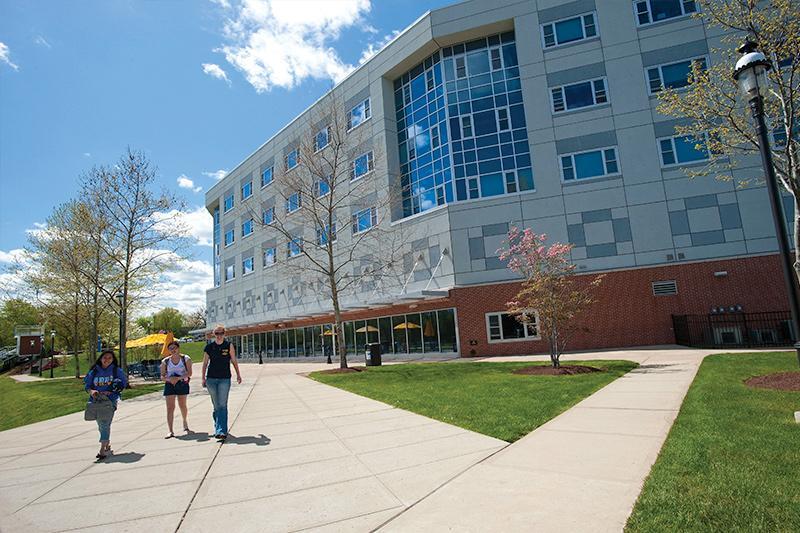
The University of New Haven is based in West Haven, Connecticut, near New Haven and within reach of the wider New England region. Its main campus provides an academic environment with classrooms, laboratories, residence halls, student facilities, and recreational resources.
The university emphasises experiential learning alongside academic study. Depending on the programme, students may have opportunities to participate in research, practical projects, laboratory work, internships, and other career-focused activities.
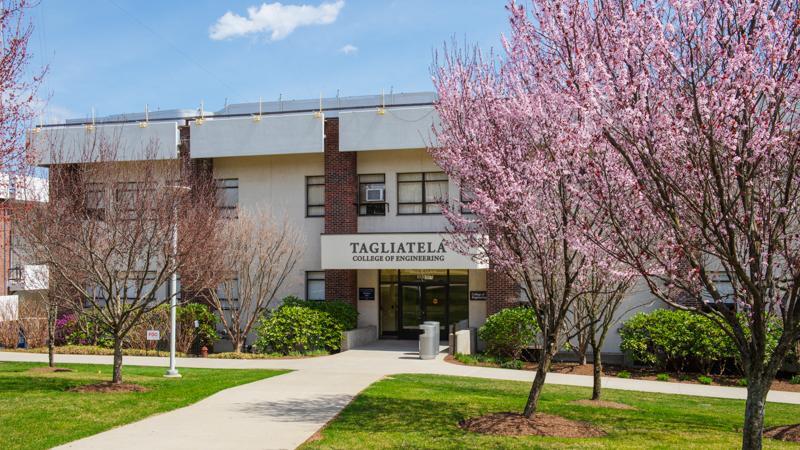
The institution includes several academic units, including the College of Arts and Sciences, Pompea College of Business, Henry C. Lee College of Criminal Justice and Forensic Sciences, Tagliatela College of Engineering, and School of Health Sciences.
These academic divisions provide options for students with different interests, from business management and computing to engineering, forensic investigation, health-related study, and the humanities.
The university's location provides access to a region with business organisations, healthcare providers, technology companies, public institutions, and cultural attractions. Students can explore opportunities that complement their studies, subject to programme requirements and individual eligibility.
Courses and Academic Programmes
The University of New Haven offers programmes across undergraduate and graduate levels. Available majors, specialisations, and degree structures depend on the academic department and the qualification level.
Business and Management
The Pompea College of Business offers programmes for students interested in business operations, financial decision-making, management, marketing, and entrepreneurship.
Students can explore areas such as:
- Accounting
- Finance
- Business administration
- Marketing
- Management
- International business
- Business analytics
- Entrepreneurship
Coursework may cover financial reporting, organisational behaviour, market research, business strategy, economics, and decision-making. Students can develop analytical, communication, and problem-solving skills relevant to professional environments.
Graduates may pursue careers in accounting, banking, financial services, marketing, business development, consulting, and management. Some occupations require professional certification, additional training, or relevant work experience.
Students should review each programme's curriculum to identify opportunities for internships, applied projects, and specialisations that match their intended career direction.
Computer Science and Information Technology
Computer science and technology-related programmes are suitable for students interested in software, information systems, computing infrastructure, and digital innovation.
Depending on the chosen degree, students may study programming, algorithms, databases, software development, systems analysis, computer security, and other technical subjects.
Project-based learning can help students apply theoretical concepts to practical problems. Students interested in technology careers should consider building a portfolio of projects and developing experience with tools and programming languages relevant to their intended specialisation.
Potential career pathways include software development, systems analysis, database administration, IT consulting, cybersecurity, application development, and technology support. Career outcomes depend on the selected programme, technical ability, professional experience, and employer requirements.
Engineering and Applied Sciences
The Tagliatela College of Engineering offers academic pathways in engineering and related technical fields. Students interested in engineering can explore disciplines such as mechanical, electrical, civil, chemical, industrial, computer, and systems engineering, subject to current programme availability.
Engineering education typically combines mathematics, scientific principles, technical design, laboratory work, and problem-solving. Students should check the prerequisites for their chosen degree and determine whether their previous mathematics and science education satisfies the requirements.
Depending on the programme, students may work on design projects, experiments, technical assignments, and collaborative activities.
Engineering graduates may pursue roles in manufacturing, construction, energy, technology, infrastructure, technical consulting, and research. Some positions require additional professional credentials, licensing, or supervised experience.
Criminal Justice and Forensic Sciences
The Henry C. Lee College of Criminal Justice and Forensic Sciences is a distinctive academic division of the university. It offers study pathways for students interested in criminal justice, forensic investigation, emergency management, and related fields.
Students may explore subjects involving evidence, investigative methods, criminal justice systems, public safety, emergency response, and the application of scientific principles to investigations.
Depending on the programme, practical learning may complement classroom instruction. Students should review the specific degree requirements to understand laboratory components, professional preparation, and available experiential opportunities.
Potential career directions include forensic laboratory work, investigative support, emergency management, criminal justice research, public safety, and related services. Employment requirements differ by occupation and employer, and some roles may involve background checks, specialised training, or citizenship restrictions.
Health Sciences
The School of Health Sciences provides academic options for students interested in healthcare, health promotion, clinical support, and related professional fields.
Available programmes may cover subjects such as health sciences, medical laboratory-related study, healthcare management, and other areas, depending on current programme offerings.
Students should examine programme prerequisites, laboratory or clinical requirements, and any additional screening procedures. Some health-related careers require professional licensing or examinations beyond a university degree.
International applicants should also consider whether their intended qualification will be recognised in the country where they hope to practise. Professional requirements can vary significantly between jurisdictions.
Arts, Humanities and Communication
The College of Arts and Sciences offers programmes for students interested in communication, culture, creative practice, language, society, and human behaviour.
Relevant areas may include communication, English, history, psychology, political science, music, art and design, and other humanities or social science disciplines.
Students can develop skills in writing, research, critical thinking, presentation, creative problem-solving, and communication. These skills can be applied across a range of professional environments.
Career opportunities may include communications, media, education, research, public service, nonprofit organisations, creative industries, and further academic study. Students can strengthen their preparation through internships, practical projects, and extracurricular involvement.
Graduate and Professional Programmes
The University of New Haven also offers graduate and professional study options for students who have completed an appropriate prior qualification.
Graduate programmes may allow students to develop advanced knowledge in business, engineering, criminal justice, forensic sciences, health sciences, and other areas.
Admission requirements vary by degree. Applicants may need a recognised bachelor's degree, academic transcripts, English-language evidence, a statement of purpose, recommendation letters, a résumé, or additional programme-specific materials.
Students should confirm whether their intended programme requires relevant professional experience, prerequisite coursework, interviews, or standardised tests before applying.
Tuition Fees and Cost of Studying at the University of New Haven
Tuition and living expenses are important considerations for international students planning to study at the University of New Haven.
For the 2026–2027 academic year, published full-time undergraduate tuition is US$49,340 per year. The general student fee is US$1,930 annually, bringing standard tuition and fees to US$51,270.
These figures apply to full-time undergraduate day students taking the standard course load. Additional charges may apply to engineering, computer science, chemistry, courses requiring specialised materials, or course loads exceeding the standard limit.
The university's estimated annual cost of attendance for an undergraduate student living on campus is approximately US$76,230. This includes estimated tuition and fees, housing, food, books, supplies, transportation, and miscellaneous expenses.
A typical cost breakdown includes:
- Tuition and standard fees: US$51,270
- Estimated housing and food: US$20,998
- Books and supplies: US$1,324
- Miscellaneous expenses: US$2,026
- Transportation: US$544
- Other estimated fees: US$68
These figures are planning estimates, and actual expenditure may differ according to housing choice, meal plan, personal spending, course selection, and other circumstances.
The university requires health insurance for international full-time students. The published 2026–2027 insurance charge is US$1,900 annually; students should verify how this charge is reflected in their individual billing and cost estimate.
Graduate tuition varies by programme and credit load. Students should consult the current graduate tuition schedule instead of assuming that undergraduate fees apply.
Applicants should prepare a financial plan that covers tuition, housing, food, health insurance, books, travel, visa-related costs, and personal expenses. Tuition and other charges are subject to change, so students should confirm the amounts for their intended intake before making financial commitments.
Scholarships and Financial Support
The University of New Haven offers scholarship and financial assistance opportunities for eligible students. International undergraduate applicants may be considered for academic merit scholarships based on the university's published criteria.
For many main-campus undergraduate merit awards, no separate scholarship application is required. Eligible students are generally notified about awards during the admission process. Award amounts, eligibility conditions, and renewal requirements depend on the specific scholarship.
Students should review whether an award applies to tuition only, whether it can be renewed, and what academic standards must be maintained. A scholarship should not be assumed to cover housing, meals, insurance, travel, or other expenses unless the award explicitly includes them.
Graduate funding opportunities may differ from undergraduate scholarships. Applicants should investigate departmental awards, assistantships, or other funding options where available.
International students should also explore legitimate external scholarships and education financing options. Before accepting a loan, students should review the repayment schedule, interest rate, eligibility conditions, and likely financial commitments after graduation.
A realistic budget should use confirmed funding rather than assuming that every applicant will receive a scholarship.
Admission Requirements for International Students
International admission requirements depend on the applicant's educational background, intended degree, and chosen programme. Students should consult the current university requirements before preparing their applications.
Undergraduate Admission
International first-year undergraduate applicants generally need to submit:
- A completed online international application or Common Application.
- The required application fee.
- Official secondary school transcripts and examination results.
- Academic grading information where requested.
- Certified English translations or credential evaluations when required.
- At least one academic recommendation letter.
- A personal essay.
- A copy of the passport information page.
- English-language proficiency evidence where required.
The university reviews academic records and other application materials to assess whether an applicant is prepared for undergraduate study.
Students whose academic documents are not issued in English may need certified translations and a professional credential evaluation. Applicants should follow the university's instructions for the required evaluation agency and document-submission method.
The university does not require standardised admission test scores for most undergraduate programmes, but exceptions may apply. Applicants should check the policy for their intended major.
English-Language Requirements
International applicants whose previous education does not qualify them for an English-language exemption may need to submit results from an accepted proficiency examination.
Published undergraduate minimums include:
- IELTS Academic: 6.0
- TOEFL iBT: 75
- PTE Academic: 53
- Duolingo English Test: 105
- SAT Evidence-Based Reading and Writing: 450
These scores are minimum published requirements and do not guarantee admission. Applicants should confirm the current rules, accepted test formats, and any programme-specific expectations.
Students who do not meet the standard English-language requirement may wish to investigate the university's English-language preparatory options or conditional admission pathways, where available.
Applicants should not assume that an English-language waiver will automatically be granted. They should provide the documentation requested by admissions staff and confirm their eligibility before relying on an exemption.
Graduate Admission
Graduate applicants generally need a recognised bachelor's degree or an equivalent qualification that meets the requirements of the intended programme.
Application materials may include official academic transcripts, a statement of purpose, recommendation letters, a résumé or curriculum vitae, English-language test results, and other supporting documents.
Some programmes may require relevant work experience, prerequisite coursework, a portfolio, an interview, or additional examinations. Requirements vary by department and degree level.
International applicants should confirm whether their previous qualifications meet the programme's academic standards and whether additional credential evaluation is necessary.
How to Apply to the University of New Haven
International students can organise the application process using the following steps.
Step 1: Select a programme. Explore available degrees, course content, admission prerequisites, and career pathways.
Step 2: Check eligibility. Compare your previous academic qualifications and English-language proficiency with the requirements for your chosen programme.
Step 3: Submit the application. Complete the university's online application or the Common Application, as appropriate, and pay the required fee.
Step 4: Prepare academic documents. Arrange official transcripts, examination results, translations, credential evaluations, recommendation letters, and any other required materials.
Step 5: Submit English-language evidence. Provide accepted test scores or documentation supporting an eligible waiver.
Step 6: Monitor the application portal. Review the status of your application and respond to requests for missing documents.
Step 7: Prepare financial documentation. Students who require immigration documents must submit the required passport and financial evidence.
Step 8: Complete the visa process. After receiving the appropriate university immigration documentation, follow the applicable SEVIS fee and visa application procedures.
Step 9: Prepare for arrival. Complete enrolment tasks, arrange accommodation, review insurance requirements, and register for orientation.
The university publishes priority deadlines for international undergraduate applications. Students should check the deadlines for their intended semester and allow enough time for academic documents, financial evidence, and immigration processing.
Campus Facilities and Accommodation
The University of New Haven provides academic buildings, laboratories, study areas, residence halls, dining facilities, and recreational resources to support students during their studies.
On-campus accommodation can help students access university facilities and participate in academic and social activities. The university offers several residence hall and apartment-style options, with costs varying by room type and occupancy.
Students should compare accommodation charges, meal plans, contract dates, housing deposits, and eligibility before selecting a room. Housing availability and prices may change each academic year.
Students who plan to live off campus should consider rent, utilities, groceries, transportation, and commuting time. They should also investigate local transport options and the distance between accommodation and campus facilities.
The university's recreational and student facilities provide opportunities to balance coursework with exercise, social activities, and personal development.
Student Life at the University of New Haven
Student life at the University of New Haven includes clubs, campus events, student organisations, athletics, recreation, and cultural activities.
Students can participate in organisations related to academic disciplines, professional interests, hobbies, volunteering, and cultural communities. These activities offer opportunities to meet people, develop leadership skills, and build connections beyond the classroom.
The university's campus community includes students from different countries and educational backgrounds. International students can benefit from connecting with peers, joining activities, and taking part in orientation programmes that help them adjust to university life in the United States.
Students can also explore recreational facilities, sports, dining options, and campus events. Participation in student activities can help develop teamwork, communication, and time-management skills.
Students should choose activities that match their interests while maintaining a healthy balance between academic responsibilities, social life, and rest.
International Student Support
International students may need assistance with admissions, immigration documentation, financial evidence, health insurance, academic planning, and adapting to a new country.
The University of New Haven provides international admissions information and immigration support for students preparing to study in the United States. Applicants should consult the appropriate university office for questions about required documents, arrival preparation, orientation, and maintaining student status.
Students who require an F-1 or J-1 visa must complete the university's immigration documentation process and follow the relevant US government procedures. Financial records should accurately demonstrate the funding required for the intended period of study.
International students are responsible for understanding the regulations associated with their immigration status. Rules can affect employment, travel, course registration, and other activities. Students should seek guidance from authorised university advisers when they have questions about their obligations.
Career Development and Employment Opportunities
The University of New Haven's academic programmes and practical learning opportunities can help students prepare for careers across business, technology, engineering, criminal justice, forensic sciences, health sciences, and other sectors.
Students can strengthen their professional preparation by participating in relevant projects, research, internships where eligible, student organisations, and career development activities.
Career preparation may include résumé writing, interview practice, professional networking, employer events, and learning about opportunities relevant to a student's programme.
The university's location in southern Connecticut provides access to the wider regional economy. However, employment opportunities depend on the student's field of study, experience, professional skills, and the requirements of individual employers.
International students must comply with applicable immigration and employment regulations and obtain any required authorisation before starting work. They should verify whether an internship or other employment opportunity is permitted under their status.
Some occupations also require professional licensing, certification, or further education. Students should investigate these requirements early if they intend to pursue a regulated career.
Why Choose the University of New Haven?
The University of New Haven may be suitable for students seeking a private university with career-focused academic options and opportunities for practical learning.
Potential advantages include:
- Broad academic choices: Programmes span business, engineering, computing, criminal justice, forensic sciences, health sciences, and the arts.
- Practical learning: Depending on the programme, students can explore research, laboratory work, applied projects, and internships.
- International student support: University services help applicants prepare for admission and the immigration documentation process.
- Scholarship opportunities: Eligible undergraduate applicants may receive academic merit awards.
- Campus facilities: Residence halls, recreation, dining, and student organisations contribute to campus life.
- Regional access: The West Haven location provides access to New Haven and the wider southern Connecticut region.
The benefits of studying at the university depend on a student's intended programme, budget, academic background, and career objectives. Applicants should compare the curriculum, total cost, scholarship options, and professional opportunities with those of other institutions.
Living in West Haven, Connecticut
West Haven is a coastal city in southern Connecticut, close to New Haven and within the wider New England region. Students can explore local beaches, cultural attractions, restaurants, parks, and community events while pursuing their studies.
The region provides access to public transport connections and a variety of urban and suburban environments. Students should research routes, schedules, travel costs, and commuting time before choosing accommodation or planning off-campus activities.
Living expenses depend on housing, food, transportation, health insurance, and personal spending. Students should prepare a monthly budget and include additional costs for seasonal clothing, travel, and unexpected expenses.
International students should also become familiar with local safety resources, healthcare arrangements, and university support services. Understanding the surrounding area can help students settle into campus life more confidently.
Frequently Asked Questions
Is the University of New Haven public or private?
The University of New Haven is a private university located in West Haven, Connecticut, United States.
Where is the University of New Haven located?
The university's main campus is in West Haven, Connecticut, near the city of New Haven.
How much is undergraduate tuition at the University of New Haven?
For the 2026–2027 academic year, full-time undergraduate tuition is US$49,340 annually, and the general student fee is US$1,930. The combined tuition-and-fee total is US$51,270, excluding additional living expenses and other charges.
What is the undergraduate application fee?
The published undergraduate application fee is US$50. Applicants should confirm the current fee and any applicable waiver options before submitting their application.
Does the university accept international students?
Yes. The University of New Haven welcomes international students and provides information about admissions, English-language requirements, immigration documentation, and preparation for arrival.
What English-language tests does the university accept?
Published undergraduate options include IELTS Academic, TOEFL iBT, PTE Academic, Duolingo English Test, and SAT Evidence-Based Reading and Writing. Applicants should verify current minimum scores and any applicable exemptions.
Are scholarships available for international students?
Eligible international undergraduate students may receive merit-based scholarships. Award conditions and renewal rules vary, and students should confirm the funding available to them during the admission process.
Does the university provide on-campus housing?
Yes. The university offers residence halls and apartment-style accommodation. Costs and availability vary by room type and academic year.
Can international students work while studying?
Some international students may be eligible for specific employment opportunities under US immigration rules. They must confirm their eligibility and obtain any required authorisation before working.
What should students consider before applying?
Students should compare programme requirements, tuition, living expenses, scholarship eligibility, housing, application deadlines, and career goals before making a decision.
Conclusion
The University of New Haven offers international students a range of academic programmes, campus resources, practical learning opportunities, and student support services. Its options across business, engineering, criminal justice, forensic sciences, health sciences, and the arts provide pathways for different educational and career interests.
Before applying, students should confirm the latest admission requirements, tuition and fees, scholarship conditions, English-language standards, and immigration documentation requirements. Careful financial planning and a clear understanding of programme expectations can help applicants decide whether the University of New Haven is the right choice for their goals.
Entry Requirements
General Entry Requirement
IELTS 6.5 overall
Fees & Scholarships
Annual Tuition Fees
USD 42,000 - USD 51,000
Ready to Apply to University of New Haven?
Our advisors guide you from eligibility check to offer letter — at no cost to you.
Join our WhatsApp Community

Scan to join our student community for admission updates & guidance