
Annual FeesUSD 31,000 - USD 51,000
University of Kansas
LocationUS
Entry RequirementIELTS 6.0 overall
Visa Success Rate80%
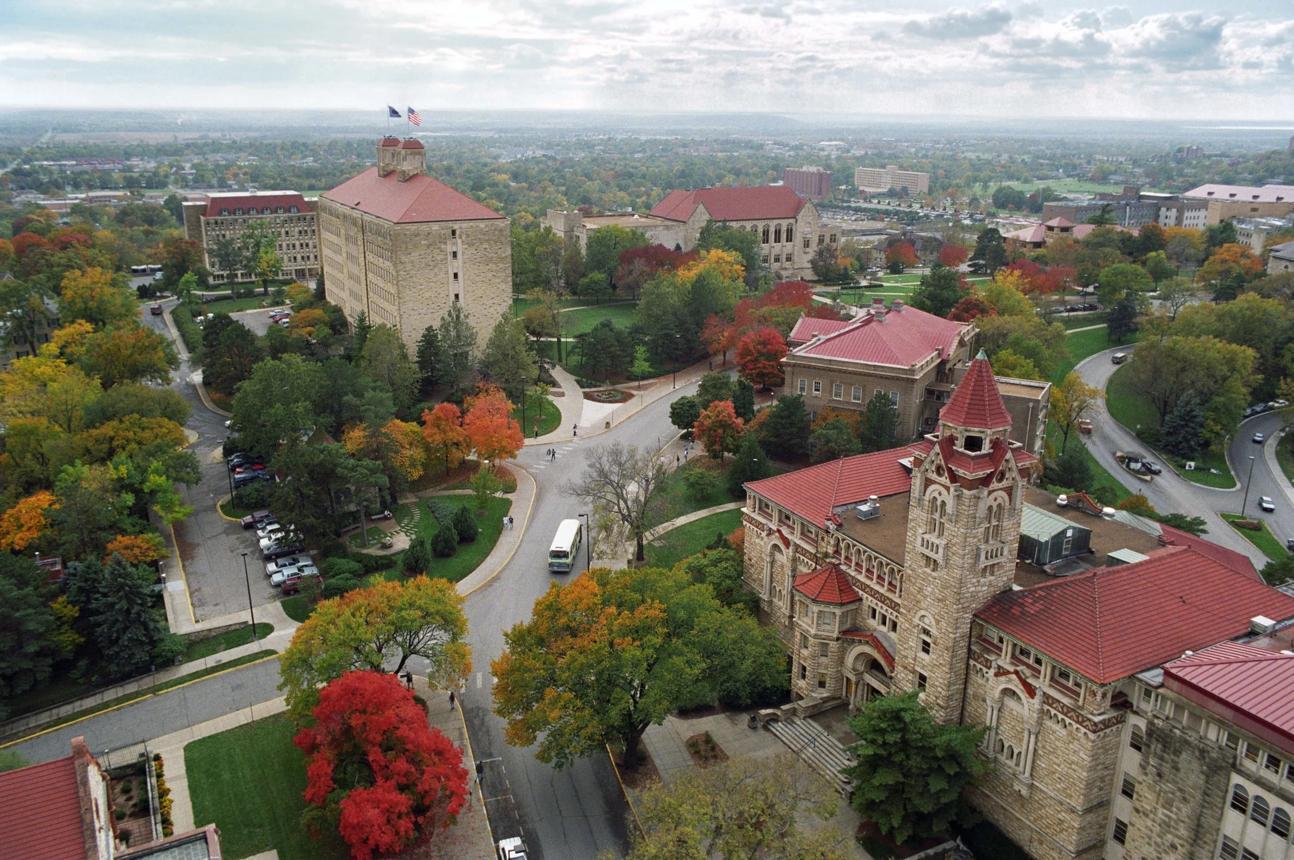
Campus Photos
University of Kansas

About University of Kansas
University of Kansas: Courses, Tuition Fees, Admissions & Student Life
Overview of the University of Kansas
The University of Kansas (KU) is a public research university located in Lawrence, Kansas, United States. Established in 1865, the university has grown into a major centre for higher education, research, innovation, and professional development. It offers undergraduate, graduate, and professional programmes across a broad range of academic disciplines.
The university's main campus in Lawrence combines historic academic buildings, modern learning facilities, research spaces, libraries, student residences, and recreational areas. Its campus community brings together students from Kansas, other parts of the United States, and countries around the world.
The University of Kansas offers programmes in areas such as engineering, business, computer science, architecture, journalism, education, health professions, pharmacy, social sciences, and the humanities. Students can develop specialised knowledge while exploring opportunities for research, internships, practical projects, and professional development.
For international students, KU provides an opportunity to pursue an American university education in a college-town setting. Its academic resources, international student services, and campus organisations can support students as they adjust to a different educational system and prepare for future careers.
Before applying, students should review the admission requirements for their intended degree, compare tuition and living expenses, investigate scholarship opportunities, and confirm the deadlines for their preferred entry term.
Why Choose the University of Kansas?
Choosing a university involves evaluating academic programmes, learning opportunities, affordability, campus life, and career preparation. The University of Kansas offers several features worth considering when comparing American universities.
A Public Research University
KU combines teaching with research across numerous disciplines. Students can learn from faculty members, explore academic questions, and investigate how knowledge is applied to practical problems.
Depending on the department and programme, students may have opportunities to participate in laboratory research, faculty-led projects, undergraduate research, and interdisciplinary activities. These experiences can help develop analytical thinking, communication, collaboration, and problem-solving skills.
Diverse Academic Opportunities
The university offers a wide selection of undergraduate and graduate programmes. Students can choose from disciplines ranging from engineering and business to journalism, education, health sciences, architecture, and liberal arts.
This variety allows applicants to compare different academic pathways within one institution. Students should still examine individual degree requirements because course structures, programme fees, practical components, and career preparation opportunities vary.
Practical and Experiential Learning
University education can be strengthened by applying classroom knowledge to real situations. Depending on the programme, KU students may participate in research, internships, group projects, professional activities, laboratory work, and community-based learning.
These experiences can help students build practical skills and develop a clearer understanding of their chosen field. Students should investigate opportunities within their intended department and confirm any eligibility requirements before relying on a particular internship or research placement.
An Active Campus Community
The University of Kansas supports student participation through clubs, academic organisations, cultural activities, athletics, volunteering, and recreational opportunities.
Joining campus activities can help students develop friendships, improve communication skills, and become more comfortable in their new environment. For international students, these opportunities can be especially useful when adjusting to American university life.
Academic Programmes at the University of Kansas
KU offers undergraduate and graduate programmes across several schools and academic departments. The exact degrees available, course requirements, and admission conditions depend on the chosen field of study.
Engineering and Computer Science
The School of Engineering offers programmes in areas including aerospace engineering, architectural engineering, chemical engineering, civil engineering, computer engineering, electrical engineering, and mechanical engineering.
Engineering students typically study mathematics, scientific principles, design, technical analysis, and applied problem-solving. Depending on their degree, they may work on laboratory assignments, design projects, research activities, and collaborative technical tasks.
Students interested in computing can investigate computer science and related programmes. These fields may cover programming, algorithms, software development, systems, and other technical subjects according to the curriculum.
Potential career directions include engineering, software development, technical analysis, systems work, and research. Career outcomes depend on individual skills, academic performance, experience, and employer requirements.
Business and Economics
The KU School of Business provides academic pathways in subjects such as accounting, finance, marketing, management, business analytics, and related disciplines.
Business students can develop an understanding of organisational decision-making, financial performance, customer behaviour, business operations, and strategic planning.
Students interested in finance may explore financial analysis and corporate decision-making. Those interested in marketing can investigate customer research, branding, and promotional strategy. Business analytics may appeal to students who want to combine data interpretation with business problem-solving.
The appropriate programme depends on a student's strengths, professional interests, and intended career direction. Applicants should compare the curriculum and any additional programme-specific requirements before selecting a major.
Journalism and Mass Communication
The William Allen White School of Journalism and Mass Communications offers study related to journalism, media, strategic communication, and related areas.
Students may develop skills in writing, research, reporting, multimedia communication, audience analysis, and digital storytelling, depending on their programme.
These skills can be relevant to journalism, public relations, corporate communications, digital media, content production, and related professional fields. Students interested in media careers may benefit from practical projects, portfolios, and relevant work experience alongside academic study.
Architecture and Design
KU offers programmes connected to architecture, architectural engineering, and design-related disciplines.
Students in these fields may combine creative thinking with technical knowledge, spatial analysis, design development, and project work. Depending on the programme, studio activities, specialist software, materials, and design assignments may form an important part of the learning experience.
Applicants should review any portfolio requirements and budget for additional materials or course-related expenses where applicable.
Education
The university provides programmes for students interested in teaching, educational research, learning support, and other education-related fields.
Students may explore educational theory, curriculum development, learning environments, assessment, and teaching practice. Certain pathways may require supervised practical experience, background checks, or additional professional requirements.
Students planning to teach in a particular US state or another country should verify the relevant certification and licensing rules before choosing a programme.
Health Professions and Pharmacy
KU offers education and professional training across several health-related disciplines. Programme options include areas associated with nursing, public health, rehabilitation, pharmacy, and other health professions, subject to current availability and admission criteria.
Some health programmes have specialised entry requirements, prerequisite courses, practical placements, or professional accreditation conditions. Applicants should distinguish between general undergraduate study and professional programmes that require additional preparation.
Students interested in regulated healthcare careers should investigate the qualifications and licensing requirements that apply in their intended country of employment.
Liberal Arts and Sciences
The university offers programmes across the humanities, natural sciences, mathematics, and social sciences.
Students may explore subjects such as biology, chemistry, physics, psychology, political science, communication studies, languages, history, and interdisciplinary areas.
These programmes can develop research, writing, critical thinking, and analytical skills. Depending on the degree, graduates may pursue employment, professional training, research, or further postgraduate education.
Graduate and Professional Programmes
KU offers master's, doctoral, and professional programmes for students seeking advanced knowledge or specialised qualifications.
Graduate applicants should examine the requirements for their specific department. Depending on the programme, admission may require a recognised bachelor's degree, academic transcripts, recommendations, a statement of purpose, a résumé, English-language proficiency evidence, or additional materials.
Research-based programmes may place particular emphasis on previous academic preparation, research interests, and alignment with available faculty expertise. Professional programmes may have separate application procedures and prerequisites.
University of Kansas Admissions for International Students
International applicants should first determine whether they are applying as first-year undergraduates, transfer students, or graduate applicants. Each category has its own application process and requirements.
Undergraduate Admission Requirements
International first-year applicants generally need to provide evidence of secondary-school completion and academic preparation appropriate for university study.
The University of Kansas lists a minimum GPA of 2.5 on a 4.0 scale for international undergraduate first-year and transfer applicants. Academic credentials from other grading systems are assessed according to the university's requirements.
Typical application materials include:
- Secondary-school transcripts and examination results.
- Proof of high school graduation, where required.
- English-language proficiency results.
- A completed application and applicable application fee.
- Additional documents requested for the applicant's circumstances or intended programme.
Applicants should ensure that academic records are accurate and complete. Documents issued in languages other than English may require an appropriate English translation.
Meeting minimum admission requirements does not guarantee acceptance into every degree. Some academic departments may have additional standards or selection criteria.
Transfer Admission
Students who have completed college or university coursework after high school may apply as transfer students.
Transfer applicants should provide academic records from all relevant institutions and review the rules governing transferable credits. The university uses academic performance and transferable coursework when evaluating eligibility.
Students transferring from institutions outside the United States should confirm the documentation and transcript procedures applicable to their circumstances. Programme-specific requirements may also affect transfer admission.
English-Language Proficiency
International applicants must submit English-language proficiency results as part of the undergraduate application process, according to the university's published instructions. KU uses these results to evaluate readiness for degree-level coursework and, where appropriate, determine whether English-language coursework is needed.
The university offers pathways for students who do not initially meet the requirements for direct entry into full degree coursework. These may involve English-language instruction before or alongside academic study, depending on the applicant's eligibility.
Accepted tests, score requirements, exemptions, and pathway options can vary. Applicants should consult the current English-language requirements before scheduling an examination.
Graduate Admission Requirements
Graduate applicants should follow the instructions for their intended programme rather than assuming that the undergraduate admission process applies.
Common requirements may include:
- A recognised bachelor's degree or equivalent qualification.
- Official academic transcripts.
- A statement of purpose or research statement.
- Letters of recommendation.
- A résumé or curriculum vitae, where requested.
- English-language proficiency evidence, if applicable.
- Additional materials required by the department.
Some programmes may require specific prerequisite subjects, relevant professional experience, a portfolio, standardised test scores, or contact with a potential research supervisor.
Application Fees and Deadlines
The published application processing fee for international undergraduate applicants is US$90. Graduate application fees can vary by programme and applicant category.
For international undergraduate applicants living outside the United States, KU publishes a November 15 deadline for spring entry and a May 1 deadline for fall entry. The fall scholarship deadline is also May 1. Different dates apply to certain applicants already living in the United States.
Applicants should verify the deadlines for their intended term and degree. They should also leave enough time to submit transcripts, English-language results, financial documentation, and any additional materials required.
University of Kansas Tuition Fees and Cost of Attendance
International students should plan for tuition, mandatory fees, accommodation, food, books, transport, health insurance, and personal expenses.
For the 2026–2027 academic year, the University of Kansas publishes the following estimated annual expenses for non-resident undergraduate students enrolled for 30 credit hours.
|
Expense |
Estimated annual cost |
|
Tuition |
US$31,779 |
|
Required student and wellness fees |
US$1,065 |
|
Loan fee allowance |
US$106 |
|
Housing and meals |
US$14,370 |
|
Books and supplies |
US$778 |
|
Transportation |
US$2,600 |
|
Personal expenses |
US$2,962 |
|
Estimated total cost of attendance |
US$53,660 |
These figures are estimates and do not include every possible additional charge. Course fees may apply depending on the student's major and selected classes.
The university's international cost estimates may use a different set of fees and assumptions for immigration financial documentation. International applicants should consult the relevant international admissions cost page and use the estimate appropriate to their intended programme.
Graduate tuition varies by degree, credit load, school, and other applicable charges. Students should check their programme's current fee schedule rather than assuming the undergraduate estimate applies.
Housing and Living Expenses
Students can investigate university residence halls, apartments, and other accommodation options in Lawrence. Housing costs depend on location, room type, meal arrangements, lease duration, and the services included.
Living expenses also include food, utilities where applicable, mobile service, transportation, clothing, personal supplies, and other everyday needs.
Students should compare accommodation options before arrival and confirm whether housing applications require a separate deposit or contract. Those planning to live off campus should consider lease conditions, utility bills, commuting costs, and the distance from university facilities.
International students should also budget for health insurance, travel, immigration-related expenses, and an emergency reserve.
Scholarships and Financial Support
The University of Kansas offers scholarship opportunities for eligible international students. Awards vary according to academic qualifications, applicant category, available funding, and the conditions of individual scholarships.
Published international freshman scholarships range from US$8,000 to US$16,000 per year for eligible students. International transfer students may qualify for scholarships ranging from US$10,000 to US$14,000 per year. Deadlines and eligibility conditions apply.
Students should verify whether an award is renewable, which academic requirements must be maintained, and whether any additional application is required. Scholarship availability and award amounts may change between admission cycles.
Graduate students may investigate departmental funding, teaching assistantships, research assistantships, and other programme-specific opportunities. These options are often competitive and may require particular academic qualifications or relevant experience.
Scholarships do not necessarily cover all expenses. Applicants should calculate their remaining costs after confirmed awards and make sure they can cover tuition, housing, meals, insurance, and other required expenses.
Campus Life at the University of Kansas
Campus life is an important part of the student experience at KU. Students can combine academic responsibilities with cultural events, student organisations, sports, recreation, and social activities.
Student Organisations and Activities
KU offers student organisations covering academic interests, professional development, cultural communities, volunteering, hobbies, and recreation.
Joining these groups can help students meet classmates, develop leadership skills, collaborate on projects, and explore interests outside the classroom.
International students may find cultural organisations and international student activities particularly helpful when adjusting to a new country and developing a support network.
Sports and Recreation
The university has a strong athletic tradition, and sporting events form part of campus culture. Students can follow university teams, attend events, and explore available recreational activities and fitness resources.
Participation opportunities vary between competitive teams, student clubs, and general recreation programmes. Students should check current eligibility and facility access arrangements.
Housing and Dining
KU provides several housing options, including residence halls and other university-managed accommodation. Students can compare options based on location, room type, cost, amenities, and community environment.
Dining plans offer ways to manage meals during the academic year. Students should compare the available plans and calculate how they fit their expected food expenses.
Those considering private accommodation should research rental costs, lease terms, utilities, and transportation before making a commitment.
Support Services
Students can access university resources such as academic advising, libraries, career support, and other student services. International students should also familiarise themselves with the university's International Support Services for immigration-related guidance and adjustment to life in the United States.
Seeking assistance early can help students manage academic expectations, understand university procedures, and resolve practical concerns.
Location: Studying in Lawrence, Kansas
Lawrence is a college town in eastern Kansas. The University of Kansas is a central part of the community, contributing to its academic atmosphere, cultural activities, local businesses, and student-oriented services.
Students can enjoy a university-focused environment while exploring restaurants, shops, cultural events, parks, and recreational spaces. Lawrence offers a different experience from a large metropolitan area, so applicants should consider whether the town's size and lifestyle match their preferences.
The city experiences seasonal weather, including warm summers and cold winter periods. International students should prepare for changes in temperature and budget for appropriate clothing.
Students who plan to visit larger cities or travel during university breaks should research transport connections, journey times, and travel costs in advance.
Career Development and Employment Opportunities
The University of Kansas offers academic and professional resources that can help students prepare for employment or further study. Depending on their programme, students may explore career advising, internships, research projects, employer engagement, networking events, and professional development activities.
Students can improve their career readiness by building relevant technical skills, preparing a strong résumé, practising interviews, completing practical projects, and gaining experience in their chosen field.
Career options vary by discipline. Engineering and computing graduates may pursue technical roles, business graduates may explore finance or management, and journalism graduates may seek media or communications positions. Graduates from education, health, and science programmes may follow pathways related to their qualifications and any additional professional requirements.
Employment is not guaranteed by a degree. Outcomes depend on skills, experience, academic preparation, employer demand, location, and eligibility to work.
International students must understand US immigration rules regarding internships and employment. Work eligibility depends on immigration status and the applicable authorisation. Students should consult university international advisers before accepting work or beginning practical training.
How to Apply to the University of Kansas
International applicants can organise their application through the following steps.
Step 1: Choose a programme. Identify a degree that matches your academic background, interests, and long-term goals.
Step 2: Check admission requirements. Review academic qualifications, English-language requirements, programme prerequisites, and deadlines.
Step 3: Prepare your documents. Collect transcripts, examination results, proof of graduation, English-language scores, and other requested materials.
Step 4: Submit the application. Complete the appropriate application and pay the required fee.
Step 5: Monitor your application. Check email and the application portal for updates or requests for additional documents.
Step 6: Review your finances. Calculate tuition, living expenses, insurance, and travel costs. Confirm any scholarship awards and the conditions attached to them.
Step 7: Prepare for arrival. Follow the university's instructions for immigration documentation, visa arrangements, accommodation, orientation, and enrolment.
Applicants should confirm all current requirements and dates before submitting their application.
Is the University of Kansas a Good Choice for International Students?
The University of Kansas may be a suitable option for students seeking a public research university with a broad selection of academic disciplines and opportunities for research, practical learning, and campus involvement.
It may appeal to students interested in engineering, business, computer science, journalism, architecture, education, health professions, or the sciences. Its Lawrence campus provides a college-town environment with university resources and student activities.
Affordability should be considered carefully. The estimated 2026–2027 annual cost of attendance for non-resident undergraduates is US$53,660 under the university's published estimate. Eligible international freshmen and transfer students may qualify for scholarships, but applicants should verify their awards and plan for expenses not covered by funding.
Prospective students should compare KU with other universities by examining programme content, tuition, scholarship eligibility, housing, location, academic support, and career preparation.
Conclusion
The University of Kansas combines public university education with research opportunities, a wide range of academic programmes, and a campus community that supports student development. Its Lawrence location offers a university-centred environment for students pursuing undergraduate, graduate, and professional education.
For international students, careful preparation is essential. Reviewing admission requirements, meeting English-language standards, understanding the full cost of attendance, exploring scholarship opportunities, and arranging housing early can help make the transition to university life more manageable.
By comparing KU's academic offerings and financial requirements with their personal goals, prospective students can make an informed decision about whether the University of Kansas is the right fit for their higher education plans.
Entry Requirements
General Entry Requirement
IELTS 6.0 overall
Fees & Scholarships
Annual Tuition Fees
USD 31,000 - USD 51,000
Ready to Apply to University of Kansas?
Our advisors guide you from eligibility check to offer letter — at no cost to you.
Join our WhatsApp Community

Scan to join our student community for admission updates & guidance