
Annual FeesCAD 39,000 – CAD 49,000
University of Guelph
LocationCanada
Entry RequirementIELTS 6.5 overall
Visa Success Rate69%
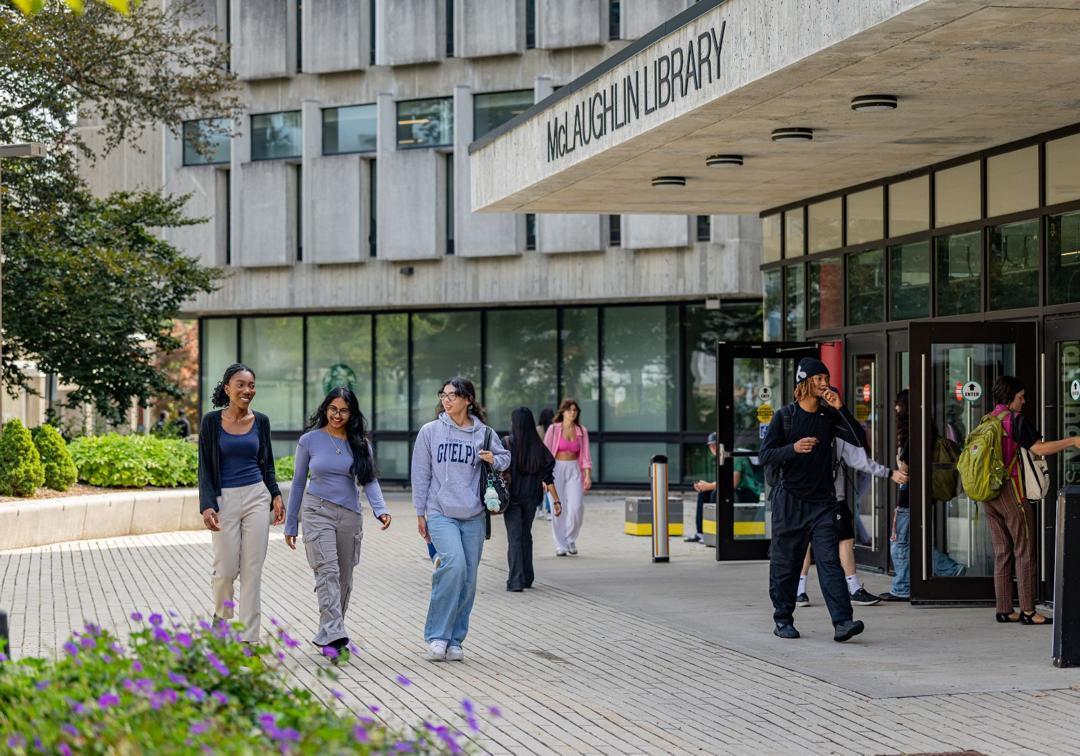
Campus Photos
University of Guelph

About University of Guelph
University of Guelph: Courses, Admission, Tuition Fees, Scholarships and Study in Canada
University of Guelph (U of G) is a public research-intensive university in Guelph, Ontario, Canada. Founded through the development of several historic agricultural, veterinary and academic institutions, the university today offers a broad range of undergraduate, graduate and diploma programs.
The university has three distinct campuses: the main Guelph campus, University of Guelph-Humber in Toronto, and Ridgetown Campus in southwestern Ontario. Its academic portfolio covers arts and humanities, biological sciences, physical and engineering sciences, business, social and applied human sciences, agriculture and veterinary medicine.
University of Guelph at a Glance
|
Information |
Details |
|
University |
University of Guelph |
|
Location |
Guelph, Ontario, Canada |
|
Institution Type |
Public research-intensive university |
|
Main Campus |
Guelph |
|
Additional Campuses |
Guelph-Humber, Ridgetown |
|
Language of Instruction |
English |
|
Undergraduate Programs |
Yes |
|
Graduate Programs |
Yes |
|
Diploma Programs |
Yes |
|
International Students |
Yes |
|
IELTS Academic |
6.5 overall, no band below 6.0 |
|
Major Academic Areas |
Arts, Science, Engineering, Business, Agriculture, Veterinary Medicine, Computing and Social Sciences |
About the University of Guelph
The University of Guelph has a long history connected with agricultural and veterinary education in Ontario. Its institutional development brought together the Ontario Agricultural College, Ontario Veterinary College and Macdonald Institute, which later became part of the University of Guelph.
Today, U of G describes itself as a research-intensive and learner-centred university, with academic activity spanning physical and life sciences, arts and humanities, social sciences, business, agricultural sciences and veterinary sciences.
The university's main campus is located in Guelph, while Guelph-Humber operates in Toronto in partnership with Humber College and Ridgetown focuses strongly on applied agriculture, animal sciences and environmental sciences.
Academic Programs
University of Guelph offers a large selection of undergraduate and graduate programs.
Arts and Humanities
The College of Arts offers programs covering subjects such as:
- English
- History
- Philosophy
- French Studies
- Music
- Creative Writing
- Studio Art
- Theatre Studies
- Art History
- Classical and Modern Cultures
- Culture and Technology Studies
Students can choose general, honours and interdisciplinary study options depending on the subject.
Business
The Gordon S. Lang School of Business and Economics offers business education in areas such as:
- Commerce
- Management
- Marketing
- Finance
- Accounting
- Economics
- Entrepreneurship
Business students can develop knowledge in management, financial decision-making, organizational behaviour and other areas relevant to modern organizations.
Computer Science and Computing
U of G offers computing programs covering areas such as:
- Computer Science
- Software Engineering
- Computing
- Artificial Intelligence
- Mathematics
- Statistics
Its College of Computational, Mathematical and Physical Sciences currently lists programs including Computer Science, Software Engineering, Human-Centred Artificial Intelligence and Bachelor of Computing, along with mathematics and physical-science programs.
Engineering
Engineering is another major area of study at U of G.
Programs include fields such as:
- Biological Engineering
- Biomedical Engineering
- Computer Engineering
- Engineering Systems and Computing
- Environmental Engineering
- Mechanical Engineering
- Water Resources Engineering
These programs combine mathematics, scientific knowledge, engineering principles and practical applications.
Biological Sciences
The university has extensive academic activity in biological sciences.
Students can explore areas including:
- Biology
- Biochemistry
- Animal Biology
- Biodiversity
- Microbiology
- Molecular biology
- Ecology
- Biomedical sciences
The university's academic structure includes the College of Biological Science, which supports teaching and research across biological disciplines.
Agriculture and Environmental Studies
Agriculture is one of U of G's historic areas of academic strength.
The Ontario Agricultural College offers programs and research connected with:
- Agriculture
- Animal science
- Crop science
- Environmental management
- Food systems
- Resource management
- Agricultural economics
- Environmental sciences
Students interested in agriculture, sustainability and natural resources can find several specialized pathways.
Veterinary Medicine
The Ontario Veterinary College (OVC) is part of the University of Guelph.
OVC provides education and research related to veterinary medicine and animal health. The Doctor of Veterinary Medicine program has specific admission requirements and should be considered separately from general undergraduate programs.
Admission Requirements
Admission requirements vary according to the program and applicant's educational background.
International undergraduate applicants generally need:
- A recognized secondary-school qualification
- Competitive academic grades
- Required prerequisite subjects
- English-language proficiency where applicable
- Official academic transcripts
- Additional documents where requested
Certain programs can have subject-specific prerequisites or higher academic requirements.
The university provides program-specific admission information, so applicants should check the requirements for their intended degree before applying.
English-Language Requirements
Applicants whose first language is not English may need to provide evidence of English proficiency.
For undergraduate admission, U of G currently lists:
- IELTS Academic: 6.5 overall, with no band below 6.0
- TOEFL iBT: 89, with no individual scaled score below 21
- Duolingo English Test: 110
- CAEL: 70
- PTE: 60, with no individual component below 60
The university also lists other accepted examinations. Certain circumstances, such as sufficient previous study in an English-language school system, can affect whether a test is required.
Requirements for Indian Students
Indian students should submit academic credentials corresponding to their completed educational qualification.
Applicants from CBSE, CISCE and other recognized Indian education systems should check U of G's country-specific requirements as well as the prerequisites for their selected program.
For competitive programs, meeting the minimum academic requirement does not necessarily mean admission is automatic because admission can depend on the applicant pool and program capacity.
Students should also ensure that prerequisite subjects such as mathematics, chemistry, physics or biology are completed where required.
How to Apply to the University of Guelph
Step 1: Choose a Program
Start by identifying the undergraduate, graduate or diploma program that matches your academic and career interests.
Step 2: Check Program Requirements
Review the academic prerequisites and English-language requirements.
Step 3: Prepare Your Documents
Typical documents can include:
- Academic transcripts
- Graduation certificates
- English-language test results
- Identification documents
- Additional program-specific materials
Step 4: Submit the Application
Complete the appropriate application process for your program and applicant category.
Step 5: Monitor Your Application
Keep track of application updates and requests for additional documentation.
Step 6: Receive Your Admission Decision
Successful applicants receive an official offer from the university.
Step 7: Accept Your Offer
Follow the instructions provided with the offer and complete any required deposits or documentation.
Step 8: Prepare for Canada
International students should arrange their study permit, housing, finances, insurance and travel plans.
Tuition Fees
University of Guelph tuition varies significantly according to program, campus, student status and cohort.
For international undergraduate students, the university's published 2025–26 fee schedules show substantial differences between programs. For example, several Guelph-campus programs have international full-time tuition and compulsory fees in the CAD 39,000–40,000 range for the fall and winter semesters, while other programs have different rates. Residence, meal plans, parking and co-op fees are generally separate.
The university has also approved 2026–27 international tuition rates that vary by academic area. The published new-student rates include CAD 44,729 for Arts & Sciences, CAD 54,529 for Business, CAD 55,915 for Computing and CAD 63,160 for Engineering.
Because fees change by program and intake year, students should check the official fee schedule for their specific program before preparing a final budget.
Scholarships for International Students
University of Guelph offers several scholarships for international students.
For Fall 2026, the university lists the following entrance awards based on admission average:
|
Admission Average |
President's International Entrance Scholarship |
|
95% and above |
CAD 7,500 |
|
90%–94.9% |
CAD 6,500 |
|
85%–89.9% |
CAD 5,500 |
|
70%–84.9% |
CAD 2,000 |
The university also lists a University International Scholarship worth CAD 5,000 in year one, renewable at CAD 5,000 in subsequent years if the applicable conditions are met, and a Dean's International Scholarship worth CAD 2,500, also potentially renewable.
International transfer students can also be eligible for a one-time CAD 10,000 International Transfer Scholarship under the published conditions.
Scholarship availability and conditions can change by intake year, so applicants should verify the latest award information.
Campus Life
The main University of Guelph campus provides students with academic buildings, laboratories, libraries, residence communities, recreational facilities and student services.
The university describes its learning environment as combining historical and modern architecture with research facilities, technology and opportunities for experiential learning.
Students can participate in:
- Student clubs
- Academic organizations
- Athletics
- Cultural activities
- Volunteering
- Research
- Student leadership
- Campus events
Guelph Campus
The main campus is located in the city of Guelph, Ontario.
The university's graduate studies information describes the campus as covering approximately 865 acres in the heart of Guelph. Its facilities include academic buildings, research laboratories, libraries, green spaces and student facilities.
The campus is particularly suited to students interested in agriculture, life sciences, environmental studies, veterinary sciences and research, while also supporting a broad range of other disciplines.
Guelph-Humber Campus
The University of Guelph-Humber is located in Toronto and operates in partnership with Humber College.
This model combines university-level education with hands-on college learning, allowing eligible students to earn both a university degree and a college diploma through applicable programs.
Students considering Guelph-Humber should check its specific programs, tuition and admission requirements rather than applying the main Guelph-campus information automatically.
Ridgetown Campus
The Ridgetown Campus is located in southwestern Ontario.
It has a particular focus on applied education and research in areas such as:
- Agriculture
- Animal sciences
- Environmental sciences
- Agricultural technologies
It provides diploma and other educational opportunities connected with agricultural and environmental fields.
Accommodation
University of Guelph provides residence options for students on the main campus.
For Fall 2026, the university states that incoming international-fee-paying undergraduate, graduate master's and transfer students attending U of G for the first time can receive a guarantee of on-campus housing for the full duration of their studies if they complete the specified residence application, deposit and admission-acceptance requirements by the stated deadline.
Students should check the current housing deadlines carefully because residence guarantees depend on completing the required steps on time.
Research Opportunities
Research is a major part of the University of Guelph's academic environment.
Research activities span:
- Agriculture
- Animal health
- Veterinary medicine
- Environmental science
- Food science
- Biological sciences
- Engineering
- Computing
- Social sciences
- Humanities
Students can encounter research through laboratory work, field studies, faculty projects and graduate-level research.
Experiential Learning
U of G emphasizes experiential learning as part of its educational approach.
Depending on the program, students may have opportunities involving:
- Co-op
- Research projects
- Laboratory work
- Field courses
- Internships
- Community projects
- Industry experiences
The availability of these opportunities varies according to the selected program.
Student Support for International Students
International students can access university resources covering academic transition, housing, immigration-related information and student life.
U of G provides a dedicated international-student section with pre-arrival information, academic guidance and support resources.
Students should use these official resources when preparing for their move to Canada.
Living in Guelph
Guelph is a mid-sized city in Ontario with a large student population.
Students can access:
- Restaurants and cafés
- Shopping
- Parks
- Public transportation
- Recreational facilities
- Cultural activities
- Community services
The city's location also provides access to the broader southern Ontario region.
Career Development
University of Guelph graduates can pursue careers across many sectors depending on their degree and professional qualifications.
Potential fields include:
- Technology
- Engineering
- Business
- Agriculture
- Environmental management
- Research
- Healthcare
- Veterinary medicine
- Education
- Government
- Communications
- Social services
Career outcomes depend on the student's chosen program, experience, qualifications and individual career path.
Post-Graduation Opportunities
International students considering work in Canada after graduation should review the immigration rules that apply at the time they complete their studies.
Post-graduation work authorization depends on current Canadian immigration regulations and factors such as the program, institution, study period and eligibility conditions.
Students should verify the latest rules through official Canadian immigration sources rather than relying on information from previous admission cycles.
Frequently Asked Questions
Where is the University of Guelph located?
The main campus is in Guelph, Ontario, Canada. The university also operates Guelph-Humber in Toronto and Ridgetown Campus in southwestern Ontario.
Is the University of Guelph public?
Yes. The University of Guelph is a public research-intensive university.
Does the University of Guelph accept international students?
Yes. U of G has dedicated admission, housing, academic and scholarship resources for international students.
What IELTS score does the University of Guelph require?
For undergraduate admission, the current IELTS Academic requirement is 6.5 overall with no band below 6.0.
How much is tuition at the University of Guelph?
International tuition varies considerably by program. Published rates for recent cohorts show many programs around the CAD 39,000–40,000 range for fall and winter, while 2026–27 rates vary substantially by academic area.
Does the University of Guelph offer scholarships to international students?
Yes. U of G lists several international entrance scholarships, including awards based on admission average and renewable international scholarships.
Does the University of Guelph offer Computer Science?
Yes. The university offers Computer Science and related programs including Software Engineering, Bachelor of Computing and Human-Centred Artificial Intelligence.
Does the University of Guelph offer Engineering?
Yes. Engineering programs include areas such as computer, mechanical, biomedical, biological, environmental and water-resources engineering.
Does the University of Guelph offer Business?
Yes. Business and economics programs are offered through the Gordon S. Lang School of Business and Economics.
Is accommodation available for international students?
Yes. The university provides on-campus residence options, and for Fall 2026 it has published a residence guarantee for eligible incoming international students who meet the specified conditions and deadlines.
Does the University of Guelph have a veterinary program?
Yes. The Ontario Veterinary College is part of the University of Guelph and provides veterinary education and research.
Final Takeaway
The University of Guelph is a broad-based Canadian public university with a particularly extensive academic presence in agriculture, veterinary medicine, biological sciences, environmental studies, engineering, computing, business, arts and social sciences.
International students can choose from a wide selection of undergraduate and graduate programs, with English-language requirements generally including IELTS Academic 6.5 overall with no band below 6.0 for undergraduate admission.
Tuition varies significantly by program and intake. Students should use the university's current program-specific fee schedule rather than relying on one general tuition figure.
International students can also access dedicated scholarships, including Fall 2026 entrance awards ranging from CAD 2,000 to CAD 7,500 based on admission average, as well as renewable international scholarships under specified conditions.
With its three campuses, extensive academic offerings, research opportunities and international student services, U of G provides multiple pathways for students looking to pursue higher education in Canada.
Entry Requirements
General Entry Requirement
IELTS 6.5 overall
Fees & Scholarships
Annual Tuition Fees
CAD 39,000 – CAD 49,000
Ready to Apply to University of Guelph?
Our advisors guide you from eligibility check to offer letter — at no cost to you.
Join our WhatsApp Community
.jpeg)
Scan to join our student community for admission updates & guidance