
Annual FeesUSD 45,000 - USD 54,000
University at Albany, The State University of New York
LocationUS
Entry RequirementIELTS 6.5 overall
Visa Success Rate72%
Campus Photos
University at Albany, The State University of New York
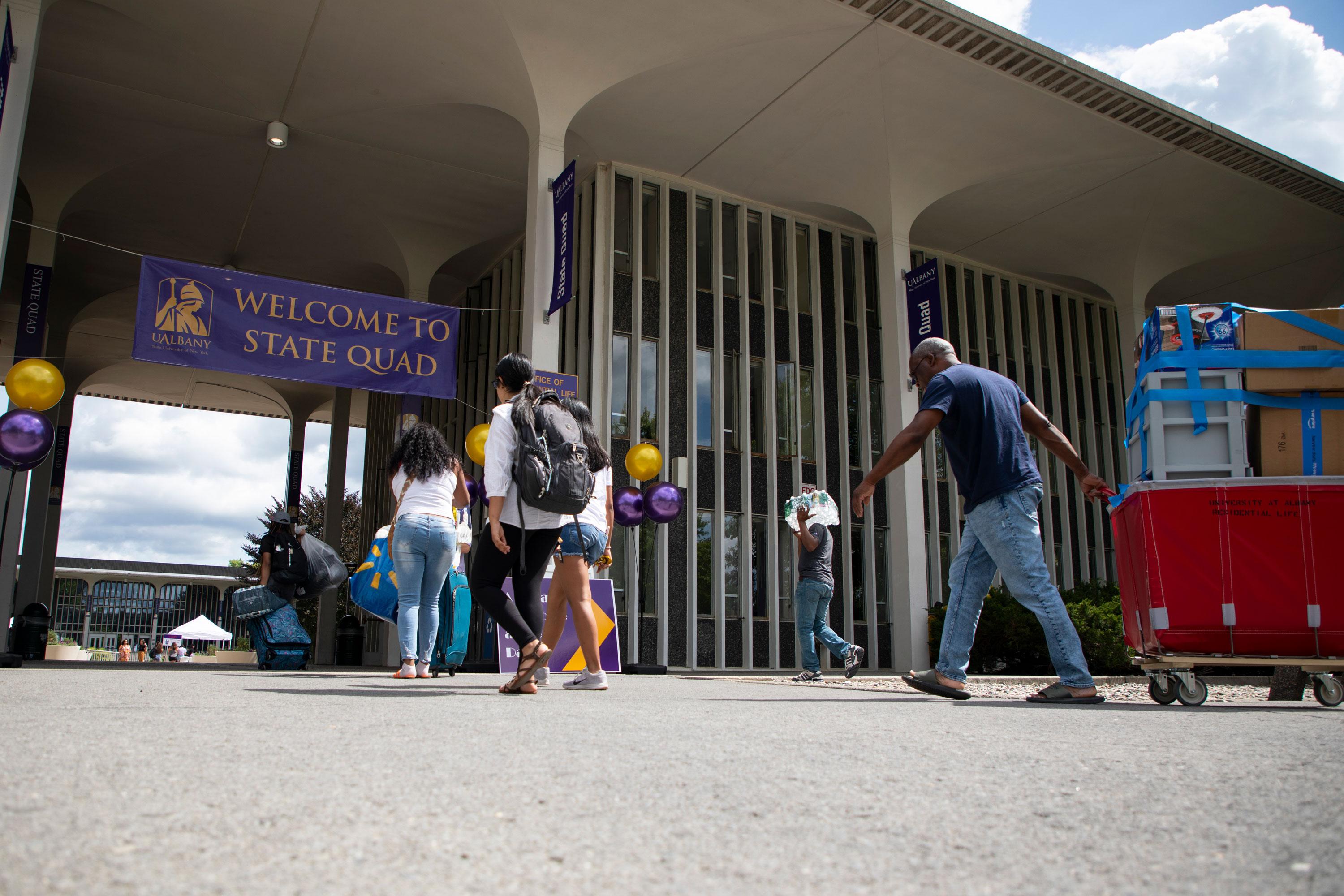

About University at Albany, The State University of New York
University at Albany: Courses, Tuition Fees, Admissions and Student Life
Introduction
The University at Albany, officially known as the University at Albany, State University of New York (SUNY), is a public research university located in Albany, New York, United States. Founded in 1844, the university has developed into a comprehensive institution offering undergraduate, graduate and doctoral education across a wide range of academic disciplines.
The university combines classroom instruction, research opportunities and practical learning to help students prepare for professional careers and advanced study. Its academic offerings include business, computer science, data science, public health, criminal justice, psychology, biological sciences, economics, education, communication and the social sciences.
As part of the State University of New York system, the University at Albany provides students with access to academic resources, research facilities, student organisations and campus support services. Its location in New York's state capital also creates opportunities to explore government, public policy, research and professional activities in the surrounding region.
International students can access dedicated admissions guidance, information about scholarships and assistance with preparing for study in the United States. For applicants considering an American public research university, the University at Albany is worth exploring for its academic breadth, research environment and range of student opportunities.
University at Albany at a Glance
- University Name: University at Albany, State University of New York
- Common Name: SUNY Albany or UAlbany
- Location: Albany, New York, United States
- Established: 1844
- Institution Type: Public research university
- Study Levels: Undergraduate, graduate and doctoral
- Popular Study Areas: Business, computer science, data science, public health, psychology, criminal justice, biological sciences, economics and education
- Research Environment: Research laboratories, centres and faculty-led projects
- International Students: Dedicated international admissions and student support
- Accommodation: On-campus residential options
- Campus Activities: Student clubs, cultural organisations, athletics and academic events
- University System: State University of New York (SUNY)
Academic Programs at the University at Albany
The University at Albany offers academic programs across multiple disciplines, allowing students to pursue professional education, research and interdisciplinary study. Undergraduate programs typically combine foundational courses with specialised subjects, while graduate and doctoral programs provide opportunities for advanced learning.
Course availability, prerequisites and delivery formats vary by department. Students should review the current academic catalogue to identify programs that match their previous education and career goals.
Business and Management
Students interested in business can explore accounting, finance, marketing, management and related areas through the university's business programs.
Business education can help students understand organisational strategy, financial decision-making, marketing principles, business analytics and management practices. Depending on the selected degree, students may also develop skills in leadership, communication and problem-solving.
These programs may support career pathways in accounting, finance, consulting, marketing, business operations and management. Students interested in professional accounting or finance roles should also investigate any additional qualifications required for their intended career.
Graduate students can consider advanced business study, including the Master of Business Administration (MBA). Applicants should check the program's admission requirements, curriculum and available concentrations before applying.
Computer Science and Data Science
Technology-related study is an important option for students interested in computing, software development and data-driven decision-making.
Computer science programs can introduce students to programming, algorithms, software engineering, computer systems and technical problem-solving. Data science focuses on methods for collecting, analysing and interpreting information to identify patterns and support decisions.
Students may develop skills relevant to software development, data analysis, systems design and other technology-related careers. Practical projects and research experiences can help students apply theoretical knowledge to real problems.
Applicants should review the mathematics and programming prerequisites for each program. Students interested in graduate study should also check whether their previous degree provides the necessary technical foundation.
Public Health and Health Sciences
The University at Albany has academic offerings in public health and related health sciences. These fields explore how social, environmental and organisational factors influence the health of individuals and communities.
Students may study public health policy, epidemiology, health administration, community health and related subjects, depending on the program. Such study can be relevant to careers in public health organisations, research, healthcare administration and community services.
Public health is different from professional clinical training. Students aiming to become physicians, nurses or other licensed healthcare practitioners should verify the separate qualifications, clinical training and licensing requirements for their intended profession.
Criminal Justice and Public Policy
Students interested in law, public safety and government can explore criminal justice, public policy and related social science disciplines.
Criminal justice study examines the institutions and processes associated with law enforcement, courts, corrections and public safety. Public policy focuses on how governments and organisations identify social problems, develop policies and assess their effects.
These areas can help students develop analytical, research and communication skills. Potential career directions include policy analysis, public administration, research, justice-related services and further academic study.
Professional eligibility depends on the role, employer and applicable regulations. Students should investigate additional requirements if they plan to enter a regulated occupation.
Psychology and Social Sciences
Psychology and the social sciences help students understand human behaviour, social relationships and the factors influencing individuals and communities.
Depending on the program, students may explore psychological theory, research methods, sociology, economics, political science or related disciplines. Coursework can develop skills in interpreting evidence, evaluating research and understanding social issues.
Graduates may pursue opportunities in research, human services, public administration, education-related settings or further professional study. Licensed clinical psychology and similar careers generally require additional graduate education and supervised professional experience.
Biological Sciences and Environmental Study
Students interested in scientific research can explore biology and other science-related programs. These disciplines examine living organisms, biological systems, ecological relationships and the scientific methods used to investigate natural processes.
Study may involve laboratory work, research projects and the interpretation of scientific data. Students should review individual program requirements to understand the practical and research opportunities available.
Graduates may consider careers in research support, laboratory settings, environmental organisations or further scientific education. Some specialised scientific and healthcare careers require postgraduate qualifications or professional certification.
Economics and Public Administration
Economics and public administration programs can appeal to students interested in markets, government, institutions and decision-making.
Economics examines how individuals, businesses and governments allocate resources, while public administration focuses on the management and delivery of public services. Depending on the program, students may develop skills in economic analysis, policy evaluation, statistics and organisational management.
These disciplines can support career interests in government, research, public service, business analysis and nonprofit organisations.
Education and Communication
The university also provides study opportunities in education, communication and related fields. These disciplines explore learning, information sharing, media, organisational communication and the ways people interact within institutions and communities.
Students can develop writing, research, presentation and critical-thinking skills. Depending on the selected program, they may pursue opportunities in education-related settings, communication, public relations, media, training or further academic study.
Applicants seeking teaching credentials should confirm whether their chosen program meets the professional certification requirements of the state or country where they intend to work.
Graduate and Doctoral Programs
The University at Albany offers graduate and doctoral programs across several academic areas. These programs allow students to develop specialised knowledge, undertake research and prepare for advanced professional roles.
Options include master's-level study in business administration, social work, public health, computer science, data-related disciplines, education and other fields. Doctoral opportunities are available in selected areas of research and professional study.
Admission requirements differ by program. Applicants may need an appropriate undergraduate degree, official transcripts, English-language scores, recommendation letters, a résumé, a statement of purpose or other supporting documents.
Students should review the requirements of their intended department rather than assuming that one set of graduate admission criteria applies to every program.
Tuition Fees and Cost of Studying at the University at Albany
The cost of studying at the University at Albany depends on the degree level, program, course load, housing arrangements, insurance and personal expenses. International students generally pay nonresident tuition and fees, and the total annual budget includes more than tuition alone.
For the 2026–2027 academic year, the university publishes the following full-time tuition and fee estimates for international students:
|
Study level |
Annual tuition and fees |
|
Undergraduate |
USD 35,499.01 |
|
Master of Business Administration (MBA) |
USD 33,031.01 |
|
Master of Social Work (MSW) |
USD 29,361.01 |
|
Other master's and PhD programs |
USD 31,811.01 |
These figures cover tuition and university fees for the Fall 2026 and Spring 2027 semesters. They do not represent the complete cost of attendance for a student living in the United States.
For undergraduate students, the university estimates additional annual housing and meal-plan costs of approximately USD 17,205 for the standard on-campus arrangement described in its cost information. The published total undergraduate cost of attendance for an international student living on campus is approximately USD 54,354 per year.
Eligible undergraduate students with junior or senior standing who live off campus have a published estimated total cost of attendance of approximately USD 45,008 per year. Off-campus living eligibility and actual expenses vary, and this estimate should not be treated as a guaranteed saving for every student.
Additional Expenses
Housing and meals: Students should budget for residence hall charges, utilities where applicable, and food. Costs vary according to accommodation and meal-plan choices.
Health insurance: International students are required to maintain the applicable health insurance coverage. The relevant fee should be included in the annual budget.
Books and supplies: Textbooks, software, laboratory materials and other course-related supplies may create additional expenses.
New student fee: New undergraduate students are charged a one-time university fee. The amount differs between first-year and transfer students.
Transportation and personal expenses: Students should budget for local travel, phone services, clothing and other everyday needs.
Course-specific fees: Certain laboratory, art and other courses may involve additional charges for equipment, supplies or special services.
Tuition and fees are subject to change. Students should obtain the latest estimate for their intended academic year and program before making financial commitments.
Scholarships and Financial Assistance
The University at Albany offers merit-based scholarship opportunities for eligible international students. The Global Excellence Scholarship is one option for incoming international undergraduates, with awards determined by academic achievement and other qualifications considered by the admissions committee.
The university publishes a maximum Global Excellence Scholarship award of USD 20,500 per year for eligible first-year students, potentially totalling USD 82,000 over four years. Eligible transfer students may also qualify for scholarships, with a published maximum award of USD 14,500.
Scholarships are subject to eligibility and renewal conditions. For the Global Excellence Scholarship, renewal requirements include maintaining the required grade point average and continuous full-time enrolment while paying the applicable out-of-state tuition.
Graduate students may have access to fellowships, assistantships or other funding opportunities, depending on their program and eligibility. These opportunities should be investigated separately because undergraduate merit awards do not automatically apply to graduate students.
Applicants should confirm their individual award amount and renewal requirements in writing. Their financial plan should be based on confirmed funding rather than the maximum scholarship amount advertised.
Admission Requirements for International Students
International applicants must meet the requirements for their chosen program and submit the necessary academic, language and financial documentation. The process differs for first-year undergraduate, transfer and graduate applicants.
Undergraduate Admission
International first-year applicants generally need to complete secondary school and provide official academic transcripts. Applicants must also meet the university's academic admission standards and submit the supporting documents required for their application.
Common requirements include:
- A completed application through the SUNY Application or Common Application.
- Official secondary school transcripts.
- Final graduation documents when required.
- English-language proficiency evidence, where applicable.
- A completed International Student Financial Statement.
- Supporting bank documentation.
- A copy of the valid passport's biographical information page.
- A recommendation letter from a teacher or school counsellor for first-year applicants.
Transfer applicants must submit official transcripts from all colleges and universities attended. Applicants with fewer than 24 transferable college credits may also need to submit secondary school transcripts.
Academic records issued in a language other than English must be accompanied by an official, certified English translation. The university may accept credential evaluations from approved organisations, although applicants should follow the current instructions on submitting official records.
Graduate Admission
Graduate applicants must meet the admission requirements of their selected master's or doctoral program. A recognised undergraduate degree is generally required for master's study, while doctoral programs may require more specific academic preparation.
Applicants may need to provide:
- Completed graduate application.
- Official university transcripts.
- Degree certificates or proof of graduation.
- English-language proficiency scores, where required.
- Statement of purpose or personal statement.
- Résumé or curriculum vitae.
- Recommendation letters.
- Standardised test scores, where applicable.
- Additional documents requested by the academic department.
The university's published 2026–2027 tuition and fee information lists different rates for MBA, MSW and other master's and PhD programs. These differences reflect the need to review program-specific information before estimating the total cost.
Students should contact the appropriate department if they are uncertain whether their previous degree satisfies the entry requirements.
English-Language Requirements
International applicants whose previous education does not qualify them for an exemption may need to submit an accepted English-language test score.
The university's published undergraduate requirements include the following minimums:
- TOEFL iBT: 70, with the corresponding minimum on the university's indicated new scoring scale.
- IELTS Academic: 6.0.
- Duolingo English Test: 95.
- PTE Academic: 50.
- Cambridge English: B2.
The university also considers certain other qualifications, including specified SAT or ACT English-related scores and selected English-language qualifications from international curricula.
Requirements may differ for individual graduate programs. Applicants should verify the accepted tests, minimum scores and validity rules for their intended degree before booking an examination.
Conditional Admission
Students who do not meet the standard undergraduate English-language requirements may be eligible for conditional admission through the university's Intensive English Language Program.
This pathway allows eligible students to improve their English before progressing to degree-seeking study, subject to the program's conditions.
Conditional admission is not automatic. Applicants must complete the relevant admission process and satisfy the requirements of the English-language program.
Financial Documentation
International applicants must submit the International Student Financial Statement and supporting financial evidence.
The university requires documentation demonstrating that the student has sufficient funds for the expected cost of study and living expenses. A bank statement and passport copy are included in the published application checklist.
Students should follow the latest instructions regarding the acceptable balance, account holder information, document dates and any additional sponsor documentation. Incomplete or unclear financial records may delay processing.
How to Apply to the University at Albany
International students can follow these steps to prepare their application.
Step 1: Select a program. Review the academic catalogue and identify a degree that matches your interests, previous education and career goals.
Step 2: Confirm eligibility. Check the academic prerequisites, English-language requirements and any program-specific conditions.
Step 3: Submit an application. First-year and transfer undergraduate applicants can use the SUNY Application or Common Application. Graduate applicants should follow the relevant graduate admissions process.
Step 4: Arrange official transcripts. Request school or university records and ensure that required English translations are provided.
Step 5: Submit English-language evidence. Provide an accepted test score or confirm whether an exemption or conditional admission route applies.
Step 6: Complete the financial statement. Submit the International Student Financial Statement, supporting bank documentation and passport copy.
Step 7: Provide additional documents. First-year undergraduate applicants should arrange the required teacher or counsellor recommendation. Graduate applicants should submit any additional program-specific materials.
Step 8: Track your application. Monitor the application portal and respond promptly to requests for missing information.
Step 9: Review scholarships and costs. Confirm any scholarship award and calculate the remaining annual cost, including housing, meals, insurance and personal expenses.
Step 10: Prepare for arrival. Once admitted and eligible, work with the university's international admissions team on the required immigration documents, housing and orientation arrangements.
Undergraduate applications are reviewed on a rolling basis. The university lists November 1 as the Early Action deadline and March 1 as the Regular Admission deadline, although students should confirm the deadlines for their intended entry term.
Applying early gives students more time to resolve document issues, review scholarship opportunities and prepare for the transition to the United States.
Campus Life at the University at Albany
Campus life at the University at Albany includes academic activities, student organisations, cultural events, recreational opportunities and university athletics. Students can participate in activities outside their courses while building friendships and developing professional skills.
The university's student community includes people from different cultural and educational backgrounds. This creates opportunities for international students to meet classmates, explore new interests and become familiar with life at an American public research university.
Accommodation and Dining
The university offers on-campus housing and meal-plan options. Living in a residence hall can help students access academic buildings, attend campus events and build relationships with other students.
Undergraduate students are generally required to live on campus during their first two years, subject to the university's applicable policies and exceptions.
Students should review housing options, room types, meal plans, deposits and cancellation policies before confirming their arrangements. Costs and availability vary by residence hall and academic year.
Student Clubs and Organisations
Student organisations provide opportunities to explore academic interests, cultural activities, leadership and community service.
Participation can help students develop communication, teamwork and organisational skills while meeting peers with similar interests. International students may also find clubs and cultural organisations helpful for building a support network and adjusting to a new environment.
Students should review the current list of organisations and campus activities to identify options that match their interests.
Athletics and Recreation
The University at Albany participates in NCAA Division I athletics and provides opportunities for students to follow university sports and explore recreational activities.
Students interested in competitive athletics should review the relevant eligibility criteria and recruitment process. Others can participate in recreational activities or attend university sporting events as part of campus life.
Research and Academic Resources
As a public research university, UAlbany provides opportunities for students to engage with faculty, academic departments and research facilities.
Depending on the program, students may participate in research projects, laboratory activities, academic presentations or other practical learning experiences. These activities can help students strengthen analytical skills and explore potential postgraduate or professional pathways.
International Student Support
International admissions and student support services help students navigate the process of studying in the United States. Guidance may include application requirements, immigration documentation, orientation and other preparation for university life.
Students should familiarise themselves with the university's current instructions before travelling. Preparing housing, insurance, transport and arrival arrangements in advance can make the transition smoother.
Career Development and Future Opportunities
The University at Albany's academic programs and research environment can help students develop knowledge and skills relevant to a variety of careers. Depending on their degree, students may gain experience in research, data analysis, communication, technical problem-solving, policy evaluation or business operations.
The university's location in New York's state capital may be especially relevant for students interested in government, public policy, public administration and organisations operating in the wider region. Opportunities depend on the student's field, eligibility and the availability of internships or professional experiences.
Students can improve their career preparation by participating in research, completing practical projects, developing technical skills and building professional connections.
Career outcomes depend on the degree, experience, employment market and professional requirements. Some occupations require further education, certification or licensing.
International students who intend to work in the United States after graduation should investigate applicable immigration and employment authorisation rules. They should obtain current guidance from the university's international student services team and the appropriate authorities before making plans.
Location: Albany, New York, USA
The University at Albany is located in Albany, the capital of New York State. The city provides a setting where students can explore higher education, government, cultural attractions and professional activities.
Albany offers a different environment from New York City, with its own housing market, transportation arrangements and local amenities. Students should consider climate, travel connections, accommodation costs and access to everyday services when planning their studies.
The university's location may be useful for students interested in public policy, government, research and regional employment opportunities. However, access to internships and jobs depends on individual eligibility, the program and the wider employment market.
International students should review transportation and arrival guidance before booking travel, particularly if they are unfamiliar with the region.
Is the University at Albany a Good Choice for International Students?
The University at Albany may be a suitable option for students seeking a public research university with a wide range of academic disciplines, research opportunities and campus activities.
It may appeal to students interested in business, computer science, data science, public health, criminal justice, psychology, biological sciences, public policy and other fields. Eligible international students may also benefit from merit scholarships and other funding opportunities.
However, choosing a university requires more than comparing program names. Students should evaluate tuition, living costs, scholarship conditions, academic prerequisites, available facilities and career objectives.
Applicants should also confirm that the program they want is available at the required study level and that they meet all admission requirements. Graduate applicants should review department-specific conditions, while undergraduate applicants should prepare their transcripts, English-language evidence and financial documentation early.
A careful comparison with other universities can help students determine whether UAlbany matches their academic goals, budget and preferred campus environment.
Frequently Asked Questions
1. Where is the University at Albany located?
The University at Albany is located in Albany, New York, United States.
2. When was the University at Albany established?
The university was founded in 1844.
3. Is the University at Albany public or private?
It is a public research university and part of the State University of New York system.
4. What programs does the University at Albany offer?
The university offers undergraduate, graduate and doctoral programs in areas such as business, computer science, data science, public health, criminal justice, psychology, biological sciences, economics, education and communication.
5. How much does it cost international undergraduate students?
For 2026–2027, the published estimated annual cost of attendance is approximately USD 54,354 for international undergraduates living on campus. Eligible junior and senior students living off campus have a published estimate of approximately USD 45,008. Actual costs vary.
6. Are scholarships available for international students?
Yes. Eligible international undergraduates may be considered for Global Excellence Scholarships. The university also provides information about graduate funding opportunities, including fellowships and assistantships where available.
7. What English-language scores are accepted?
Published undergraduate minimums include TOEFL iBT 70, IELTS 6.0, Duolingo 95 and PTE 50. Other qualifications may be accepted. Requirements can vary for graduate programs, so applicants should check the current requirements for their intended degree.
8. Can international students apply for conditional admission?
Eligible undergraduate applicants who do not meet the standard English-language requirements may be able to apply for conditional admission through the Intensive English Language Program.
9. Does the university provide student accommodation?
Yes. The university offers on-campus housing and meal plans. Undergraduate students are generally required to live on campus during their first two years, subject to applicable policies and exceptions.
10. What are the undergraduate application deadlines?
The university lists November 1 for Early Action and March 1 for Regular Admission. Applicants should verify the deadlines for their intended entry term because dates and requirements can change.
Conclusion
The University at Albany, State University of New York, offers a public research university experience with academic programs spanning business, technology, public health, science, criminal justice, social sciences and other disciplines.
Its research environment, student organisations, campus facilities and location in New York's state capital may make it an appealing option for international students seeking academic and professional development.
Before applying, students should confirm their program's eligibility requirements, review current tuition and living expenses, investigate scholarships and prepare the required academic, English-language and financial documents.
By comparing these details with their own educational goals and financial plans, prospective students can make a more informed decision about whether the University at Albany is the right choice for their higher education journey in the United States.
Entry Requirements
General Entry Requirement
IELTS 6.5 overall
Fees & Scholarships
Annual Tuition Fees
USD 45,000 - USD 54,000
Ready to Apply to University at Albany, The State University of New York?
Our advisors guide you from eligibility check to offer letter — at no cost to you.
Join our WhatsApp Community

Scan to join our student community for admission updates & guidance