
Annual Fees£11,750 to £23,200
The Open University
LocationUK
Entry RequirementIELTS 6.5 overall
Visa Success Rate98%
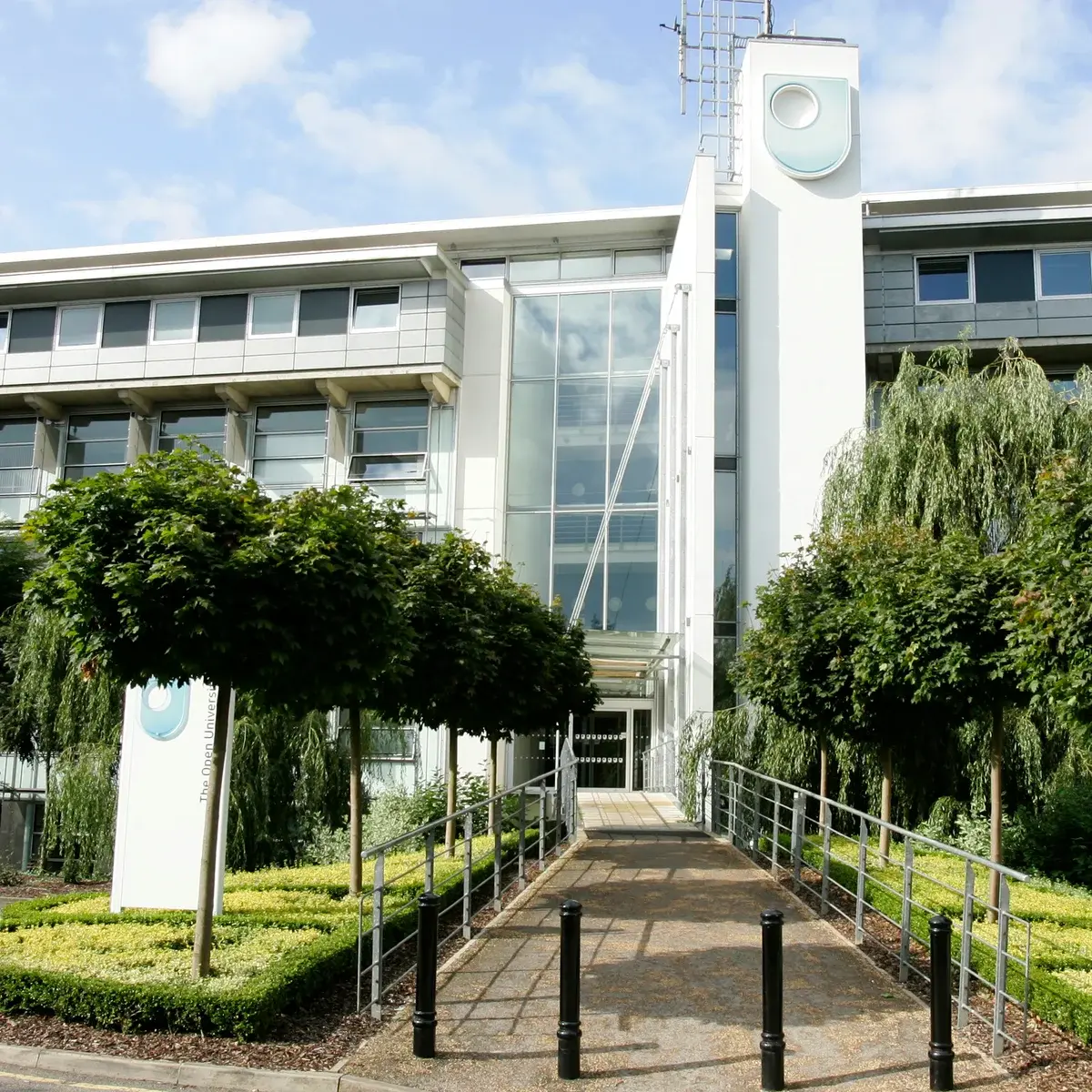
Campus Photos
The Open University
-Jun-30-2026-10-25-54-1174-AM.jpg)
About The Open University
The Open University: Flexible UK Degrees in Computing, Business, Psychology, Law and More
The Open University (OU) is one of the UK's best-known institutions for distance and flexible learning. Unlike a traditional campus university, the OU is designed around studying remotely, allowing students to earn a UK degree while continuing to live at home, work, or manage other commitments.
The university offers undergraduate and postgraduate programmes across areas including Computing, Artificial Intelligence, Data Science, Business, Economics, Psychology, Law, Engineering, Health, Education, Social Sciences, Arts and Languages.
The OU states that its degrees meet the same quality-assurance standards as traditional UK universities, while international students can study from their home country without necessarily paying the living costs associated with relocating to the UK.
What is The Open University Known For?
The Open University is particularly known for:
- Distance learning
- Flexible online education
- Computer Science
- Computing & IT
- Artificial Intelligence
- Data Science
- Business & Management
- Economics
- Psychology
- Law
- Engineering
- Health & Social Care
- Education
- Social Sciences
- Arts and Humanities
Computing & IT
The OU offers programmes covering areas such as:
- Computing
- Computer Science
- Software development
- Data
- Networks
- Cyber security
- Artificial intelligence
- Information technology
Students can build technical and analytical skills while studying remotely.
Artificial Intelligence & Data
Students interested in emerging technology can explore:
- Artificial Intelligence
- Data Science
- Machine learning
- Data analysis
- Statistics
- Computing
These areas can prepare students for careers in technology, data analysis, software, AI and digital services.
Business & Management
Business programmes cover areas such as:
- Business management
- Accounting
- Finance
- Economics
- Marketing
- Leadership
- Entrepreneurship
These can prepare students for careers in business, finance, management, consulting and marketing.
Psychology
Psychology is another major area of study.
Students can explore:
- Human behaviour
- Cognitive psychology
- Social psychology
- Research methods
- Psychological development
- Mental health
- Psychological research
Law
The OU also offers law-related study, allowing students to develop knowledge of:
- Legal systems
- Legal reasoning
- Law and society
- Legal research
- Public and private law
Students intending to become practising lawyers should separately check the professional qualification requirements of the country where they intend to practise.
Engineering & Technology
The university also offers engineering and technology-related qualifications, allowing students to study technical subjects through its flexible learning model.
Education & Social Sciences
Students can explore:
- Education
- Childhood and youth
- Sociology
- Politics
- Social policy
- Criminology
- International development
Arts & Humanities
Other areas include:
- English
- History
- Philosophy
- Languages
- Creative arts
- Religious studies
The Open University's Academic Model
The biggest difference between the OU and a conventional university is flexibility.
Students can structure their studies around their own circumstances rather than relocating to a university campus.
The university's model allows students to:
Study From Home + Work + Learn Flexibly + Earn a UK Degree
Students normally study individual modules, with the cost of the modules contributing to the overall qualification cost.
Quick Facts
- Location: Milton Keynes, England
- Study model: Distance and flexible learning
- International study: Available in many countries
- Undergraduate and postgraduate programmes
- Strong focus on independent learning
- Wide range of academic disciplines
- Students can study while working
- No need to relocate to a UK campus for many programmes
Q. Is The Open University a good university?
A. Yes, particularly for students who need flexibility. It is especially attractive for people who want a recognised UK qualification while remaining in their home country or balancing study with employment and other commitments.
The Open University Study Experience – Learn From Home
The OU's student experience is very different from that of a residential university.
Instead of attending daily lectures on campus, students generally study through:
- Online learning materials
- Digital resources
- Study guides
- Tutor support
- Online activities
- Assignments
- Examinations or assessments
Flexible Study
Students can choose a study intensity that fits their circumstances.
This makes the OU particularly useful for:
- Working professionals
- International students
- Parents
- Students changing careers
- People who cannot relocate
- Students who need flexible schedules
International Student Experience
International students can study an OU degree from their home country.
The university specifically highlights that students can earn a fully accredited degree while avoiding many of the costs associated with studying at a traditional UK campus.
No Traditional Campus Requirement
One of the biggest advantages is that students generally don't need to relocate to the UK for distance-learning programmes.
That means an international student can potentially avoid:
- UK accommodation
- Daily commuting
- Relocation costs
- Most UK living expenses
The OU estimates that studying from home can save international students around £900–£1,400 per month compared with living abroad for study.
Q. Can Indian students study at The Open University?
A. Yes. International students can study eligible OU programmes from outside the UK. Students should check whether their chosen qualification is available in their country and whether it meets any Indian professional or further-study requirements.
Careers & Employability – Study While Working
One of the biggest advantages of The Open University is the ability to study alongside employment.
Students can develop:
- Professional knowledge
- Independent learning
- Research skills
- Communication
- Analytical thinking
- Problem-solving
- Digital skills
- Time management
Career Areas
Depending on the degree, graduates can pursue careers in:
- Software development
- IT
- Data analysis
- Artificial intelligence
- Business
- Finance
- Accounting
- Marketing
- Management
- Psychology
- Education
- Social services
- Law-related fields
- Research
Career Development
The flexible model can be particularly useful for someone who is already working because they can potentially gain professional experience while completing their degree.
This can create a combination of:
Degree + Work Experience + Professional Skills
rather than requiring students to stop working for several years.
For Indian Students
The Open University can be particularly relevant for Indian students interested in:
Computer Science | Computing | AI | Data Science | Business | Psychology | Law | Engineering | Management
Its biggest advantage is that students can potentially earn a UK degree without moving to Britain.
Indian applicants should check:
- Academic requirements
- English requirements
- Country availability
- Qualification recognition
- Professional accreditation where applicable
- Examination arrangements
- Tuition fees
- Career plans in India
The OU itself recommends checking recognition requirements when using its qualifications outside the UK.
Q. Does The Open University provide placement opportunities?
A. The OU's model is primarily based on flexible study rather than a traditional campus placement year. Career support and employability resources are available, but students should check the individual qualification to determine whether it contains a formal work-placement component.
Q. Who should consider The Open University?
A. The OU is particularly suitable for students who want a flexible UK degree that can be completed while working or living outside the UK.
It may be less suitable for students who specifically want:
- Traditional campus life
- University accommodation
- Daily face-to-face lectures
- A large physical student community
- A conventional residential university experience
The Open University Courses – Computing, Artificial Intelligence, Data Science, Business, Psychology, Law and More
The Open University offers a wide range of undergraduate and postgraduate programmes through its distance-learning model. Students can study from home and structure their learning around work or other commitments.
Popular Subject Areas
Computing & IT
Students can study areas such as:
- Computing
- Computer Science
- Software development
- Information technology
- Cyber security
- Networks
- Databases
- Digital technologies
These programmes can prepare students for careers in software development, IT, systems, technology and digital services.
Artificial Intelligence & Data Science
Students interested in emerging technologies can explore:
- Artificial Intelligence
- Data Science
- Machine learning
- Data analysis
- Statistics
- Computing
These subjects can lead to careers in:
AI + Data + Technology + Analytics
Business & Management
The Open University offers programmes covering:
- Business management
- Accounting
- Finance
- Marketing
- Economics
- Leadership
- Entrepreneurship
Students can develop skills in:
- Business analysis
- Strategy
- Management
- Financial decision-making
- Marketing
- Communication
These can support careers in business, banking, finance, consulting and management.
Psychology
Psychology programmes explore areas such as:
- Human behaviour
- Cognitive psychology
- Social psychology
- Development
- Psychological research
- Research methods
Students can develop analytical and research skills applicable to psychology and wider graduate careers.
Law
Students can explore:
- Legal systems
- Legal reasoning
- Public law
- Private law
- Legal research
- Law and society
Students who intend to practise law should check the professional qualification requirements of the country where they intend to work.
Engineering
The Open University also provides engineering and technology-related study through its flexible learning model.
Students can develop knowledge in:
- Engineering principles
- Technology
- Design
- Systems
- Technical problem-solving
Education & Social Sciences
Students can study:
- Education
- Childhood and youth
- Sociology
- Politics
- Social policy
- Criminology
- International development
These programmes can prepare students for careers in education, government, social services, policy and research.
Arts & Humanities
Other subject areas include:
- English
- History
- Philosophy
- Languages
- Creative arts
- Religious studies
These programmes focus on:
- Critical thinking
- Research
- Communication
- Analysis
- Academic writing
Q. What Are the Best Courses at The Open University?
A. For students interested in technology, Computing, Computer Science, Artificial Intelligence and Data Science are particularly relevant. Other major areas include Business, Psychology, Law, Engineering, Education and Social Sciences.
The best option depends heavily on the student's career goal.
Student Experience at The Open University – Flexible Learning From Home
The Open University provides a very different experience from a conventional campus university.
Students generally learn through:
- Online study materials
- Digital resources
- Study guides
- Tutor support
- Online activities
- Assignments
- Examinations and assessments
Flexible Study
Students can organise their studies around:
Work + Family + Other Commitments + Education
This makes the OU particularly attractive to students who cannot commit to full-time campus study.
Online Learning
Students can access learning resources digitally and communicate with tutors and other students through online platforms.
The model encourages students to become independent learners while still receiving academic support.
International Student Experience
International students can study eligible OU qualifications from their home countries.
This means an Indian student can potentially complete a UK degree while remaining in India rather than relocating to Britain.
No Traditional Campus Requirement
For distance-learning students, there is generally no need to attend a UK campus every day.
This can significantly reduce the costs associated with:
- Accommodation
- Food
- Local transport
- Relocation
- Living in the UK
Q. What is student life like at The Open University?
A. It is primarily digital, independent and flexible rather than campus-based. Students who enjoy self-directed learning can benefit greatly from the model, while students looking for traditional university social life may prefer a residential university.
Careers & Employability – Building a Degree Around Your Career
The Open University's flexible structure can be particularly useful for students who want to gain professional experience while studying.
Students develop:
- Research skills
- Analytical thinking
- Communication
- Problem-solving
- Digital skills
- Independent learning
- Time management
Career Areas
Depending on the programme, graduates can pursue careers in:
- Software development
- IT
- Data analysis
- Artificial intelligence
- Business
- Finance
- Accounting
- Marketing
- Management
- Psychology
- Education
- Social services
- Policy
- Research
Work While Studying
One of the biggest advantages is that students can potentially combine:
Full-Time/Part-Time Work + Degree Study
This can allow students to graduate with both:
Academic Qualification + Professional Experience
Career Support
Students can access career-development resources to help with:
- Career planning
- CV development
- Job applications
- Interview preparation
- Skills development
- Further study
For Indian Students
The Open University can be particularly relevant for Indian students interested in:
Computer Science | Computing | Artificial Intelligence | Data Science | Business | Psychology | Law | Engineering | Management
The biggest advantage is the possibility of earning a UK degree without moving to the UK.
Indian applicants should carefully check:
- Academic entry requirements
- English-language requirements
- Country availability
- Tuition fees
- Qualification recognition
- Professional accreditation
- Examination arrangements
- Career plans after graduation
For regulated professions, students should always confirm recognition with the relevant Indian professional authority.
Q. Does The Open University provide placement opportunities?
A. The OU is primarily designed around flexible distance learning rather than the traditional placement-year model. Career support is available, but whether a formal placement is part of a qualification depends on the specific course.
Q. Who should consider The Open University?
A. It is particularly suitable for students who want a flexible UK qualification that can be completed while working or living outside the UK.
It may be less suitable for students who want:
- Daily face-to-face teaching
- University accommodation
- Traditional campus life
- Large physical student communities
- A conventional three-year residential experience
The Open University Fees – Tuition Costs, International Fees, Payment Structure and Financial Support
The Open University (OU) uses a module-based fee structure, rather than requiring students to pay the entire degree fee upfront. For 2026/27, the published undergraduate fee information shows a 360-credit honours degree costing £26,520 when studied at the standard part-time pace over six years, or £8,840 per year / £26,520 total when studied at a full-time pace over three years.
For international students, the OU states that fees vary by qualification and modules chosen, and that students pay as they study.
Tuition Fees for International Students
|
Study Level |
2026/27 Fee |
|
Certificate of Higher Education – 120 credits |
£8,840 total |
|
Diploma of Higher Education – 240 credits |
£17,680 total |
|
Honours Degree – 360 credits |
£26,520 total |
|
Full-time honours degree |
£8,840 per year |
|
Part-time honours degree |
£4,420 per year |
These figures are based on modules starting before 31 July 2027 and can increase in future years.
Undergraduate Degree Cost
For a typical 360-credit honours degree:
£8,840 × 3 years = £26,520
So a student studying at a full-time pace would pay approximately:
£26,520 for the full degree
This is substantially different from many UK campus universities because the OU's distance-learning model avoids the need for international students to pay UK accommodation and daily living expenses.
The OU estimates that international students studying from home can save an additional £900–£1,400 per month compared with living abroad for study.
Example: Computing & IT
The BSc Computing & IT currently has an indicative total cost of:
£24,528
for the 360-credit honours degree under the published 2026/27 fee structure.
The same published comparison shows:
- OU degree: £24,528
- Comparable campus-university cost: £29,370
- Indicative saving: £4,842
This makes Computing & IT one of the particularly attractive options for students looking for a flexible UK computing qualification.
Computer Science with Artificial Intelligence
The OU also offers BSc Computer Science with Artificial Intelligence, combining computing with AI-related study.
The exact total depends on the modules selected and the fee structure applicable to the qualification. Students should check the individual course page before applying.
Cyber Security
The BSc Cyber Security is another option for students interested in:
- Cyber security
- Networks
- Computing
- Digital systems
- Security
- Technology
The OU confirms that course fees cover tuition, assessment and study materials, while some additional costs may apply depending on the qualification.
What Does the Tuition Fee Include?
The OU states that module fees include:
- Tuition
- Assessment
- Examinations
- Study materials
Some additional costs are not included and vary by qualification.
Students may need to budget separately for:
- Laptop/computer
- Internet
- Books beyond included materials
- Software where required
- Travel for any face-to-face activity
- Personal expenses
- Examination-related travel where applicable
How Do You Pay?
One of the major advantages of the OU is that students pay for modules as they study them rather than paying the entire degree cost upfront.
Payment options can include:
- Debit/credit card
- Instalment arrangements
- Employer sponsorship
- Other eligible funding arrangements
International students can also make payments in euros or US dollars by bank transfer, with the applicable exchange rate used when registration is processed.
Scholarships and Financial Support
The Open University's funding options vary according to the student's location, circumstances and study route.
International Student Funding
International students should not assume that UK government funding will be available to them.
Instead, they should investigate:
- OU scholarships
- Country-specific funding
- Employer sponsorship
- External scholarships
- Payment plans
- Funding available in their home country
The OU provides dedicated information for international students about fees and funding.
Employer Sponsorship
Students who are already employed may be able to have some or all of their module fees paid by their employer.
The OU states that more than one in ten OU students are sponsored by their employer.
This can make the OU particularly attractive for working professionals.
Important Funding Note for International Students
The OU's Tuition Fee Loans and Part-Time Fee Grants shown on its main funding pages are primarily UK funding arrangements and should not be assumed to apply to international students living in India. Eligibility depends on residency and other rules.
The Open University for Indian Students – Fees and Overall Cost
For an Indian student, one of the biggest financial advantages is that the degree can be completed without relocating to the UK.
Instead of paying:
Tuition + London/UK accommodation + food + transport + relocation
the student can potentially pay:
OU Tuition + Internet + Laptop + Personal Study Costs
This can make the overall cost substantially lower.
Example
Suppose an Indian student completes an OU honours degree at the published full-time pace:
Tuition: £26,520
There is no requirement to add three years of UK accommodation and living expenses if the student studies from India.
This is one of the strongest financial arguments for choosing the OU.
The Honest Verdict – Is The Open University Worth the Cost?
The Open University is particularly attractive for students who want a recognised UK degree without the financial and practical burden of relocating to Britain.
The Open University Is an Excellent Choice If You...
- Want to study from India.
- Need flexible study.
- Want to work while studying.
- Want a UK qualification.
- Are interested in Computing.
- Want to study AI.
- Are interested in Cyber Security.
- Want to study Data Science.
- Are interested in Business.
- Want to study Psychology.
- Need a flexible Law programme.
- Want to reduce accommodation and living costs.
It May Not Be the Right Fit If You...
- Want traditional campus life.
- Want daily face-to-face lectures.
- Want university accommodation.
- Want a large physical student community.
- Prefer hands-on campus laboratories.
- Need a traditional residential university experience.
Frequently Asked Questions About Open University Fees
Q. How much does The Open University cost?
A. For 2026/27, a 360-credit honours degree is £26,520 at the published full-time pace, equivalent to £8,840 per year for three years.
Q. How much is a part-time degree?
A. At the published 2026/27 rate, a 360-credit honours degree costs approximately £4,420 per year over six years, giving a total of £26,520.
Q. How much is the BSc Computing & IT?
A. The published 2026/27 indicative total for the BSc Computing & IT is £24,528.
Q. Do I have to pay the whole degree fee upfront?
A. No. The OU charges students for individual modules as they study them.
Q. Can I study from India?
A. Yes. The OU offers international distance-learning opportunities, allowing eligible students to study from their home country.
Q. Do I need to pay for UK accommodation?
A. Not if you study from India. The distance-learning model allows you to remain in India, avoiding UK accommodation and most UK living expenses.
Q. Are study materials included?
A. Yes. The OU states that tuition, assessment, exams and study materials are included in module fees.
Q. Can I work while studying?
A. Yes, and this is one of the OU's biggest advantages. Its flexible model allows students to organise their study around employment and other commitments.
Q. Is The Open University cheaper than a campus university?
A. Its published 2026/27 figures show a 360-credit honours degree at £26,520, compared with a maximum campus-university tuition figure of £29,370 in the comparison shown by the OU. International students can potentially save considerably more overall because they don't need to pay UK living costs.
A Final Word – Why The Open University Deserves Your Consideration
The Open University offers a distinctive combination of:
UK Degree + Flexible Learning + Online Study + Lower Relocation Costs + Work-Study Flexibility
For 2026/27, the key published undergraduate figure is:
£26,520 for a 360-credit honours degree
when studied at the published full-time pace, equivalent to £8,840 per year for three years.
For the BSc Computing & IT, the published indicative total is £24,528.
For an Indian student, the biggest advantage is that you can potentially earn the UK qualification without moving to the UK, avoiding years of accommodation and living expenses.
Overall Verdict: The Open University is a strong option for students who prioritise flexibility, affordability and the ability to study from India, particularly in Computing, AI, Cyber Security, Business, Psychology and other subjects. Its biggest trade-off is that students do not receive the traditional residential university experience.
Entry Requirements
General Entry Requirement
IELTS 6.5 overall
Fees & Scholarships
Annual Tuition Fees
£11,750 to £23,200
Ready to Apply to The Open University?
Our advisors guide you from eligibility check to offer letter — at no cost to you.
Join our WhatsApp Community
.jpeg)
Scan to join our student community for admission updates & guidance