
Annual FeesUSD 64,000 - USD 80,000
South Dakota School of Mines & Technology
LocationUS
Entry RequirementIELTS 6.5 overall
Visa Success Rate60%
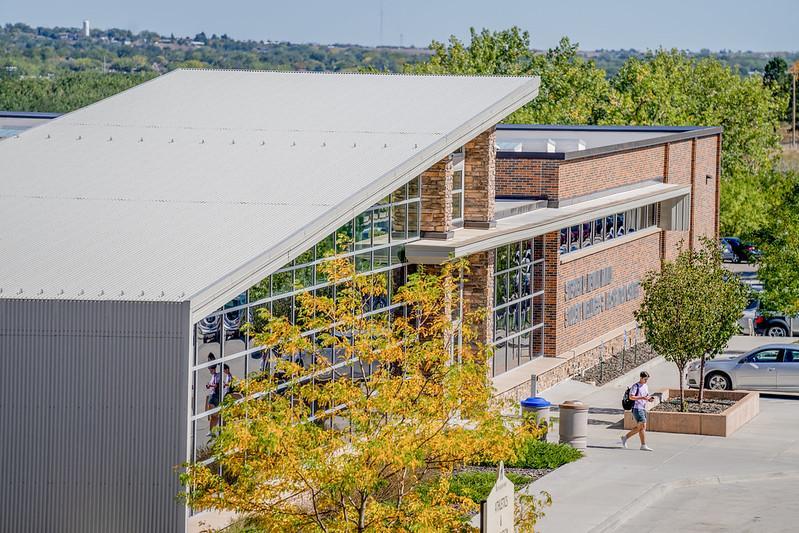
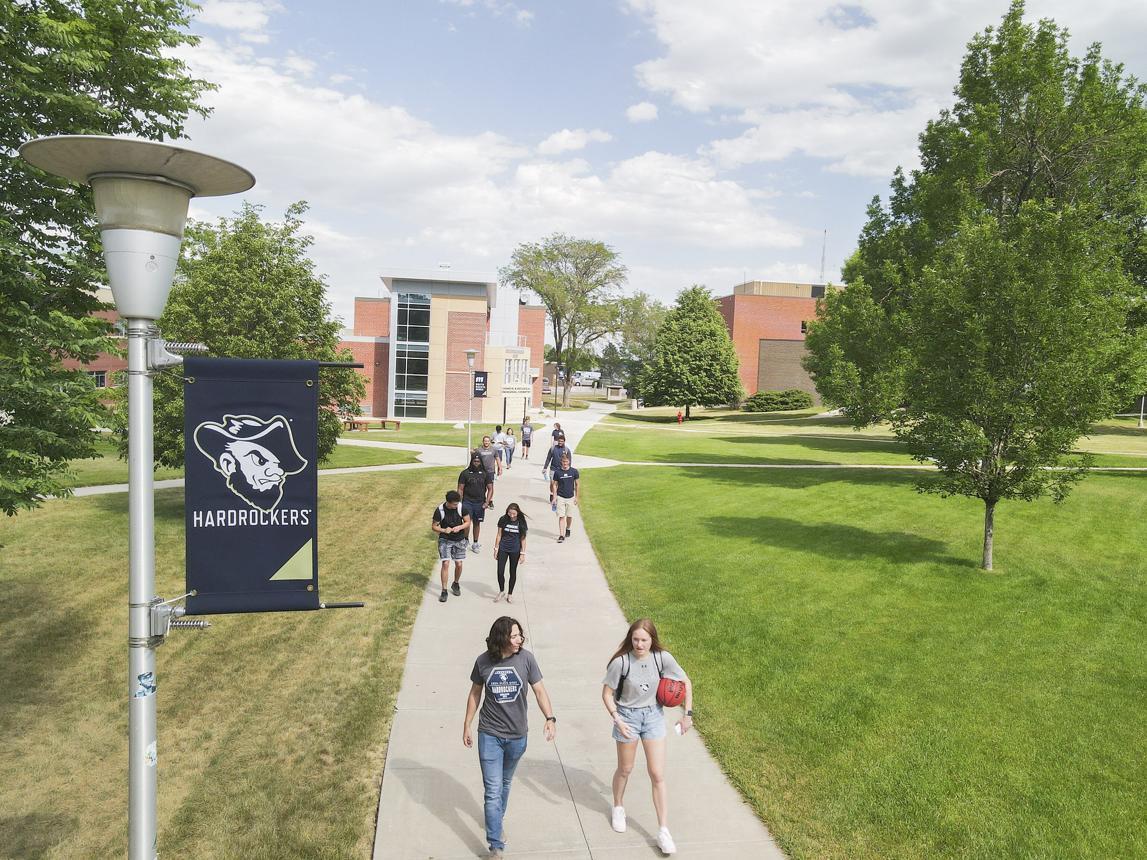
Campus Photos
South Dakota School of Mines & Technology
About South Dakota School of Mines & Technology
South Dakota School of Mines & Technology: Programs, Admission, Tuition Fees, Scholarships and Study in the USA
South Dakota Mines at a Glance
South Dakota School of Mines & Technology, commonly known as South Dakota Mines, is a public university located in Rapid City, South Dakota, United States. The institution specialises in science, engineering, mathematics, computing and technology-related education. It offers undergraduate and graduate programmes designed to prepare students for technical careers, research and further academic study.
The university provides an environment where students can develop scientific knowledge, practical skills and problem-solving abilities. Its emphasis on science, technology, engineering and mathematics makes it an option for international students interested in specialised technical education in the United States.
- Institution: South Dakota School of Mines & Technology
- Common name: South Dakota Mines
- Institution type: Public university
- Location: Rapid City, South Dakota, USA
- Study levels: Undergraduate and graduate
- Primary academic focus: Science, engineering, mathematics and technology
- International student support: Ivanhoe International Center
- Campus environment: Technical university in the Black Hills region
Students should confirm the availability of their intended degree, current admission requirements, fees and scholarship eligibility before submitting an application.
About South Dakota School of Mines & Technology
South Dakota Mines is known for its specialised approach to higher education, particularly in scientific and engineering disciplines. Rather than offering an equally broad range of programmes across every academic field, the university concentrates on technical subjects that require analytical thinking, laboratory learning and applied problem-solving.
Students can investigate degree options that align with interests such as computer science, engineering, geological sciences, chemistry, biology and physics. Depending on the programme, learning may include lectures, laboratory sessions, technical projects and research opportunities.
The university is located in Rapid City, a city in western South Dakota near the Black Hills. This setting can be relevant to students interested in geological sciences, environmental research and related disciplines.
International students receive assistance through the Ivanhoe International Center, which supports prospective and enrolled students with admission guidance and international student matters. Applicants should use the university's official requirements when planning their education and immigration documentation.
Academic Programs and Areas of Study
South Dakota Mines offers programmes across several technical and scientific disciplines. The precise degree titles, concentrations and admission requirements depend on the academic department and degree level.
Engineering
Engineering is a central area of study at South Dakota Mines. Students can explore disciplines such as mechanical, electrical, civil, chemical and industrial engineering, subject to current programme offerings.
Engineering programmes typically combine mathematics and scientific foundations with technical coursework and practical applications. Students may learn to analyse systems, design solutions, assess technical problems and apply engineering principles to real-world situations.
Prospective students should compare degree curricula carefully. Some engineering disciplines require specific prerequisite subjects, and students transferring from another institution should confirm how their previous coursework will be evaluated.
Computer Science
Computer science is an option for students interested in software, computing systems, algorithms and computational problem-solving. Study in this field can build a foundation for careers in software development, systems engineering, data-related work and other technology areas.
Students should review the curriculum to understand the balance between programming, mathematics, systems, theoretical computing and specialised electives. Applicants should also check whether their previous mathematics preparation meets the programme's expectations.
Technology careers evolve quickly, so students can benefit from combining their degree with projects, internships, collaborative work and continuous technical learning.
Geological and Mining Engineering Sciences
The university's location and technical focus make geological sciences and mining-related engineering important areas to explore. These disciplines can appeal to students interested in the Earth's structure, mineral resources, geological processes and the responsible development of natural resources.
Coursework may involve scientific analysis, field-based learning, laboratory work and engineering applications. Students considering these subjects should review the curriculum and investigate the facilities and learning opportunities available within their intended programme.
Chemical Engineering
Chemical engineering combines chemistry, mathematics, physics and engineering principles to understand and improve industrial processes. Students may study topics related to materials, process design, energy, manufacturing and chemical systems.
Applicants interested in this field should ensure that their prior education includes the necessary mathematics and science foundations. They should also check the current course sequence and laboratory requirements before applying.
Mechanical Engineering
Mechanical engineering focuses on the design, analysis and operation of mechanical systems. Students may encounter subjects such as mechanics, thermodynamics, materials, manufacturing and system design.
The discipline can prepare graduates for a variety of technical industries, depending on their skills and subsequent experience. Practical projects and technical communication can be valuable parts of professional development.
Electrical and Electronics Engineering
Students interested in electrical systems, electronics, power, controls and related technologies can investigate the university's electrical engineering options.
The field requires strong analytical and mathematical skills. Students should check programme prerequisites and the availability of relevant laboratory, project and research opportunities.
Civil and Environmental Engineering
Civil engineering relates to infrastructure, structures, construction and the systems that support communities. Environmental engineering and related studies address environmental challenges using scientific and technical methods.
Students interested in these areas should review the exact degree options available for their entry year and confirm any specialisation requirements. Career opportunities depend on the degree, professional experience and applicable licensing rules.
Physics, Chemistry and Applied Sciences
Students interested in fundamental science can explore programmes related to physics, chemistry and other scientific disciplines. These subjects can provide foundations for laboratory work, technical research, advanced study and specialised industry roles.
Scientific programmes often require mathematics, laboratory participation and careful interpretation of data. Applicants should examine the curriculum and consider whether they wish to enter the workforce after their bachelor's degree or pursue postgraduate research.
Biology and Related Sciences
Biology and related scientific subjects can appeal to students interested in living systems, laboratory methods and scientific investigation. Students should examine the current programme catalogue to identify available majors and determine whether the curriculum supports their intended career or postgraduate pathway.
Some laboratory, healthcare and research occupations require further qualifications beyond an undergraduate degree. Students should investigate the professional requirements of their intended occupation before selecting a course.
Mathematics and Statistics
Mathematics and statistics support many of the university's technical disciplines. Students studying these subjects can develop quantitative reasoning, modelling and analytical skills.
Mathematical preparation is particularly important for students planning to pursue engineering, computer science or other quantitatively demanding programmes. Applicants should review prerequisite requirements and seek academic advice if their previous coursework differs from the expected curriculum.
Graduate and Research Opportunities
Graduate students can investigate master's and doctoral programmes in eligible technical fields. Graduate study may involve advanced coursework, research, laboratory work or a combination of these activities.
Requirements can differ considerably by department. Applicants may need a relevant bachelor's degree, prerequisite coursework, academic transcripts, English proficiency results, recommendations and additional application materials.
Graduate assistantships may be available through individual departments. Availability and funding decisions are determined according to departmental needs and eligibility, so students should contact the relevant academic unit before relying on financial support.
Admission Requirements for International Students
South Dakota Mines has separate admission procedures for first-time undergraduate applicants, transfer students and graduate students. Applicants should identify the appropriate category and follow the current instructions for that route.
Undergraduate Admission
First-time international undergraduate applicants are generally expected to:
- Have a minimum high school GPA of 2.75 on a 4.0 scale or its recognised equivalent.
- Demonstrate English language proficiency or qualify for an approved exemption.
- Provide an acceptable SAT or ACT score, or complete the university's accepted Accuplacer mathematics assessment.
- Submit the required academic records.
- Complete the application and provide any additional documents requested by the university.
The university's published requirements specify minimum mathematics subscores of 520 on the SAT or 20 on the ACT for the relevant testing route. Applicants should confirm the latest testing and assessment policies before applying.
Students who intend to be considered for merit-based undergraduate scholarships should pay particular attention to the testing requirements, because the university's published international undergraduate guidance links scholarship eligibility to acceptable SAT or ACT results.
Transfer Admission
Students transferring from another college or university generally need a minimum 2.75 GPA at both the high school and postsecondary levels, subject to the university's current rules and applicable exceptions.
Applicants should submit the required academic transcripts and demonstrate English proficiency. They must also meet the university's mathematics readiness requirements or complete the accepted assessment.
The university evaluates transfer credit after admission. Students should not assume that every course completed at another institution will count toward their intended degree. The receiving department or academic adviser can help clarify course equivalencies and programme requirements.
Graduate Admission
Graduate admission requirements depend on the intended degree and department. Applicants typically need a recognised bachelor's degree and may need to demonstrate relevant academic preparation in their chosen discipline.
Some programmes may require a minimum undergraduate GPA, recommendations, a statement of purpose, a résumé or other supporting documents. Research-based programmes can have additional expectations relating to research interests or faculty supervision.
International applicants should review the requirements for their exact graduate programme rather than relying only on the general undergraduate admissions criteria.
English Language Requirements
International applicants whose native language is not English generally need to demonstrate English proficiency unless they qualify for an exemption recognised by the university.
South Dakota Mines publishes the following minimum scores for international undergraduate admission:
|
English proficiency test |
Published minimum score |
|
Duolingo English Test |
105 |
|
IELTS |
6.5 |
|
Pearson Test of English |
56 |
|
TOEFL iBT, 120-point scale |
79 |
|
TOEFL iBT, 6-point scale |
4.0 |
The university notes that minimum-score applicants may be required to complete English proficiency testing upon arrival. Accepted test formats and requirements may change, so students should verify the current policy before registering for an examination.
Certain applicants may qualify for an exemption based on citizenship, prior education or qualifying standardised test results. Exemptions are subject to university rules and should be confirmed directly.
Students who do not meet the English requirement should ask the university whether conditional admission or an approved pathway is possible. South Dakota Mines does not operate its own intensive English as a Second Language programme, although conditional admission may be available in specified circumstances.
How to Apply to South Dakota Mines
International applicants can organise their application through the following steps.
Step 1: Select a Programme
Review the university's undergraduate or graduate offerings and choose a degree that matches your academic background and career goals. Check the current programme description, prerequisites and entry-term availability.
Step 2: Submit the Application
Complete the relevant university application and provide accurate personal, educational and contact details. Check the applicable application fee and ensure that all required sections are submitted.
Step 3: Provide Academic Records
Submit the required high school or university transcripts, depending on your applicant category. Transfer applicants must provide the records specified by the university, including documentation from previous postsecondary institutions.
Applicants should follow the university's instructions for certified, official or electronic documents. Translations may be necessary when academic records are not in English.
Step 4: Meet Mathematics Requirements
First-time undergraduate applicants must satisfy the accepted mathematics requirement through the required SAT or ACT score or the university's Accuplacer mathematics assessment, as applicable.
Students should check the latest requirements before arranging a test. They should also understand the relationship between testing and scholarship eligibility.
Step 5: Submit English Proficiency Evidence
Provide the accepted English test results or documentation supporting an approved exemption. Students should verify that the score meets the current minimum for their application category.
Step 6: Monitor Your Application
Check your email and applicant portal for updates, missing-document notices and admission decisions. Respond promptly to requests from the Admissions Office.
Step 7: Prepare Financial Documentation
After admission, international students seeking an F-1 or J-1 visa must demonstrate sufficient financial resources for at least one academic year. The university requires appropriate financial documentation before issuing the relevant immigration document.
Students should follow the latest financial support certification instructions and ensure that their documents meet the university's requirements regarding dates, currency, translation and acceptable funds.
Step 8: Complete Immigration and Enrolment Procedures
Eligible students can proceed with the required immigration documentation and student visa process. They should also review orientation dates, housing arrangements, health insurance, registration instructions and payment deadlines before travelling.
Admission to the university does not guarantee visa approval. Students should allow enough time to complete the necessary procedures.
Tuition Fees and Cost of Attendance
Tuition is an important factor when comparing American universities. South Dakota Mines publishes estimated costs for international students based on typical annual credit loads. Actual expenses depend on study level, discipline-specific fees, accommodation and personal spending.
For the 2026–2027 academic year, the university estimates the following annual costs:
|
Expense |
Undergraduate |
Graduate |
|
Tuition and fees |
$18,200 |
$16,520 |
|
Living expenses |
$11,830 |
$14,930 |
|
Books and supplies |
$700 |
$700 |
|
Estimated annual total |
$30,730 |
$32,150 |
These are estimates, not guaranteed final bills. The undergraduate estimate is based on an average of 15 credit hours, while the graduate estimate uses an average of 9 credit hours.
The university's cost information states that living expense estimates include modest accommodation, food and required health insurance. The figures do not cover every personal or transportation expense. Students should budget separately for travel, clothing, additional personal needs and other costs that may apply to their circumstances.
Tuition can also differ by discipline because some technical programmes have additional per-credit fees. Undergraduate students may have mandatory technology-related fees. Applicants should review the fee schedule for their intended programme and entry year before making a financial commitment.
Scholarships and Financial Aid
International students should carefully investigate funding before applying to South Dakota Mines. The university states that it does not offer scholarships specifically designated for international students and that international students are not eligible for South Dakota Mines or federal loan programmes.
However, some funding opportunities may be available under particular conditions.
Undergraduate Merit Scholarships
First-time undergraduate applicants may qualify for merit-based university scholarships if they meet the relevant eligibility requirements. The university's published international admissions guidance states that applicants must be admitted before January 15 for the fall semester to be considered under the specified scholarship process.
The university does not offer spring merit scholarships under that guidance. Applicants should review the current scholarship information to confirm award amounts, eligibility, deadlines and testing requirements.
Transfer Student Scholarships
The university's published international undergraduate information states that transfer students do not currently have scholarships available through the specified international transfer route. Students transferring from another institution should therefore prepare a realistic budget without assuming they will receive a university scholarship.
Graduate Assistantships
International graduate students may be eligible for graduate assistantships. These opportunities are handled by academic departments, and availability depends on the programme, departmental needs and individual eligibility.
Students interested in assistantships should contact their intended department and ask about application procedures, funding amounts, work responsibilities and renewal conditions. An assistantship should not be included in a financial plan until the relevant funding has been confirmed.
Planning Your Budget
Students should calculate tuition, housing, meals, insurance, books, transportation and personal expenses. They should also consider currency exchange fluctuations and the possibility of unexpected costs.
Because international students cannot rely on federal student loans, arranging sufficient funding before arrival is particularly important. Students should check whether personal funds, family sponsorship, an education loan or another acceptable source can cover the required expenses.
Campus Facilities and Student Life
South Dakota Mines provides a campus environment focused on technical education, scientific exploration and collaboration. Students can participate in academic activities, student organisations, campus events and experiences connected to their programmes.
The university's location in Rapid City places students near the Black Hills region, which offers opportunities to explore the surrounding natural environment. Students interested in geology, earth sciences and outdoor recreation may find the region particularly relevant to their interests.
As with any university, the student experience depends on academic workload, personal interests, housing arrangements and participation in campus life. International students should research available residence halls, meal plans, transportation options and campus support services before arriving.
Students should also familiarise themselves with local weather conditions, healthcare arrangements and the practical needs of living in South Dakota. Planning these details can help reduce the challenges associated with moving to a new country.
International Student Support Services
The Ivanhoe International Center supports international students from the application stage through their time at South Dakota Mines. Its services help students understand admission procedures, financial documentation and immigration-related responsibilities.
International students should maintain regular communication with the university when questions arise about their immigration status, course registration, employment eligibility or programme changes.
Students should keep copies of their academic records, financial documents, immigration paperwork and university correspondence. They should also pay attention to deadlines related to registration, tuition payments and required reporting.
The university's international support team can direct students to the appropriate offices for academic questions, housing, health insurance and other student needs.
Career Preparation and Professional Opportunities
South Dakota Mines focuses on disciplines that support technical, scientific and engineering careers. Depending on their chosen programme, students can develop analytical reasoning, mathematical skills, laboratory experience, technical communication and problem-solving abilities.
Engineering and computing graduates may pursue opportunities in technology, manufacturing, infrastructure, software, energy and other sectors. Science graduates may explore laboratory work, research, environmental fields or advanced study. Specific opportunities depend on the student's qualification, experience, location and labour-market conditions.
Students can strengthen their preparation through academic projects, internships, research experiences and relevant technical activities when these opportunities are available. They should also investigate the professional qualifications or licensing requirements that apply to their intended career.
International students must understand the employment restrictions associated with their immigration status. They should consult the university's designated international student officials before accepting work or participating in an activity that may require employment authorisation.
Post-Graduation Opportunities in the United States
Eligible F-1 students may apply for Optional Practical Training, commonly known as OPT, subject to applicable federal immigration rules and the requirements of their programme.
OPT may allow eligible students to undertake temporary employment related to their field of study. Eligibility, application timing and the period of authorisation depend on the student's individual circumstances and the rules in effect when they apply.
Students should not assume that graduation automatically grants work permission or guarantees a job. They should consult the university's international student advisers and official U.S. government guidance when preparing post-graduation plans.
Students in eligible STEM fields may have additional options under the STEM OPT extension, but eligibility depends on the degree, employer and other regulatory requirements. Students should confirm their individual eligibility before relying on any extension.
Frequently Asked Questions
Is South Dakota School of Mines & Technology a public university?
Yes. South Dakota Mines is a public university in Rapid City, South Dakota, specialising in science, engineering and technology-related education.
What programmes can international students study?
Students can explore undergraduate and graduate programmes across engineering, computer science, geological sciences, chemistry, physics, mathematics and related technical fields. Current availability and admission requirements should be confirmed with the university.
How much does it cost international students?
For 2026–2027, estimated annual expenses are $30,730 for undergraduates and $32,150 for graduate students. These estimates include tuition and fees, living expenses, and books and supplies. Actual costs vary by programme and personal circumstances.
What GPA is required for undergraduate admission?
The published minimum for first-time undergraduate applicants is generally a 2.75 high school GPA on a 4.0 scale. Applicants must also meet the relevant English and mathematics requirements.
Is IELTS required?
Applicants whose native language is not English generally need to demonstrate proficiency unless they qualify for an approved exemption. The published IELTS minimum is 6.5, although accepted tests and requirements should be checked before applying.
Are scholarships available to international students?
The university states that it does not offer scholarships specifically for international students. Eligible first-time undergraduate applicants may nevertheless be considered for merit-based university scholarships under the published rules. Graduate assistantships may be available through academic departments.
Can international students apply for graduate assistantships?
International graduate students may be eligible for assistantships. Decisions are made by academic departments, so students should contact their intended department directly.
What financial documents are needed for an F-1 visa?
Students must demonstrate that they can fund at least one academic year of tuition, fees, insurance, books and living expenses. The university provides instructions on acceptable financial documents after admission.
Can students work in the United States after graduation?
Eligible students may apply for OPT under the applicable immigration rules. Additional STEM OPT options may be available to some qualifying graduates. Work authorisation is not automatic, and students should seek official guidance.
Conclusion
South Dakota School of Mines & Technology is an option for international students seeking a specialised education in engineering, computer science, science and related technical fields. Its focused academic environment, technical learning opportunities and international student support can help students work towards their educational and professional goals.
Before applying, students should confirm their intended programme's requirements, review the current cost of attendance, prepare the necessary academic and financial documents, and investigate the limited scholarship options available to them. A careful comparison of programme content, total cost and future career requirements will help students decide whether South Dakota Mines is the right fit for their plans.
Entry Requirements
General Entry Requirement
IELTS 6.5 overall
Fees & Scholarships
Annual Tuition Fees
USD 64,000 - USD 80,000
Ready to Apply to South Dakota School of Mines & Technology?
Our advisors guide you from eligibility check to offer letter — at no cost to you.
Join our WhatsApp Community

Scan to join our student community for admission updates & guidance