
Annual FeesUSD 20,000 - USD 35,000
Post University
LocationUS
Entry RequirementIELTS 6.5 overall
Visa Success Rate70%
Campus Photos
Post University
About Post University
Post University: Courses, Tuition Fees, Admissions and Student Life
Introduction
Post University is a private university located in Waterbury, Connecticut, United States. Founded in 1890, the institution has a long history of providing higher education and offers programs designed to help students develop academic knowledge, professional skills and career readiness. It provides both campus-based and online learning options, making it possible for students to explore different study formats according to their educational needs.
The university offers programs in business, nursing and health sciences, public service, education, arts and sciences, and other professional areas. Its academic structure includes undergraduate and graduate degrees, certificates and selected doctoral programs. Students can choose a course based on their previous education, interests and long-term career goals.
For international students considering higher education in the United States, Post University offers a campus experience in Waterbury as well as online study opportunities. However, students who need an F-1 student visa must pay particular attention to the eligibility of their intended program and its campus attendance requirements.
Before applying, prospective students should examine the university's admission criteria, tuition fees, accommodation options, English-language requirements and available financial assistance. These details are important for determining whether Post University is an appropriate choice.
About Post University
Post University is a private, four-year institution that focuses on providing a personalised educational experience. Its academic approach combines subject-specific instruction with opportunities to develop communication, analytical thinking, collaboration and practical problem-solving skills.
The university organises its academic offerings across four main schools: the Malcolm Baldrige School of Business, the John P. Burke School of Public Service and Education, the School of Arts and Sciences, and the American Sentinel College of Nursing and Health Sciences.
This structure allows students to explore a range of professional and academic disciplines. Business students can study organisational management and financial decision-making, while students in health-related programs can pursue specialised education in nursing and healthcare. Other options cover education, public service, technology-related subjects and the liberal arts and sciences.
Post University provides campus-based learning at its Waterbury location and a wide range of online programs. The flexibility of its delivery formats can be useful for students with different schedules and circumstances. Nevertheless, the availability of a particular degree, its tuition rate and its academic requirements depend on the program.
International applicants can access dedicated admissions guidance covering academic documents, English proficiency, financial evidence and immigration-related preparation. Students should confirm all requirements directly with the university before committing to an application.
Location and Campus
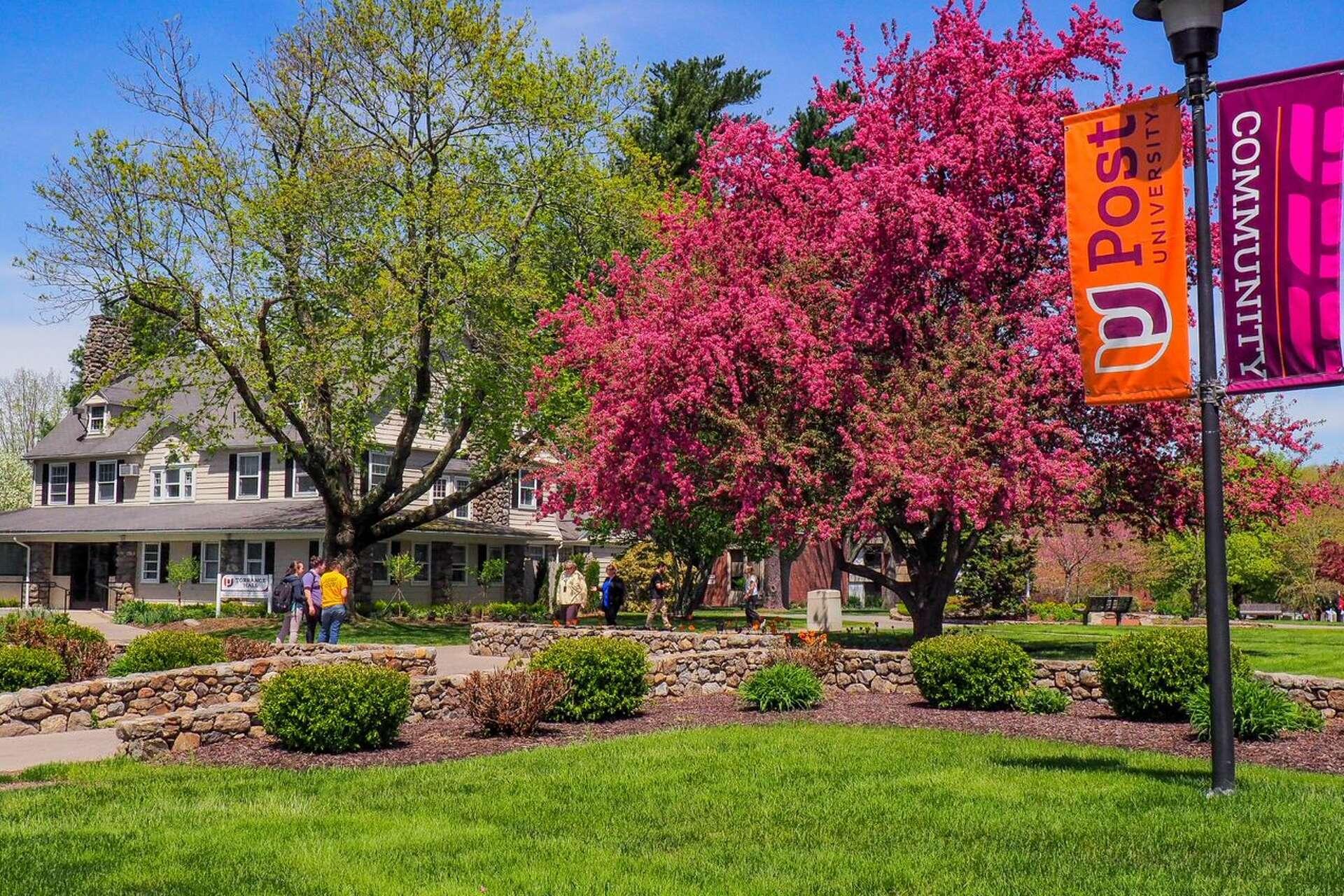
Post University's main campus is located at 800 Country Club Road in Waterbury, Connecticut. The campus provides an environment where students can attend classes, use academic facilities, participate in activities and connect with other members of the university community.
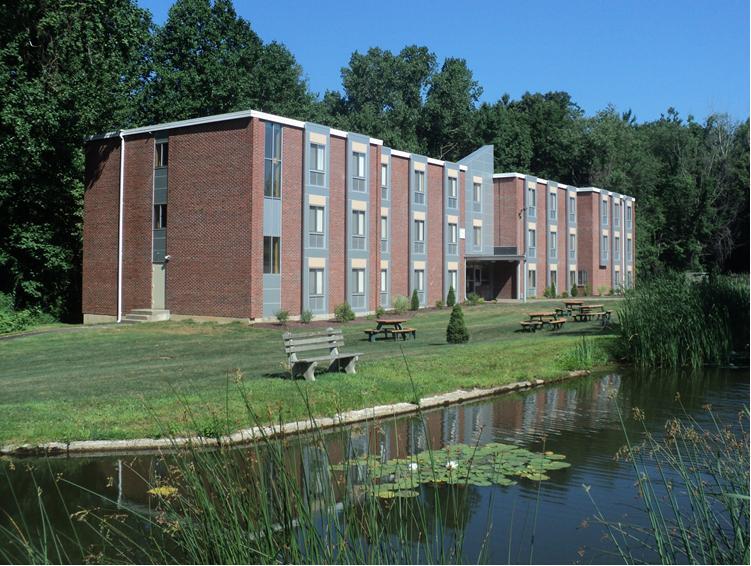
The university's campus includes academic buildings, residence halls, dining facilities, a library, recreational resources and student-support services. These facilities contribute to a traditional American campus experience, particularly for students who prefer to live and study in the same community.
Waterbury is a city in Connecticut within the broader New England region. Students can explore local services, shops, restaurants and cultural activities while studying. Travel to larger cities requires planning, and students should compare transportation options, travel times and costs before arranging trips.
International students travelling from overseas should organise their journey before arriving in the United States. They should confirm the university's orientation schedule, accommodation check-in dates and any transportation guidance provided by the international admissions office.
Students considering online study should review the delivery format and participation requirements of their chosen program. Online enrolment may provide greater scheduling flexibility, but it should not be assumed to qualify a student for an F-1 visa.
Courses and Academic Programs
Post University offers more than 50 academic programs through its campus-based offerings, alongside a broad selection of online degrees and certificates. Program availability, admission criteria and delivery formats vary, so students should consult the current academic catalogue before applying.
Business and Management
The Malcolm Baldrige School of Business offers programs in areas such as accounting, business administration, finance, marketing, management and other business-related disciplines.
These programs can help students understand how organisations operate, make financial decisions, manage people and develop strategies. Depending on the selected degree, coursework may cover accounting principles, marketing research, business communication, organisational behaviour and management practices.
Students interested in entrepreneurship can investigate subjects related to business planning, market analysis and the management of new ventures. Those interested in corporate careers may explore pathways in operations, human resources, financial services, marketing and administration.
Applicants should review the curriculum of their intended major to understand the balance between core subjects, electives and any practical learning requirements.
Nursing and Health Sciences
The American Sentinel College of Nursing and Health Sciences offers programs for students interested in healthcare and nursing-related fields. Its offerings include different levels of study, with eligibility depending on the student's prior education and professional background.
Nursing and health sciences programs can involve specialist knowledge, evidence-based practice, healthcare systems and patient-focused professional responsibilities. Some qualifications are designed for students entering a profession, while others support experienced healthcare workers seeking advanced education.
Applicants should check whether their intended program requires an existing nursing qualification, a current professional licence, clinical experience or other prerequisites. International students who completed nursing education outside the United States may need an academic credential evaluation.
Professional recognition is another important consideration. Completing a degree does not automatically grant permission to practise as a nurse or other regulated healthcare professional. Students should verify the licensing and qualification-recognition requirements of the state or country where they plan to work.
Education and Public Service
The John P. Burke School of Public Service and Education offers programs related to education, public service and associated professional fields.
Students may explore subjects connected with educational practice, organisational leadership, public administration and community services, depending on the current course catalogue. These areas can help students develop communication, planning, decision-making and leadership skills.
Education-related programs may be relevant to people interested in teaching support, educational administration or professional development. Students pursuing teaching credentials should confirm whether their chosen program meets the requirements of the jurisdiction where they intend to teach.
Public service programs may appeal to students who want to understand institutions, public organisations and the delivery of services to communities. Career opportunities depend on the degree, relevant experience and requirements of the intended employer.
Arts and Sciences
The School of Arts and Sciences offers academic options across a range of subjects, including disciplines connected with the humanities, social sciences and natural sciences.
Depending on current availability, students can explore areas such as psychology, criminal justice, communication, general studies and related academic fields. These subjects can develop research, analytical thinking, writing and interpersonal communication skills.
Students should examine the course structure and elective options to determine how a degree fits their intended career or plans for further education. Some career pathways may require additional qualifications or professional certification beyond an undergraduate degree.
Technology and Career-Focused Study
Students interested in technology or applied professional skills should investigate the university's current program catalogue for relevant degrees and concentrations. The precise availability of computing, technology and STEM-designated programs depends on the current academic offering.
Technology-focused study can be valuable for students seeking to develop digital literacy, analytical abilities and practical skills. Applicants should confirm the exact degree title, curriculum, admission prerequisites and delivery format before selecting a program.
Post University Tuition Fees and Cost of Attendance
Tuition fees at Post University vary by degree level, school, delivery format and enrolment status. Campus-based students and online students may pay different rates, so applicants should compare the correct fee schedule for their intended program.
For new full-time undergraduate students studying on the main campus, the published tuition for fall 2026 through spring 2027 is approximately USD 35,736. This figure represents tuition rather than the complete cost of attending the university.
Additional campus expenses can include student service and technology fees, laboratory or art-related charges where applicable, accommodation, meal plans, books, health insurance and personal expenses. The cost of housing depends on the residence hall and room arrangement, while meal-plan costs vary according to the selected option.
Post University's published cost-of-attendance budget has estimated a total of USD 48,684 for a typical full-time main-campus undergraduate academic year using its earlier published budget. That figure should not be treated as a confirmed 2026–2027 total because tuition and other charges may have changed. Students should calculate a current budget using the latest tuition, fee, housing and meal-plan information.
Online programs use different tuition schedules, often charging by credit hour. Certain programs, including those in early childhood education and child studies, may have separate rates. Students who intend to study online should calculate their expenses using the correct program-specific rate rather than the campus undergraduate tuition figure.
International students should also consider travel, immigration-related expenses, accommodation deposits, health insurance and other costs that may arise before classes begin. A complete financial plan should distinguish direct university charges from living expenses and personal spending.
Admission Requirements
Admission requirements at Post University depend on the selected degree, applicant category and previous educational background.
International undergraduate applicants generally need to submit a completed application and evidence of secondary school completion or equivalent qualifications. Students applying to graduate programs must meet the academic requirements for their intended degree.
International applicants may need to prepare the following documents:
- A completed university application.
- Official secondary school transcripts for associate or bachelor's programs.
- Transcripts from all previously attended colleges or universities, where applicable.
- English translations of academic documents issued in another language.
- English-language proficiency results when required.
- Passport identification and financial documentation for international student processing.
- Additional documents requested by the chosen program.
Foreign academic records may need to be evaluated to establish their equivalence to US educational standards. Students seeking transfer credits from institutions outside the United States should review the university's requirements for course-by-course credential evaluation.
Post University's main-campus undergraduate admissions process allows applicants to provide an attestation of high school graduation or equivalent for provisional acceptance, subject to its applicable procedures. Official transcripts and proof of graduation are required for final acceptance.
Applicants should follow the requirements for their exact program and submit documents by the requested deadlines. Meeting general admission criteria does not guarantee admission to every specialised program.
English-Language Requirements
International applicants whose native language is not English may need to demonstrate proficiency through an approved examination or another accepted verification method.
Post University's published minimum English-language test scores for undergraduate programs include:
- TOEFL iBT: 75.
- IELTS: 5.5.
- Duolingo English Test: 95.
- PTE Academic: 50.
- Cambridge English: 176.
Graduate programs generally require higher scores. Published minimums include TOEFL iBT 80, IELTS 6.5, Duolingo English Test 105 and PTE Academic 53. The Master of Science in Nursing nurse practitioner specialisations have additional English requirements.
These are published minimum benchmarks and should be verified against the latest admissions policy before an applicant books an examination. Test results must be submitted according to the university's instructions.
Post University may accept proof that an applicant's previous education was delivered in English under specific conditions. Eligibility depends on the student's educational history and the university's current policy. Applicants should request confirmation from the admissions office rather than assuming that an English-medium qualification automatically provides an exemption.
Students who do not meet the required English level may be able to investigate the university's English Language Institute and applicable pathway options. Availability, eligibility and additional costs should be confirmed before applying.
How to Apply to Post University
International students can organise the application process into several steps.
Step 1: Select a program. Choose an associate, bachelor's, master's or other eligible degree based on your academic background and career objectives. Confirm whether it is offered on campus or online.
Step 2: Review the entry requirements. Check academic qualifications, English proficiency, program-specific conditions and application deadlines.
Step 3: Prepare academic records. Gather transcripts, certificates and proof of graduation. Arrange English translations and credential evaluations where required.
Step 4: Submit the application. Complete the university's application process and provide all required supporting documents.
Step 5: Respond to admissions requests. Monitor your email and application communications for requests for further information, interviews or missing records.
Step 6: Review your admission decision. If accepted, read the offer carefully and confirm enrolment deadlines, deposits and any conditions attached to your admission.
Step 7: Complete international student requirements. Main-campus students seeking an F-1 visa must follow the university's instructions for submitting passport information, a Declaration of Finances and proof of sufficient financial resources before the university can issue the Form I-20.
Step 8: Prepare for arrival. Arrange accommodation, travel, required health documentation and participation in orientation. Students should also check any university requirements that must be completed before moving into campus housing.
International applicants should begin the process early to allow sufficient time for transcript evaluation, English testing, financial documentation and visa arrangements.
Scholarships and Financial Assistance
Post University encourages students to investigate scholarships and other financial assistance options that may help reduce the cost of their education.
Available funding depends on the student's program, academic background, enrolment category and the terms of each award. Some scholarships may have academic requirements, deadlines or renewal conditions. Other forms of financial assistance may be restricted to eligible US students, so international applicants should confirm which opportunities are available to them.
Students should contact the university's financial aid or admissions team to ask about current scholarships, eligibility, application procedures and payment arrangements.
When comparing financial assistance options, applicants should determine whether an award applies to tuition only or can also help with other eligible educational expenses. They should also check whether the scholarship continues for multiple terms and what academic performance is required to retain it.
A scholarship should not be treated as guaranteed funding until the university formally confirms the award. Students should prepare a financial plan that accounts for the remaining tuition, fees, accommodation, meals, insurance, books and personal expenses.
Accommodation and Living in Waterbury
Post University provides campus accommodation for eligible students through several residence halls. The university's campus housing options include West Hall, South Hall, East Hall, Middle Hall, Paparazzo Hall and Okinaga Hall. Certain upper-year and graduate students may also investigate other accommodation arrangements described by the university.
Living on campus can make it easier to attend classes, access student services and participate in campus activities. Residence halls also provide opportunities to meet fellow students and become involved in the university community.
Housing costs vary according to the residence hall, room type and meal plan. Students should review the current accommodation rates, application deadlines, deposit requirements and housing contract conditions before making arrangements.
Students considering off-campus housing should compare rental prices, utilities, transport, food and other living expenses. They should also consider commuting time and the terms of any rental agreement.
International students should arrange their accommodation before arriving in the United States whenever possible. Main-campus students may also need to submit approved health documentation and meet immunisation requirements before moving into a residence hall.
A realistic monthly budget can help students manage housing, food, transportation, telephone service, study materials and unexpected expenses throughout the academic year.
Student Life at Post University
Student life at Post University includes academic activities, student organisations, recreational facilities, campus events and opportunities to connect with other students.
The university offers clubs and organisations for students with different interests, including the Student Government Association, the Honors Club and the International Students Club. Participation in these groups can help students develop friendships, practise communication skills and gain experience in leadership and teamwork.
The campus provides spaces for studying, dining, recreation and social interaction. Students can also investigate the resources available through the library, fitness facilities, health services and other student-support departments.
For international students, orientation and dedicated support services can help make the transition to studying in the United States easier. Learning about campus procedures, local transportation and available support resources early can help students settle into their new environment.
Post University's Waterbury location also provides access to local shops, restaurants and cultural activities. Students can explore the surrounding community while balancing their academic commitments and personal budgets.
A successful university experience involves more than attending classes. Students can benefit from participating in appropriate activities, seeking help when needed and maintaining a balanced routine.
Career Development and Employment Opportunities
Post University's career-focused academic programs can help students develop knowledge and skills relevant to professional employment or further education.
Business students may investigate opportunities in accounting, management, marketing, operations and related areas. Students in education or public service can explore professional pathways connected with learning environments, community organisations and administrative roles. Nursing and health sciences students must consider the additional professional qualifications and licensing requirements associated with their intended careers.
Career preparation can involve developing a résumé, practising interviews, researching employers and gaining relevant experience through appropriate academic or professional activities. Students should investigate the career services available through the university and their academic departments.
The value of a degree depends on more than its title. Employers may consider relevant skills, professional experience, academic performance, licensing status and the requirements of the specific position.
International students must follow US immigration rules governing employment. Work authorisation depends on immigration status and the nature of the employment. Students should consult the university's international student advisers before accepting work or an internship that may require authorisation.
Students intending to return to their home country should also investigate whether their chosen qualification is recognised by employers or professional bodies in their intended employment market.
Why Choose Post University?
Post University may be suitable for students seeking a private institution with a range of professional programs and both campus-based and online study options.
Its academic schools cover business, nursing and health sciences, education, public service, arts and sciences. This selection allows students to investigate different educational pathways according to their interests and career goals.
The Waterbury campus provides a traditional university environment with residence halls, dining facilities, academic buildings and student organisations. Online programs can offer additional flexibility for students whose circumstances are better suited to remote study.
International admissions support can help eligible applicants understand the requirements for academic documents, English proficiency and financial certification. Students should also compare the total cost of attendance and any available financial assistance before making a final decision.
Ultimately, Post University's suitability depends on the student's intended degree, budget, preferred learning format and career objectives. Applicants should compare the specific program with similar offerings at other institutions and confirm all relevant requirements before enrolling.
Frequently Asked Questions
Is Post University a public or private university?
Post University is a private university located in Waterbury, Connecticut, United States. It offers campus-based and online educational programs.
How much is the tuition fee at Post University?
For new full-time campus undergraduate students, published tuition for fall 2026 through spring 2027 is USD 35,736. Additional fees, housing, meals, insurance and other expenses may apply. Online tuition rates differ by program.
Does Post University accept international students?
Yes. Post University has an international admissions process and provides guidance on academic records, English-language requirements and financial documentation.
What English test scores are required?
Published undergraduate minimums include TOEFL iBT 75, IELTS 5.5, Duolingo English Test 95 and PTE Academic 50. Graduate programs generally require higher scores, and some nursing specialisations have additional requirements.
Can international students live on campus?
Yes. The university provides several residence halls for eligible students. Housing availability, costs and requirements should be confirmed before applying.
Does Post University offer online courses?
Yes. Post University offers a wide selection of online programs. However, students who need an F-1 visa should confirm that their intended program and attendance format qualify for that immigration pathway.
What documents are needed for an F-1 visa application through the university?
Main-campus international applicants generally need an admission decision, passport information, a completed Declaration of Finances and acceptable evidence of sufficient financial resources before the university can issue a Form I-20. Students must then follow the applicable US visa procedures.
Conclusion
Post University offers international students a range of academic options in business, nursing and health sciences, education, public service, arts and sciences, and related fields. Its combination of campus-based and online learning formats can appeal to students with different educational needs.
Before applying, prospective students should confirm the requirements for their chosen program, review current tuition and living costs, investigate eligible scholarships and arrange suitable accommodation. International applicants should also understand the English-language requirements and financial documentation needed for their intended study format.
By evaluating these factors carefully, students can decide whether Post University aligns with their academic interests, financial circumstances and long-term professional goals.
Entry Requirements
General Entry Requirement
IELTS 6.5 overall
Fees & Scholarships
Annual Tuition Fees
USD 20,000 - USD 35,000
Ready to Apply to Post University?
Our advisors guide you from eligibility check to offer letter — at no cost to you.
Join our WhatsApp Community
Scan to join our student community for admission updates & guidance