
Annual FeesUSD 40,000 - USD 54,000
Moore College of Art & Design
LocationUS
Entry RequirementIELTS 6.5 overall
Visa Success Rate70%
Campus Photos
Moore College of Art & Design
About Moore College of Art & Design
Moore College of Art & Design: Courses, Tuition Fees, Admissions, Scholarships and Student Life
Introduction
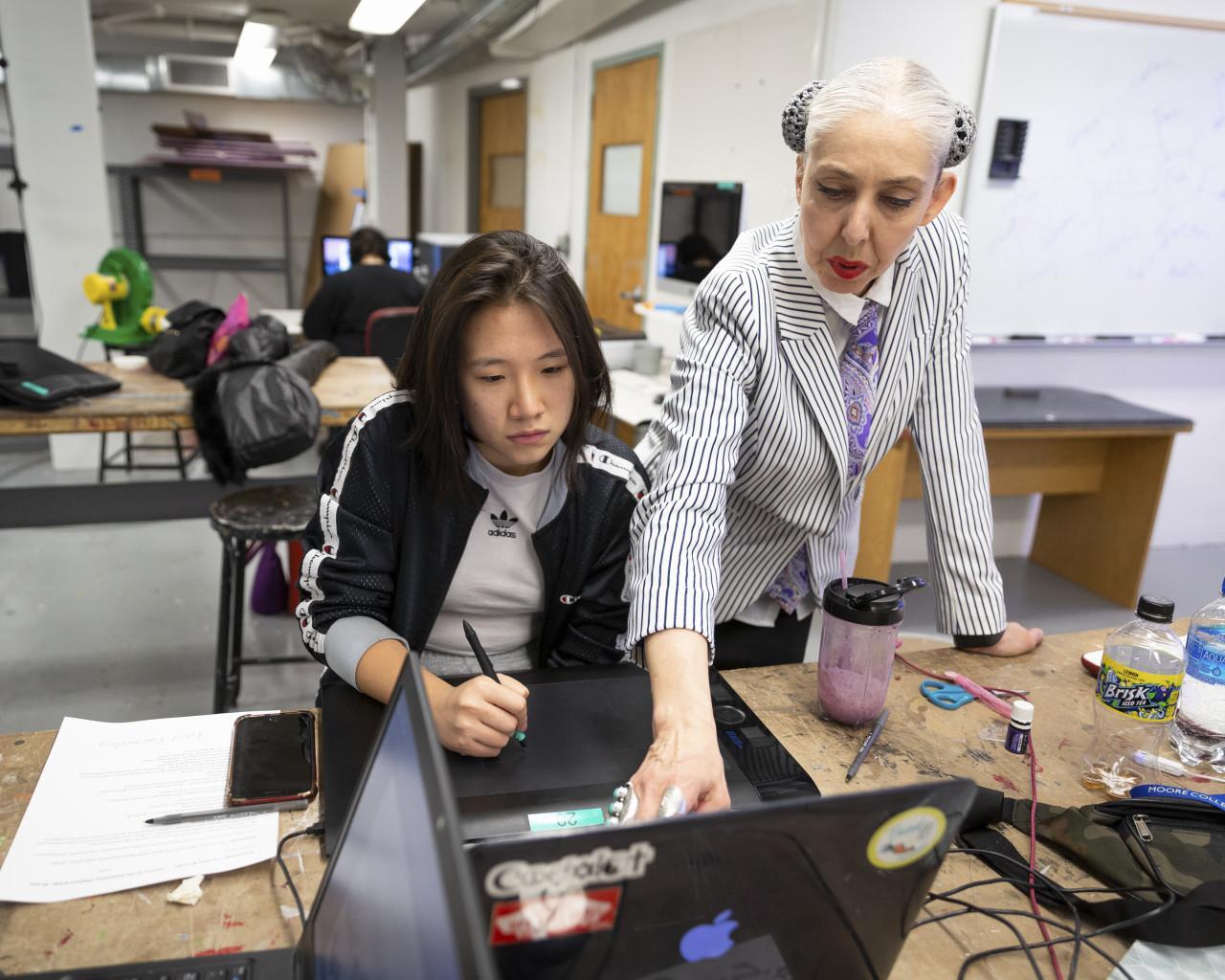
Moore College of Art & Design is a specialist art and design institution located in Philadelphia, Pennsylvania, United States. Founded in 1848, the college has a long history of preparing students for careers in creative industries. Its educational approach combines artistic exploration, practical studio learning, professional development and opportunities to develop a distinctive creative identity.
Unlike universities that offer a broad range of academic disciplines, Moore concentrates on visual arts, design and related creative fields. Students can explore subjects such as animation, fashion design, graphic design, illustration, fine arts, interior design, photography and film. This focused environment allows students to work closely with faculty members, build technical skills and develop portfolios that demonstrate their abilities to prospective employers and clients.
The college is situated in Philadelphia's Museum District, an area known for its cultural institutions, galleries, historical attractions and creative communities. Its location provides students with opportunities to engage with the city's artistic environment while pursuing a career-focused education.
For international students considering an art and design degree in the United States, Moore College of Art & Design is an option worth exploring. Applicants should carefully review the available programs, portfolio requirements, tuition costs, scholarship opportunities and international admission procedures before making a decision.
About Moore College of Art & Design
Moore College of Art & Design was established in 1848 with a mission centred on expanding educational opportunities in art and design. It developed a reputation as a specialist institution dedicated to helping students transform creative interests into professional capabilities.
The college combines traditional artistic foundations with contemporary design practices and emerging technologies. Students are encouraged to experiment, think critically, solve problems and communicate ideas through visual work. Rather than concentrating exclusively on theory, its programs place significant emphasis on studio projects, practical assignments, critiques and the development of a professional portfolio.
Moore has historically focused on women's education and continues to maintain a distinctive identity within American art and design education. Its current undergraduate admissions policy welcomes qualified applicants of all genders, providing an inclusive environment for students pursuing creative careers.
The college offers undergraduate Bachelor of Fine Arts programs, graduate study in art education, post-baccalaureate opportunities and continuing education courses. Its academic offerings are designed for different stages of creative development, from students beginning their undergraduate education to professionals and educators seeking additional skills.
The institution's career-oriented philosophy is particularly relevant for students who want to understand how artistic ability can translate into employment, independent practice, entrepreneurship or further study.
Location and Campus
Moore College of Art & Design is located at 1916 Race Street, Philadelphia, Pennsylvania 19103, United States. Its position in the city's Museum District places students close to cultural attractions, public art, galleries, museums and other creative resources.
Philadelphia offers an interesting setting for studying art and design because it combines historical architecture and established cultural institutions with contemporary creative businesses. Students can encounter a wide range of artistic styles, design approaches and cultural influences beyond the classroom.
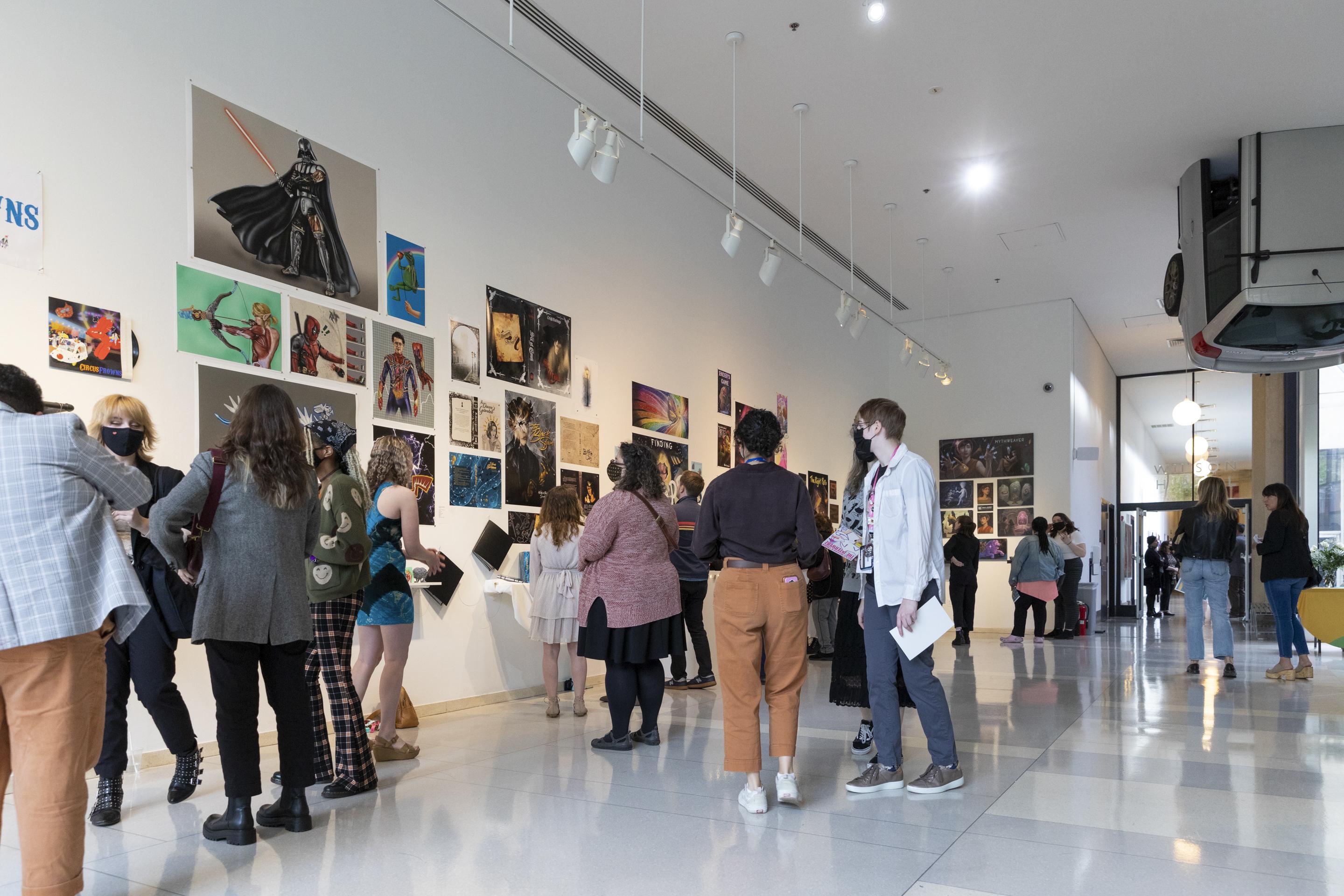
The campus provides an environment for studio-based education, project development, academic study and collaboration. Facilities and learning resources support students as they experiment with materials, use creative technologies and produce work related to their chosen disciplines. The college also operates The Galleries at Moore, providing a dedicated space for contemporary art and exhibitions.
Students can benefit from observing exhibitions, attending cultural events and connecting with the wider creative community. These experiences can help them develop a stronger understanding of the relationship between artistic ideas, audiences and professional practice.
Philadelphia also offers public transportation, shopping areas, restaurants, entertainment and access to other parts of the city. However, students should research accommodation, transportation expenses and neighbourhood options before choosing where to live.
Courses and Academic Programs
Moore College of Art & Design offers specialised programs for students interested in creative disciplines. Its undergraduate Bachelor of Fine Arts degrees combine focused study in a major with broader coursework intended to strengthen communication, critical thinking and contextual understanding.
The college's undergraduate majors include the following areas.
Animation & Game Arts
Animation & Game Arts is suited to students interested in developing animated content, visual storytelling, character concepts and interactive experiences. Students can explore the creative and technical processes involved in animation and game-related production.
Potential career directions include animation, game art, concept development, visual development and related digital media roles. Students should examine individual course plans to understand the balance of artistic foundations, software skills and production work.
Art Education
Art Education prepares students interested in teaching and supporting artistic development. The field combines art practice with educational approaches, learning methods and the communication of creative ideas.
Graduates may explore teaching-related opportunities, educational programming and community arts work, subject to the professional qualifications and licensing requirements applicable to their intended roles.
Immersive Experience Design
Immersive Experience Design focuses on creating engaging experiences that may combine spatial design, visual communication, technology and storytelling. It can appeal to students interested in how audiences interact with environments and designed experiences.
Possible career interests include experiential design, exhibition environments, interactive installations and related creative production.
Fashion Design
Fashion Design introduces students to the creative and practical dimensions of clothing and fashion development. Areas of study may include design concepts, garment construction, materials, illustration and the presentation of fashion ideas.
Potential career paths include fashion design, product development, fashion illustration and related industry roles. Students should develop a portfolio that demonstrates originality, technical understanding and awareness of their intended market.
Film & Digital Cinema
Film & Digital Cinema is relevant to students who want to communicate stories through moving images. The field can involve visual storytelling, filmmaking techniques, digital production and the development of creative media projects.
Possible directions include film production, editing, digital content creation and other screen-based creative roles. Applicants should review the program's specific portfolio alternatives and application instructions.
Fine Arts
Fine Arts allows students to investigate artistic expression through a range of materials, techniques and concepts. Students can develop their own creative practice while exploring visual ideas, experimentation and contemporary artistic approaches.
Potential directions include independent artistic practice, exhibitions, community arts, creative commissions and further study.
Graphic Design
Graphic Design focuses on visual communication and the organisation of information through typography, imagery, layout and design systems. Students interested in branding, editorial design, digital communication and visual identity may find this major relevant.
Career opportunities can include graphic designer, brand designer, visual communication designer and related creative positions. A strong portfolio should show both visual quality and the ability to solve communication problems.
Illustration
Illustration is suitable for students who want to communicate ideas and narratives through images. The discipline can support work across publishing, editorial content, advertising, entertainment and digital media.
Students can develop a personal illustration style while learning to respond to different creative briefs and audiences. Possible career directions include freelance illustration, publishing, concept art and visual storytelling.
Interior Design
Interior Design explores how indoor environments are planned and developed to respond to functional, aesthetic and human needs. Students may investigate spatial planning, materials, design communication and the relationship between people and their surroundings.
Career paths can include interior design and related spatial design roles. Professional practice requirements vary by location, so students should check the credentials needed in their intended employment market.
Photography
Photography prepares students to communicate ideas through still images and related visual practices. Students can investigate photographic techniques, image-making, visual narratives and contemporary photographic applications.
Potential opportunities include commercial photography, editorial work, portraiture, visual content production and further artistic study.
Alongside these majors, Moore offers minors and additional educational options. Program availability, course structures and degree requirements can change, so applicants should confirm the current curriculum before applying.
Tuition Fees and Cost of Attendance
Tuition is one of the most important factors to consider when planning to study at Moore College of Art & Design. The college is a private specialist institution, and its costs should be evaluated alongside the resources, program structure and career opportunities offered.
For the 2026–2027 academic year, published undergraduate tuition is approximately US$54,018 per year. This figure represents tuition and should not be treated as the complete cost of studying in Philadelphia.
Students may also need to budget for mandatory fees, housing, meals, transportation, health insurance, books, art materials, software, personal expenses and travel. Creative programs can require particular supplies or equipment, so applicants should ask whether their intended major has additional costs.
International students should also account for visa-related expenses and the cost of travelling between the United States and their home country. Exchange-rate movements may affect the final amount paid in their home currency.
Because annual charges can change, students should consult the college's latest tuition and cost-of-attendance information before preparing a financial plan. They should also request a personalised estimate that reflects their program, housing arrangements and financial aid eligibility.
Admission Requirements
Admission to Moore College of Art & Design involves an assessment of academic preparation and creative potential. For undergraduate applicants, the college considers the application materials together rather than relying on grades alone.
Typical first-year application materials include a completed application, high school transcripts and a portfolio containing approximately eight to twelve pieces of original artwork. Applicants may submit through the college's online application or the Common Application, following the instructions for their intended entry term.
The portfolio is an important part of the application because it gives the admissions team an opportunity to evaluate artistic ability, experimentation, observation and creative development. Applicants should select work that represents their strongest abilities and demonstrates a range of approaches where possible.
Students are encouraged to review the requirements for their chosen major. Some programs have alternative portfolio options, and Interior Design applicants may have an essay-based alternative under the college's stated guidance.
Academic expectations vary according to the applicant's educational background and program. Students should provide accurate transcripts and any additional documentation requested during the review process.
Transfer applicants generally need to provide transcripts from previous colleges as well as high school records or equivalent documentation. Portfolio requirements also apply, and the college may evaluate previous coursework to determine whether credits can be transferred.
International applicants should allow sufficient time to prepare translated documents, verify academic equivalencies and complete any additional requirements specified by the admissions office.
English Language Requirements
International students whose previous education was not conducted in English may need to demonstrate English-language proficiency. The purpose is to establish that students can understand instruction, participate in discussions, complete written assignments and communicate effectively in an academic setting.
Moore's international admissions guidance has listed English proficiency options such as the TOEFL iBT and IELTS Academic. Published guidance has included a TOEFL iBT score of 79 or an IELTS score of 6.5, but applicants should confirm the current accepted tests, minimum scores and any exemptions directly with the college.
Students should also verify whether alternative tests are accepted and whether official score reports must be sent directly by the testing organisation.
Preparing for English-language requirements early can help international applicants avoid delays. Applicants should make sure that their test results remain valid for the relevant admission period and meet the college's current policies.
How to Apply to Moore College of Art & Design
Students can approach the application process in several organised steps.
First, identify the intended major and review its curriculum, learning outcomes and career relevance. This helps applicants determine whether the program matches their interests and long-term goals.
Second, review the admission requirements for the relevant application category. First-year applicants, transfer students and graduate applicants may have different documentation requirements.
Third, prepare the application and academic records. Ensure that personal details are accurate and that transcripts and supporting documents are available in the required format.
Fourth, develop the portfolio. Choose original work that reflects artistic growth, experimentation and the ability to communicate ideas. Applicants should follow the college's submission instructions and include any requested information about titles, media and dimensions.
Fifth, submit English-proficiency results and other international documentation if required. Applicants should check directly with the admissions team if they are unsure whether a particular document or test is acceptable.
Finally, monitor application communications, respond to requests for additional information and review any admission offer carefully. Students should pay attention to deposit requirements, financial aid details, enrollment instructions and deadlines relevant to their intake.
Moore reviews undergraduate applications on a rolling basis while places remain available. Applicants should not assume that every program has the same deadline, and applying early can provide more time to address outstanding requirements.
Scholarships and Financial Aid
Scholarships and financial aid can make a significant difference to the affordability of a private art and design education. Moore provides merit-based awards for eligible incoming undergraduate students, with decisions considering academic and artistic achievement.
Some scholarships offer substantial annual support, while competitive programs may combine additional academic or leadership opportunities with financial awards. Eligibility, award amounts, renewal conditions and the possibility of combining scholarships differ between awards.
Applicants should review the latest financial aid information and ask how international students are considered. They should also determine whether an award is renewable and what academic progress is needed to retain it.
A practical budget should be based on the remaining cost after confirmed grants and scholarships, rather than the advertised maximum award. Students should not assume that they will receive a particular scholarship until the college confirms the amount in writing.
Students and families should also compare the estimated cost for all years of study, since annual tuition changes and living expenses can affect the overall financial commitment.
Accommodation and Living in Philadelphia
Students attending Moore need to plan for accommodation and everyday living expenses. Housing arrangements, meal costs and transportation can form a substantial part of the total study budget, particularly for students relocating from overseas.
Students should review the college's current residential options, housing policies and meal arrangements. They should confirm availability, contract dates, deposits and additional charges before making a commitment.
Those considering off-campus accommodation should compare rental costs, transport connections, safety information, lease conditions and the distance from campus. It is sensible to understand the full monthly expense rather than looking at rent alone.
Philadelphia offers access to public transportation, shops, restaurants, cultural attractions and services. Students can research travel options for reaching classes, internships and other parts of the city.
International students should also consider seasonal weather, health insurance, mobile phone service, banking and the cost of setting up a new home. Preparing these arrangements before arrival can make the transition to university life more manageable.
Student Life and Campus Experience
Student life at Moore is closely connected to creative practice. Students from different majors can share ideas, collaborate on projects, participate in critiques and learn from one another's artistic approaches.
The college describes its community as supportive and collaborative. Students can participate in student organisations and activities that reflect creative, cultural and personal interests. Exhibitions and events can also provide opportunities to present work, observe other students' projects and build relationships within the creative community.
The campus's location in Philadelphia gives students access to a wider cultural environment beyond college facilities. Museums, galleries, public art and local creative businesses can help students understand how artistic work is produced, presented and experienced by audiences.
Students should take time to explore the extracurricular activities, support services and facilities available during their intended year of study. Participation in campus activities can help them develop communication skills, confidence and professional connections alongside their academic work.
Career Development and Employment Opportunities
Career preparation is an important element of Moore's educational approach. Creative careers require more than technical ability: graduates often need to communicate with clients, respond to feedback, manage projects and explain the value of their work.
Students can develop these capabilities through studio assignments, collaborative projects, portfolio development and professional experiences. The college highlights paid internship opportunities for its undergraduate students, helping them connect their academic learning with workplace expectations.
The value of an internship depends on the role, responsibilities, supervision and relevance to a student's intended career. Students should clarify the current internship arrangements for their program and understand how placements are organised.
Career directions vary by major. Graphic design students may pursue branding and visual communication, while Animation & Game Arts students may explore animation or game production. Fashion Design students may investigate apparel and product development, and photography students may consider commercial, editorial or independent work.
Creative graduates may also choose freelance work, entrepreneurship, graduate education or interdisciplinary careers. A well-developed portfolio, professional network and ability to adapt to changing industry tools can support long-term progress.
Employment is never guaranteed by a degree alone. Students should assess the current creative job market, build relevant experience and develop practical skills throughout their studies.
Why Choose Moore College of Art & Design?
Moore may be a strong option for students who want a focused education in art and design rather than a general university experience.
Its specialist academic environment allows students to concentrate on creative disciplines and build a body of work relevant to their intended profession. The combination of studio learning, faculty guidance and career-oriented development can be valuable for students who learn best by making, testing and refining their ideas.
The college's Philadelphia location offers access to a culturally rich urban environment. Students can explore exhibitions, engage with creative communities and gain exposure to different artistic perspectives.
Its range of undergraduate majors also allows students to investigate different career directions, from illustration and fine arts to graphic design, interior design and digital media.
Nevertheless, choosing Moore requires careful financial and academic planning. Tuition is substantial, and prospective students should compare the program curriculum, scholarship options, total cost of attendance and career outcomes with those of other institutions before making a final decision.
Frequently Asked Questions
Where is Moore College of Art & Design located?
Moore College of Art & Design is located at 1916 Race Street in Philadelphia, Pennsylvania, United States, within the city's Museum District.
What programs does Moore College of Art & Design offer?
Its undergraduate majors include Animation & Game Arts, Art Education, Immersive Experience Design, Fashion Design, Film & Digital Cinema, Fine Arts, Graphic Design, Illustration, Interior Design and Photography. Graduate and continuing education options are also available.
How much is the tuition fee at Moore College of Art & Design?
Published undergraduate tuition for the 2026–2027 academic year is approximately US$54,018 annually. Additional expenses such as housing, meals, supplies and fees must be budgeted separately.
Does Moore require a portfolio?
Yes. Most first-year undergraduate applicants must submit a portfolio of approximately eight to twelve pieces of original artwork. Some programs provide alternative submission options, so applicants should check their major's requirements.
Can international students apply to Moore?
International students can explore undergraduate and other applicable programs, subject to the college's admission policies. They should verify academic documentation, English proficiency, financial planning and immigration requirements.
Are scholarships available?
Moore offers merit-based scholarships and other financial aid opportunities for eligible students. Applicants should review current award conditions and confirm their individual eligibility with the college.
Does Moore offer internship opportunities?
The college highlights paid internship opportunities for undergraduate students. Applicants should confirm the current program arrangements and how opportunities are coordinated for their chosen major.
Is Moore College of Art & Design suitable for students interested in creative careers?
It may suit students seeking specialised education in visual arts and design, especially those who value studio-based learning and portfolio development. Students should compare the curriculum, cost and career opportunities with their personal goals.
Conclusion
Moore College of Art & Design offers a specialised educational environment for students who want to develop their abilities in art, design and related creative fields. Founded in 1848 and located in Philadelphia, the college combines studio-focused academic programs with professional development and opportunities to engage with a wider creative community.
Its undergraduate majors cover a broad selection of creative disciplines, while its portfolio-based admissions process encourages applicants to demonstrate their individual artistic potential. Scholarships and internship opportunities may also support students as they work towards professional goals.
However, tuition and living expenses require careful consideration, especially for international applicants. Students should verify current admission requirements, English-language policies, financial aid, housing arrangements and total costs before submitting an application.
For prospective artists and designers who want a focused, career-oriented education, Moore College of Art & Design is an institution worth researching as part of a wider comparison of art and design colleges in the United States.
Entry Requirements
General Entry Requirement
IELTS 6.5 overall
Fees & Scholarships
Annual Tuition Fees
USD 40,000 - USD 54,000
Ready to Apply to Moore College of Art & Design?
Our advisors guide you from eligibility check to offer letter — at no cost to you.
Join our WhatsApp Community

Scan to join our student community for admission updates & guidance