
Annual FeesUSD 30,000 - USD 43,000
Massachusetts College of Pharmacy and Health Sciences (MCPHS University)
LocationUS
Entry RequirementIELTS 6.5 overall
Visa Success Rate72%
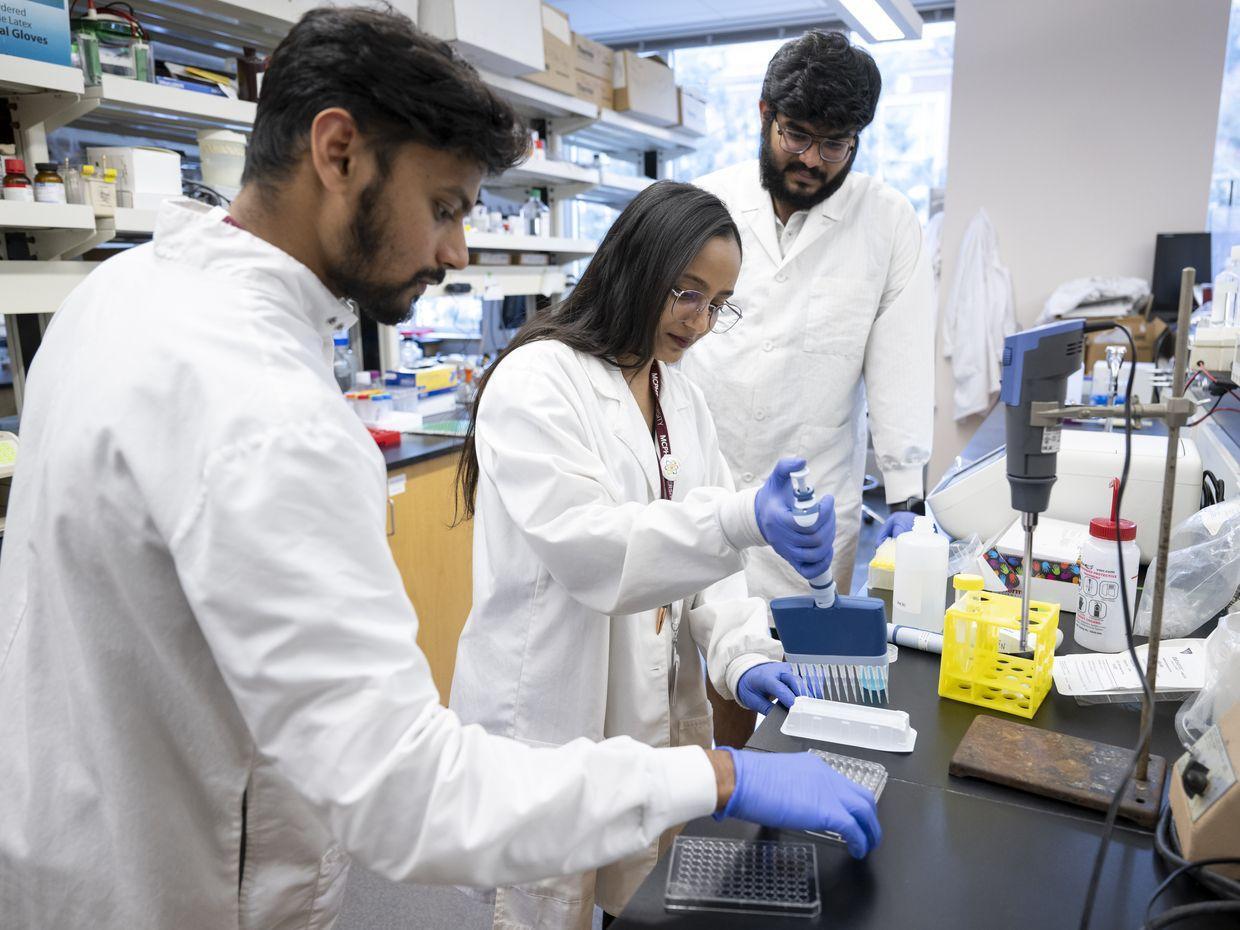
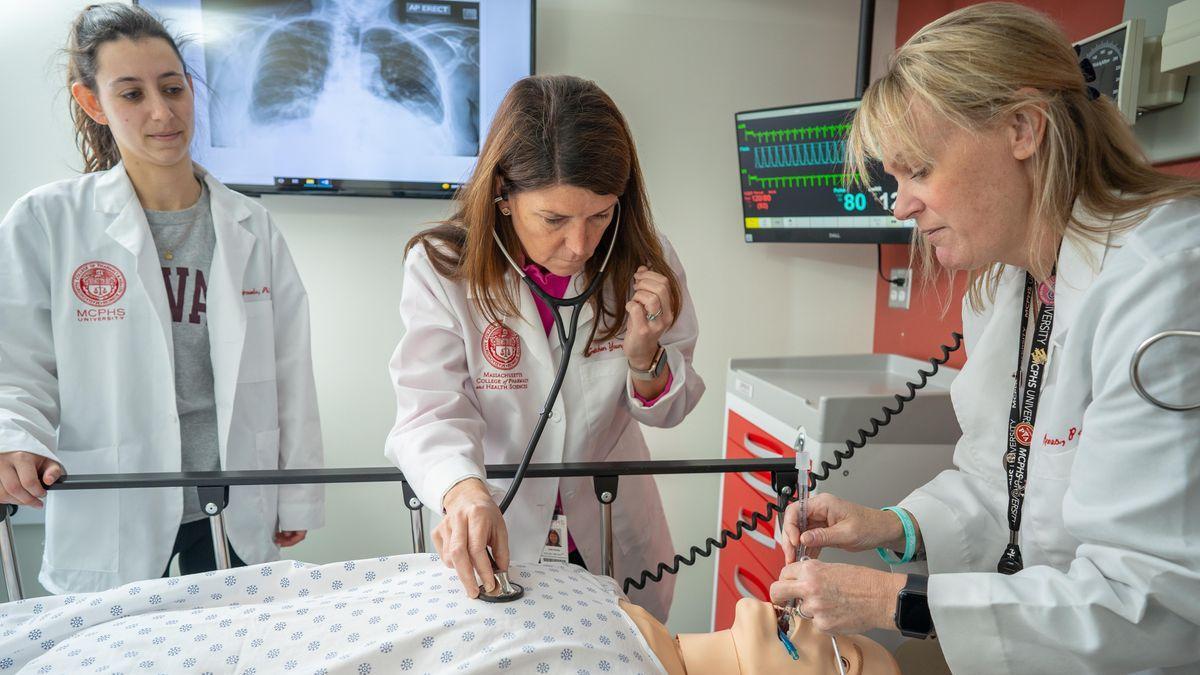
Campus Photos
Massachusetts College of Pharmacy and Health Sciences (MCPHS University)
About Massachusetts College of Pharmacy and Health Sciences (MCPHS University)
MCPHS University: Courses, Fees, Admissions, and Student Life in Massachusetts
Overview of MCPHS University
Massachusetts College of Pharmacy and Health Sciences, commonly known as MCPHS University, is a private university in the United States specializing in health sciences, pharmacy, and related professional fields. Established in 1823, the institution has a long history of educating students for careers in healthcare, scientific research, and other health-related industries.
MCPHS offers undergraduate, graduate, and professional programs designed to develop the knowledge and practical skills needed in modern healthcare environments. Its academic areas include pharmacy, nursing, physician assistant studies, physical therapy, occupational therapy, optometry, public health, dental hygiene, medical imaging, pharmaceutical sciences, and healthcare management.
The university serves domestic and international students seeking specialized education in health and life sciences. Its programs combine classroom learning with laboratory instruction, clinical preparation, and other professional experiences where applicable.
MCPHS operates campuses in Boston and Worcester, Massachusetts, and Manchester, New Hampshire. The appropriate campus depends on the chosen program, so applicants should confirm the location of their intended degree before making accommodation and travel arrangements.
For international students interested in healthcare or scientific careers, MCPHS may be worth considering because of its specialized academic focus. However, professional health programs can have demanding admission requirements, substantial tuition costs, and licensing conditions that applicants should understand before enrolling.
Where Is MCPHS University Located?
MCPHS has campuses in Boston and Worcester, Massachusetts, and Manchester, New Hampshire. Its main Boston campus is located at 179 Longwood Avenue, Boston, Massachusetts, in the Longwood Medical and Academic Area.
Boston is a major educational and healthcare center with hospitals, research institutions, universities, biotechnology organizations, and pharmaceutical companies. The city's academic environment can provide opportunities to attend professional events, explore research-related activities, and learn about developments in health and life sciences.
The Worcester campus serves students in selected health and professional programs. Worcester has its own network of healthcare providers, educational institutions, and research organizations. Manchester, New Hampshire, provides another location for selected professional and health science degrees.
Applicants should not assume that every program is available at every campus. Program delivery, clinical placements, and course locations can differ. Students should confirm these details with the university before accepting an offer.
The cost of living also varies by location and accommodation choice. Students should prepare a realistic budget for housing, food, transportation, health insurance, books, supplies, and personal expenses.
Courses and Academic Programs at MCPHS University
MCPHS focuses on education in healthcare and life sciences. Its program portfolio includes traditional bachelor's degrees, accelerated professional pathways, master's degrees, and doctoral programs. Availability and entry requirements vary by discipline.
Pharmacy and Pharmaceutical Sciences
Pharmacy is one of MCPHS's central academic areas. Students can explore pathways leading to professional pharmacy education as well as programs in pharmaceutical sciences and related disciplines.
The Doctor of Pharmacy, or PharmD, prepares students for professional pharmacy practice through scientific study, medication-related education, patient-care preparation, and clinical experiences. The length and structure of the pathway depend on the student's entry route and academic background.
Applicants should carefully review prerequisite courses, application procedures, academic standards, and experiential training requirements. Admission to a professional pharmacy program does not automatically guarantee a professional licence after graduation.
Students interested in pharmaceutical sciences may also explore programs involving drug development, pharmacology, medicinal chemistry, pharmaceutical research, and related subjects. These fields can support careers in research, industry, regulatory work, or further academic study, depending on the qualification.
Nursing
MCPHS offers nursing-related study pathways for students interested in patient care and healthcare delivery. Nursing education may combine classroom learning, simulation activities, laboratory instruction, and supervised clinical experiences.
Applicants should identify the nursing pathway that matches their previous education. Traditional undergraduate routes and postbaccalaureate or accelerated options can have different prerequisites, timelines, and costs.
Students should also understand that nursing is a regulated profession. Graduates must meet the licensing requirements applicable to the jurisdiction in which they intend to practise. International students planning to work outside the United States should investigate whether the qualification will be recognized by the relevant professional authority in their intended country.
Physician Assistant Studies
Physician assistant education prepares students for a professional role involving patient assessment, clinical decision-making, treatment planning, and collaboration with other healthcare professionals.
MCPHS offers a Master of Physician Assistant Studies pathway. Applicants should check the specific academic prerequisites, any required healthcare experience, application service, and supporting documentation for the current admission cycle.
Professional training may include classroom instruction, clinical simulation, and supervised placements. Students should consider the intensity of the program and the financial commitment required to complete it.
Graduation does not itself guarantee permission to practise. Graduates must satisfy the relevant certification and licensing requirements.
Physical Therapy
Physical therapy education focuses on movement, rehabilitation, functional recovery, and helping patients improve mobility and physical well-being.
MCPHS offers a Doctor of Physical Therapy program. Students should review the required prior coursework, academic eligibility, application procedure, and clinical education components before applying.
The program may suit applicants interested in rehabilitation, sports-related care, patient mobility, and healthcare services. However, professional practice requires compliance with the applicable licensing rules, and students should confirm the recognition requirements for their intended career location.
Occupational Therapy
Occupational therapy supports people who need help participating in everyday activities following illness, injury, disability, or other challenges. The profession emphasizes functional independence, adaptive strategies, and participation in daily life.
MCPHS offers graduate-level study in occupational therapy. Applicants should review the prerequisite subjects, degree requirements, professional training arrangements, and clinical placement expectations.
Prospective students should also investigate the professional registration or licensing requirements applicable to their future place of work.
Optometry
Optometry focuses on vision, eye health, and the assessment of visual function. MCPHS offers a Doctor of Optometry program for students interested in this specialized healthcare field.
Applicants should verify the academic prerequisites, application process, program duration, and professional requirements associated with optometry. Students should also consider the cost of equipment, clinical training, and other program-specific expenses when preparing a financial plan.
Because optometry is regulated, the qualification and licensing pathway should be evaluated in relation to the country or state where the student intends to practise.
Public Health and Healthcare Management
Students interested in healthcare systems beyond direct patient care may consider public health and healthcare management programs.
Public health study can involve population health, disease prevention, health promotion, research methods, and the analysis of health-related challenges. Healthcare management focuses on the organization and administration of healthcare services, including operational planning, leadership, and resource management.
These fields may suit students interested in healthcare organizations, public health initiatives, research, administration, or policy-related work. Career opportunities depend on the degree, experience, and employment requirements of individual organizations.
Medical Imaging and Diagnostic Health Sciences
MCPHS offers selected programs in diagnostic and health science fields, including medical imaging-related pathways. These programs can prepare students for technical roles supporting diagnosis, patient assessment, and clinical care.
Applicants should check whether their preferred course is available at the intended campus and whether it follows a traditional or accelerated structure. Professional programs may require clinical training, specialized equipment, and additional fees.
Students should confirm any certification, registration, or licensing requirements that apply to the occupation they plan to pursue.
Research and Graduate Programs
MCPHS also offers graduate study in areas such as pharmaceutics, pharmacology, medicinal chemistry, regulatory affairs, public health, and other health-related subjects.
Research-oriented programs may be suitable for students seeking careers in scientific investigation, pharmaceutical development, academic research, or further doctoral study. Requirements can include relevant previous qualifications, research interests, academic references, and higher English proficiency standards.
Applicants should review each department's current entry criteria and research opportunities before applying.
Tuition Fees and Cost of Studying at MCPHS University
MCPHS tuition varies substantially according to program, campus, degree level, and study format. Professional health degrees can cost considerably more than traditional undergraduate programs, and certain clinical programs have additional fees.
For the 2026–2027 academic year, the university lists annual tuition of approximately USD 43,110 for traditional undergraduate bachelor's degree programs in Boston. Accelerated bachelor's programs are listed at approximately USD 62,480 per academic year.
Other published tuition rates include approximately USD 51,900 per academic year for the professional didactic years of the Doctor of Pharmacy and Physician Assistant programs in Boston. Clinical rotations may be billed per credit. In Worcester and Manchester, the published annual tuition for the accelerated Doctor of Pharmacy program is approximately USD 68,100.
These amounts are program-specific examples, not a single fee applicable to every MCPHS student. Graduate programs may charge per credit, while some professional degrees use a flat-rate structure for specified credit loads.
Students should budget for the following expenses:
- Tuition and mandatory university fees
- Accommodation and utilities
- Food and meal plans
- Books, course materials, and equipment
- Health insurance and medical expenses
- Transportation and commuting
- Clinical or professional program fees where applicable
- Personal expenses and international travel
For Boston students, the university's published estimates for 2026–2027 include annual housing costs of approximately USD 18,990 for a traditional fall-and-spring academic year, with food and other expenses budgeted separately. Actual spending will depend on housing arrangements and personal circumstances.
International students should use the official cost-of-attendance estimate for their exact program and campus rather than relying on a general university fee range. They should also confirm whether health insurance is mandatory, whether any waiver is permitted, and what amount of financial evidence is required for immigration documentation.
Scholarships and Financial Assistance
Students should investigate scholarships, institutional awards, and other eligible funding opportunities before submitting their application. The availability of financial assistance may depend on the degree level, academic performance, citizenship or residency status, and the conditions of individual awards.
International applicants should confirm whether they qualify for a particular scholarship and whether the award is renewable. They should also check whether funding is applied toward tuition only or helps cover other expenses.
Because professional health programs can require a substantial financial commitment, applicants should calculate the expected cost for the entire program, including clinical training and other additional charges.
Students should not assume that a scholarship will cover all expenses unless the university has explicitly confirmed the award amount and conditions.
Admission Requirements for International Students
MCPHS has different admission requirements for first-year undergraduate, transfer, and graduate applicants. Professional programs may use specialized application systems and additional academic prerequisites.
Undergraduate Admission
International first-year applicants generally need to submit a completed application, an official high school transcript, and a letter of recommendation. Applicants whose first language is not English may also need to provide an approved English proficiency score.
Official transcripts must be submitted according to the university's instructions. Applicants should arrange for their school or an authorized school official to send the required academic records.
Standardized admission test scores may be optional for some applicants, although English proficiency requirements can still apply. Students should review the current admission guidance to determine which materials are required for their particular circumstances.
Transfer Admission
Applicants who have already completed college-level coursework may need to apply as transfer students. MCPHS considers prior academic records and determines whether previous coursework can be accepted toward the intended degree.
Transfer applicants should prepare official transcripts from each institution attended and check whether a credential evaluation is required for international academic records.
Students interested in transferring into a professional program should confirm the correct application route, prerequisite requirements, and the availability of transfer credit. Admission to an advanced stage of a professional degree is not guaranteed simply because an applicant has completed related coursework elsewhere.
Graduate and Professional Admission
Graduate applicants must meet the academic and application requirements of their intended program. Depending on the degree, required materials may include university transcripts, a credential evaluation, a résumé, recommendation letters, prerequisite coursework, or other supporting documents.
Some professional degrees use centralized application services. For example, applicants may need to use PharmCAS for designated pharmacy pathways, OTCAS for occupational therapy, PTCAS for physical therapy, CASPA for physician assistant studies, or OptomCAS for optometry.
The correct application service depends on the program and entry route. Applicants should verify the process for the intended campus and admission year before submitting materials.
English Language Requirements
International applicants whose first language is not English generally need to demonstrate English proficiency through an accepted examination or an eligible alternative.
For undergraduate admission, MCPHS lists minimum scores including TOEFL iBT 79, IELTS 6.5, PTE Academic 58, and Duolingo English Test 115. The university also lists a lower set of thresholds for its bridge admission pathway.
Graduate applicants to master's and professional programs generally need TOEFL iBT 79, IELTS 6.5, PTE Academic 58, or Duolingo English Test 115. PhD applicants face higher published requirements, including TOEFL iBT 90, IELTS 7.0, PTE Academic 73, or Duolingo English Test 125.
Some specialized programs may require a higher level of English proficiency. The university also describes circumstances in which applicants may qualify for an English requirement waiver.
Applicants should confirm the current score requirements, test validity, accepted alternatives, and official score-reporting procedure before applying. Meeting the general minimum does not necessarily satisfy every program's requirements.
How to Apply to MCPHS University
International applicants can organize the application process through the following steps.
Step 1: Choose a program and campus. Identify the degree that matches your previous education, professional interests, and career goals. Confirm whether it is offered in Boston, Worcester, Manchester, or online.
Step 2: Review academic prerequisites. Check required subjects, previous qualifications, clinical experience where applicable, and any program-specific admission conditions.
Step 3: Prepare supporting documents. Collect official transcripts, certificates, recommendation letters, English proficiency results, and credential evaluations where required.
Step 4: Use the correct application system. Submit the university's application or the relevant centralized application for your selected professional program.
Step 5: Track your application. Monitor your application status and respond to requests for missing documentation. The university generally reviews a file once the required materials have been received.
Step 6: Review admission and financial arrangements. If admitted, examine your offer, confirm enrollment according to the stated instructions, and establish a realistic budget for tuition and living expenses.
Step 7: Complete international student procedures. Students planning to study in the United States on an F-1 visa should follow MCPHS instructions for financial documentation and Form I-20 processing. They must then complete the relevant visa application process.
Step 8: Arrange accommodation and arrival. Confirm housing, transportation, health insurance, and any orientation requirements before travelling to the United States.
Applicants should allow sufficient time for credential evaluation, English testing, admission processing, and visa arrangements.
Student Life at MCPHS University
Student life at MCPHS is closely connected to its health and life sciences focus. Students may engage with academic departments, professional organizations, student activities, and opportunities to interact with peers who share interests in healthcare and scientific study.
The Boston campus is located in a major academic and medical district, providing access to a wider environment of hospitals, research institutions, and universities. Students at the Worcester and Manchester locations can experience the educational and community opportunities available in those regions.
The intensity of health professional programs can make time management particularly important. Students may need to balance lectures, laboratory work, practical training, independent study, and clinical responsibilities where applicable.
International students may also need to adjust to a new academic system, unfamiliar surroundings, and the practical responsibilities of living abroad. Connecting with academic advisers, student support services, and other students can help make the transition more manageable.
Prospective students should investigate the services available at their specific campus, including housing support, academic guidance, international student advising, and career preparation.
Accommodation and Living in Massachusetts and New Hampshire
Housing options depend on the campus and the student's eligibility. Students may consider university residence halls, private rentals, or shared accommodation, subject to availability and lease conditions.
Boston's location in a major metropolitan area can make accommodation a significant part of the overall study budget. The university publishes residence hall rates for its Boston campus, but students should check the latest rates and available housing options for their intended semester.
Students in Worcester or Manchester should research local housing markets and transportation options before selecting accommodation. The cheapest rental option may not always be the most convenient if it requires a long commute or additional transport costs.
International students should budget for deposits, utilities, food, phone service, household supplies, insurance, and personal expenses. It is also advisable to reserve funds for initial costs incurred before the first regular semester payment cycle.
Career Development and Professional Opportunities
MCPHS prepares students for specialized careers in health and life sciences. Depending on their program, graduates may pursue opportunities in pharmacy, nursing, rehabilitation, healthcare administration, pharmaceutical research, public health, medical imaging, or related fields.
The university's campus locations provide access to healthcare and research environments in the wider region. Students should investigate the practical training, clinical placements, professional preparation, and career support associated with their chosen degree.
Professional outcomes depend on several factors, including academic performance, practical experience, licensing requirements, and employer expectations. International students must also comply with US immigration regulations when undertaking internships or employment.
Students planning to work in another country after graduation should research recognition and licensing requirements early. A qualification that meets requirements in one jurisdiction may not automatically qualify a graduate to practise in another.
Why Consider MCPHS University?
MCPHS may be a suitable option for students who want specialized education in healthcare, pharmacy, and life sciences rather than a university with a primarily general academic focus.
Its program portfolio includes professional degrees and graduate study across multiple health-related fields. Its campuses are located in regions with established educational, medical, and research communities, which may be relevant to students seeking professional preparation.
However, prospective applicants should compare program content, tuition, living costs, clinical requirements, financial assistance, accreditation, and professional recognition. These factors are particularly important for degrees that lead to regulated healthcare occupations.
The right program is one that aligns with the student's academic background, financial circumstances, and intended career location.
Frequently Asked Questions
Where is MCPHS University located?
MCPHS has campuses in Boston and Worcester, Massachusetts, and Manchester, New Hampshire. The location depends on the selected program.
What courses does MCPHS University offer?
MCPHS specializes in pharmacy, nursing, physician assistant studies, physical therapy, occupational therapy, optometry, public health, healthcare management, pharmaceutical sciences, and other health-related fields.
How much is undergraduate tuition at MCPHS?
For 2026–2027, traditional undergraduate bachelor's programs in Boston are listed at approximately USD 43,110 per academic year. Accelerated and professional programs may cost considerably more.
What English proficiency score is required?
For general undergraduate admission, MCPHS lists minimum scores including IELTS 6.5, TOEFL iBT 79, PTE Academic 58, and Duolingo 115. Graduate and specialized program requirements should be checked individually.
Are scholarships available to international students?
Funding opportunities depend on the program, eligibility criteria, and award conditions. Applicants should confirm available scholarships and their requirements directly with the university.
Can international students apply for professional healthcare programs?
Yes, international applicants can apply to eligible programs, provided they satisfy the academic, English proficiency, and program-specific requirements. Some degrees use specialized application services.
Can graduates work as licensed healthcare professionals?
Graduates must meet the licensing or registration requirements of the jurisdiction where they intend to practise. Completing a degree alone does not guarantee professional licensure.
What should students consider before applying?
Students should evaluate program prerequisites, tuition, living expenses, campus location, clinical training requirements, English proficiency, scholarships, and professional licensing pathways.
Conclusion
MCPHS University offers specialized education across pharmacy, health sciences, and related professional disciplines. With campuses in Boston, Worcester, and Manchester, it provides several pathways for students interested in healthcare practice, research, and scientific careers.
For international applicants, careful preparation is essential. Students should verify current admission requirements, English proficiency scores, program-specific tuition, accommodation costs, and immigration procedures before making a decision. Those pursuing regulated professions should also investigate licensing and recognition requirements in their intended country of employment.
By evaluating these factors alongside their academic interests and career goals, prospective students can determine whether MCPHS University is the right choice for their higher education journey.
Entry Requirements
General Entry Requirement
IELTS 6.5 overall
Fees & Scholarships
Annual Tuition Fees
USD 30,000 - USD 43,000
Ready to Apply to Massachusetts College of Pharmacy and Health Sciences (MCPHS University)?
Our advisors guide you from eligibility check to offer letter — at no cost to you.
Join our WhatsApp Community

Scan to join our student community for admission updates & guidance