
Annual FeesUSD 42,000 - USD 84,000
Marymount University
LocationUS
Entry RequirementIELTS 6.0 overall
Visa Success Rate70%
Campus Photos
Marymount University
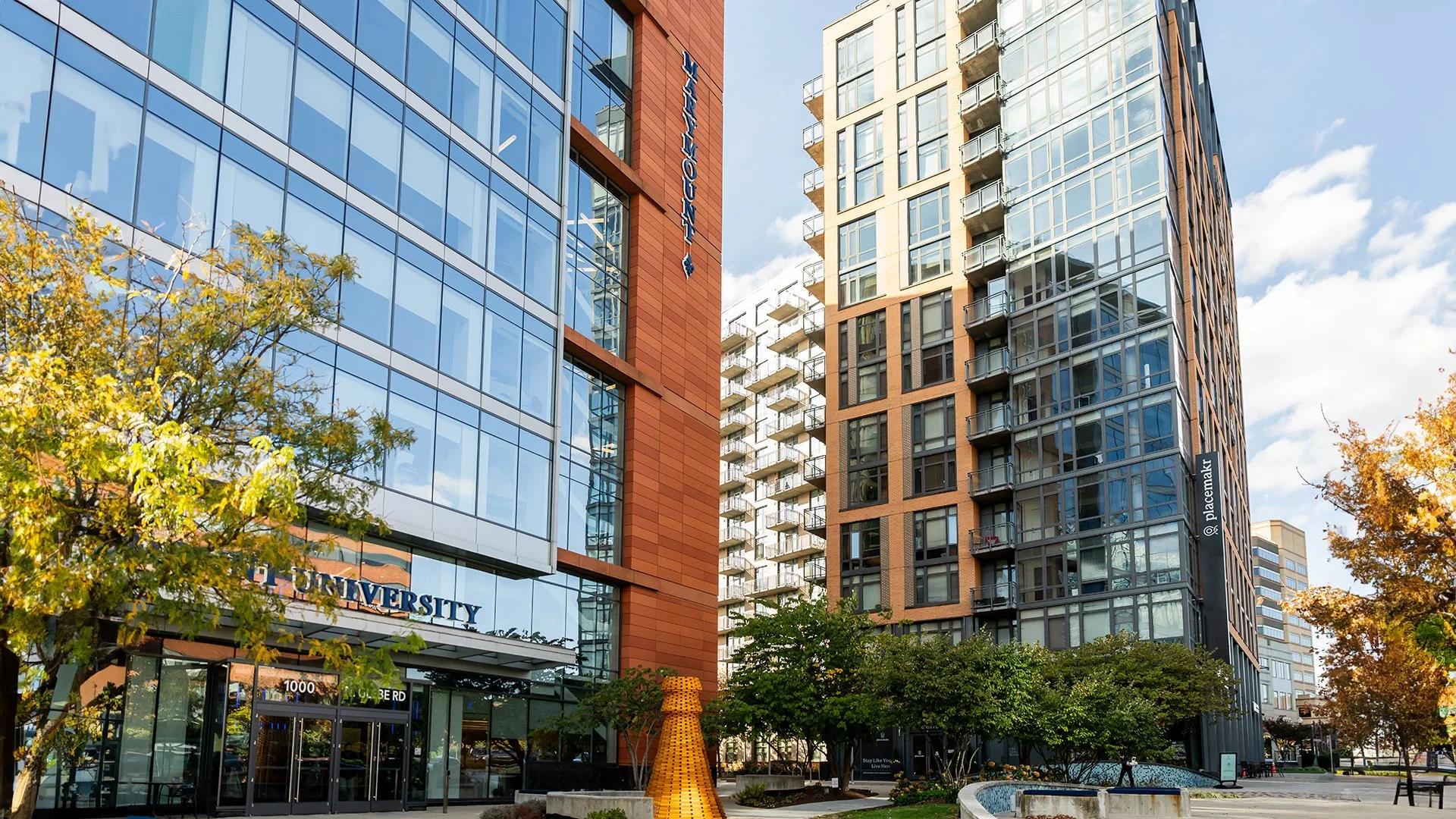

About Marymount University
Marymount University: Courses, Fees, Admissions, and Student Life in Virginia
Overview of Marymount University
Marymount University is a private Catholic university located in Arlington, Virginia, in the metropolitan area surrounding Washington, D.C. Founded in 1950, the university offers undergraduate, graduate, and doctoral programs designed to combine academic knowledge with practical learning and professional development. Its location provides students with access to the cultural, professional, and educational opportunities of the nation’s capital while allowing them to study in a university environment.
Marymount welcomes students from different backgrounds and faiths. Its educational approach emphasizes intellectual growth, ethical leadership, service, and the development of skills that can be applied in professional settings. The university offers programs across business, technology, health, education, psychology, and the humanities.
For international students considering higher education in the United States, Marymount University may be an option for those seeking a campus near Washington, D.C., with access to a range of academic disciplines and career-related opportunities. Applicants should review the requirements and costs for their intended program because admission criteria, tuition, and additional expenses can differ substantially by degree level and field of study.
Where Is Marymount University Located?
Marymount University’s main campus is located at 2807 North Glebe Road, Arlington, Virginia, USA. Arlington is part of Northern Virginia and is situated close to Washington, D.C. This location allows students to explore museums, cultural institutions, public events, government organizations, nonprofit organizations, and businesses in the wider metropolitan region.
The university also operates learning locations in the Arlington area, supporting its academic and professional programs. Students should confirm the campus or facility associated with their chosen course before making accommodation or travel arrangements.
Arlington offers a mix of residential neighborhoods, restaurants, shopping areas, public transportation, and access to regional employment centers. Students can experience a metropolitan lifestyle while remaining connected to the university community. However, living expenses in the Washington metropolitan area can be significant, so international applicants should prepare a realistic budget covering accommodation, food, transportation, health insurance, and personal expenses.
Courses and Academic Programs at Marymount University
Marymount University offers degrees at undergraduate, graduate, and doctoral levels. Its academic portfolio covers several fields, allowing students to select a program that aligns with their interests, previous education, and long-term career plans.
Business and Management
Business-related programs can appeal to students interested in management, organizational leadership, finance, marketing, and business operations. Depending on the degree, students may develop skills in decision-making, communication, teamwork, analytical thinking, and strategic planning.
Students considering a business qualification should compare course structures, elective choices, internship possibilities, and career services. Those interested in management positions may also wish to examine whether a particular program includes practical projects or opportunities to apply classroom learning to business problems.
Technology and Cybersecurity
Technology-focused education is relevant to students planning careers in information systems, cybersecurity, data-related fields, and other areas of digital innovation. Marymount offers programs in technology-related disciplines, including doctoral-level study in cybersecurity.
Prospective students should examine the technical prerequisites for each program, particularly when a course requires previous experience in computing, mathematics, programming, or a related discipline. Reviewing the curriculum can help applicants determine whether the program is suitable for their existing knowledge and professional goals.
Health Sciences and Nursing
Health-related education is an important part of Marymount’s academic offering. Students can explore options in nursing and other health disciplines, subject to the entry requirements of the individual program.
Professional health programs may have additional requirements beyond standard university admission. These can include prerequisite coursework, clinical placements, background checks, health documentation, or professional licensing conditions. Applicants should check these requirements carefully before applying, especially when considering programs that lead to regulated professions in the United States.
Psychology and Behavioral Sciences
Students interested in human behavior, mental health, research, and counseling may consider relevant programs in psychology and related disciplines. Graduate study in these areas can involve research methods, assessment, ethical practice, and supervised professional experience, depending on the course.
A degree in psychology does not automatically qualify a graduate to practise as a licensed counselor or other regulated professional. Licensing requirements depend on the specific profession and jurisdiction, so students should review the educational and supervised-experience requirements associated with their intended career.
Education and Leadership
Education and leadership programs can suit students interested in teaching-related fields, educational services, organizational development, and leadership roles. Program requirements may differ depending on whether the course is academic, professional, or designed to meet specific licensure standards.
Students planning to work in education should confirm whether the program meets the certification or licensing requirements of the state or country where they intend to work.
Humanities and Social Sciences
Marymount also offers study options across sciences and humanities. These disciplines can help students develop communication, critical thinking, research, writing, and problem-solving skills. Depending on the subject and degree level, students may prepare for further study, public service, research, communication-related work, or other professional pathways.
Because program availability and course structures may change, applicants should consult the university’s current academic catalogue and the relevant department before making a final decision.
Tuition Fees and Cost of Studying at Marymount University
The cost of studying at Marymount University depends on the selected degree, credit load, housing arrangements, insurance, and personal spending. Tuition should therefore be evaluated separately from the overall cost of attendance.
For the 2026–2027 academic year, the published full-time undergraduate tuition and fees are approximately USD 42,678 per academic year for students taking the standard full-time course load. This figure represents the undergraduate tuition-and-fee amount and should not be interpreted as the complete cost of living and studying in Arlington.
The university’s estimated annual cost for an international undergraduate student can be higher once living and other expenses are included. Graduate program budgets also vary. Professional programs, including certain health-related degrees, may have substantially different total costs from general undergraduate programs.
International students should prepare for the following possible expenses:
- Tuition and mandatory university fees
- Accommodation and utilities
- Food and everyday living costs
- Books, course materials, and equipment
- Health insurance and medical expenses
- Local transportation
- Personal expenses and emergency funds
- Visa-related and international travel costs
The final amount will depend on the student’s course, housing choice, lifestyle, and individual circumstances. Students should use the university’s current tuition schedule and official cost-of-attendance estimates when preparing financial documents or planning their budget.
Scholarships and Financial Assistance
Students should investigate the scholarships, grants, and other financial assistance available for their intended program. Eligibility may depend on academic performance, degree level, citizenship or residency status, financial circumstances, and the conditions of a particular award.
International applicants should not assume that every scholarship or form of financial aid is available to them. They should confirm eligibility, application deadlines, renewal conditions, and whether an award applies to tuition only or also covers other expenses.
A sensible financial plan should account for the full duration of the degree rather than only the first semester. Students should also consider exchange-rate fluctuations and the possibility of changes in living expenses.
Admission Requirements for International Students
Marymount University has separate application guidance for international first-year, transfer, and graduate applicants. The documents required depend on the applicant’s educational history and chosen program.
Undergraduate Admission
International first-year applicants generally need to submit a completed application through the university’s application system or the Common Application. They must also provide official academic transcripts from their previous schools and evidence of graduation or completion of the required secondary education.
Documents that are not in English may need certified English translations. Applicants should arrange for official transcripts and test scores to be sent according to the university’s instructions.
Additional application components can include a personal statement, a résumé explaining gaps in education, or other supporting documents where relevant. Standardized test scores and recommendation letters may be optional for some applicants, but requirements can change, so students should check the current instructions for their intended entry term.
Transfer Admission
Students who have completed college or university coursework after secondary school may need to apply as international transfer students rather than first-year applicants.
Transfer applicants generally need to submit official records from each institution attended. Depending on where previous university-level study was completed, a certified course-by-course credential evaluation may be required. Students with a limited number of completed university credits may also need to submit secondary-school records.
Applicants should confirm how previous coursework will be evaluated and whether credits can be transferred toward their intended degree. Credit transfer is not automatic, and the university determines which courses satisfy its academic requirements.
Graduate Admission
Graduate applicants must meet the academic and application requirements for their chosen program. Typical requirements include a completed graduate application and official transcripts documenting previous university-level study.
Applicants whose previous university coursework was completed outside the United States may need to provide an official course-by-course credential evaluation. Some graduate programs may also request a résumé, recommendation letters, a statement of purpose, test results, a portfolio, or additional professional documentation.
Programs in fields such as health sciences, counseling, and other specialized disciplines may have specific prerequisites or application procedures. Doctor of Physical Therapy applicants, for example, should follow the designated application process for that program.
English Language Requirements
Applicants whose native language is not English may need to demonstrate English proficiency through an approved test or an eligible waiver.
For international undergraduate applicants, Marymount lists minimum scores that include an IELTS Academic score of 6.0, a TOEFL iBT score around 79 under the applicable scoring system, a PTE score of 54, or a Duolingo English Test score within the university’s published range. The university may accept other forms of evidence or provide waivers in eligible circumstances.
Graduate applicants generally face different requirements. The published minimums include an IELTS Academic score of 6.5, a PTE score of 58, and a Duolingo English Test score within the university’s stated graduate range. TOEFL scoring guidance should be checked carefully because the test’s scoring scale changed in 2026.
These figures are general reference points rather than a substitute for the current requirements of a specific degree. Applicants should verify the accepted tests, minimum scores, validity period, and any program-specific conditions before booking an examination. Test scores must meet the university’s rules for official submission.
How to Apply to Marymount University
International applicants can approach the application process in a series of practical steps.
Step 1: Choose a program. Review the available degrees, curriculum, duration, academic prerequisites, and potential career pathways. Make sure the selected course matches your previous education and future plans.
Step 2: Check entry requirements. Confirm the academic qualifications, English proficiency requirements, application materials, and any additional departmental requirements for your chosen program.
Step 3: Prepare official documents. Collect academic transcripts, certificates, proof of graduation, and certified English translations where needed. Transfer and graduate applicants should check whether credential evaluation is required.
Step 4: Submit the application. Complete the appropriate undergraduate, transfer, or graduate application through the designated platform. Submit all supporting documents according to the university’s instructions.
Step 5: Monitor your application. Check for requests for additional documents and respond within the stated deadlines. An application may not be reviewed as complete until the required materials have been received.
Step 6: Review your admission and financial arrangements. If admitted, read the offer carefully, confirm the costs, review available financial assistance, and complete the required enrollment steps.
Step 7: Complete international student procedures. Students planning to study in the United States on an F-1 visa must follow the university’s instructions for obtaining the appropriate immigration documentation. This process may involve an enrollment deposit, proof of financial support, passport documentation, and a request for a Form I-20.
Admission and immigration documentation are separate processes. Receiving an offer does not itself guarantee a visa, so students should allow sufficient time for each stage.
Student Life at Marymount University
Marymount combines a university campus environment with the wider opportunities of the Arlington and Washington, D.C., region. Students can participate in campus activities, student organizations, academic events, and community initiatives while developing friendships and professional networks.
The university’s location can be particularly attractive to students who want to explore museums, public institutions, cultural venues, conferences, and professional events in the capital region. Opportunities will vary by academic schedule, student interests, transportation access, and eligibility.
Student life also involves learning to manage academic responsibilities alongside everyday tasks. International students may need time to adjust to a different education system, new cultural expectations, and the practical requirements of living abroad. Connecting with classmates, academic advisers, student services, and international student support staff can help make the transition easier.
Before enrolling, students should review housing options, transportation arrangements, campus services, and the support available for international students. These details can have a meaningful effect on both the budget and the overall study experience.
Accommodation and Living in Arlington
Students may consider university-affiliated housing, private rentals, shared accommodation, or other suitable arrangements, depending on availability and eligibility. Housing costs vary by room type, location, lease duration, and whether utilities are included.
Arlington is part of a major metropolitan area, so students should compare rent and commuting costs before choosing accommodation. Living farther from campus may reduce rent in some cases but can increase transportation time and expenses.
Students should also plan for deposits, initial household purchases, food, phone service, health insurance, and other expenses that may arise before their first month of study is complete. International students should make sure their financial plan covers these initial costs as well as recurring monthly expenses.
Career Development and Professional Opportunities
Marymount’s location near Washington, D.C., places students within reach of a broad regional economy that includes government-related organizations, technology companies, healthcare providers, consulting firms, nonprofits, educational institutions, and private businesses.
The university’s academic programs can help students build subject knowledge and transferable skills relevant to their chosen fields. Career preparation may include guidance on résumés, interviewing, networking, and identifying suitable internships or employment opportunities. Access and eligibility depend on the specific opportunity and university arrangements.
International students must understand the employment rules associated with their immigration status. Working in the United States is subject to federal regulations, and students should consult the university’s international student advisers before accepting employment or beginning an internship. They should not assume that every role or placement is automatically permitted.
Students can improve their career preparation by developing a clear professional direction, building relevant experience, strengthening communication skills, and learning about the employment requirements of their intended industry.
Why Consider Marymount University?
Marymount University may appeal to students seeking a private university in Northern Virginia with a diverse academic offering and access to the Washington, D.C., metropolitan area.
Potential advantages include a range of undergraduate and graduate disciplines, a location close to major professional and cultural institutions, and an educational environment that emphasizes academic development and service. Its program options may be relevant to students interested in business, technology, health, education, psychology, and the humanities.
However, the right choice depends on each student’s academic goals, budget, preferred campus environment, and career plans. Students should compare Marymount with other universities by examining curriculum, tuition, total living costs, available financial assistance, professional accreditation where relevant, and graduate outcomes.
The university’s location should also be considered realistically. Access to a major metropolitan area can provide valuable experiences, but it may come with higher living expenses and commuting considerations.
Frequently Asked Questions
Where is Marymount University located?
Marymount University is located in Arlington, Virginia, in the Washington, D.C., metropolitan area of the United States.
Is Marymount University a private university?
Yes. Marymount is a private Catholic university that welcomes students from different backgrounds and faiths.
What courses can international students study at Marymount University?
The university offers undergraduate, graduate, and doctoral programs across areas such as business, technology, cybersecurity, health sciences, nursing, psychology, education, and the humanities. Availability and entry requirements depend on the specific degree.
How much does it cost to study at Marymount University?
Published full-time undergraduate tuition and fees for the 2026–2027 academic year are approximately USD 42,678 per year. The total cost is higher when living and other expenses are included, and graduate program costs vary by degree.
What English test score is required?
Requirements depend on the degree level and program. Undergraduate applicants may be required to meet published minimums such as IELTS Academic 6.0, while graduate applicants may need IELTS Academic 6.5. Applicants should verify current requirements and accepted alternatives before applying.
Can international students apply for financial assistance?
Some scholarships or funding opportunities may be available, but eligibility varies. International applicants should confirm which awards are open to them and whether the funding covers tuition, living costs, or both.
Can international students work while studying?
Employment is subject to the rules associated with the student’s immigration status and the type of work. Students should consult the university’s international student services team before accepting a job or internship.
What should students consider before applying?
Students should evaluate academic fit, program requirements, total cost, accommodation, English proficiency, application deadlines, and the steps required for international student documentation. Comparing these factors with other universities can help them make an informed decision.
Conclusion
Marymount University offers a range of academic programs in Arlington, Virginia, with the added benefit of being close to Washington, D.C. Its offerings span business, technology, health, education, psychology, and other disciplines, making it worth exploring for students whose academic and professional goals align with its programs.
For international students, successful planning involves more than selecting a course. Applicants should verify current admission and English language requirements, prepare official academic documents, understand tuition and living expenses, and allow time for the US student visa process. By researching these factors carefully, prospective students can determine whether Marymount University is a suitable option for their higher education journey.
Entry Requirements
General Entry Requirement
IELTS 6.0 overall
Fees & Scholarships
Annual Tuition Fees
USD 42,000 - USD 84,000
Ready to Apply to Marymount University?
Our advisors guide you from eligibility check to offer letter — at no cost to you.
Join our WhatsApp Community

Scan to join our student community for admission updates & guidance