
Annual FeesAUD 31,000 - AUD 62,000
Le Cordon Bleu, Melbourne
LocationAustralia
Entry RequirementIELTS 6.5 overall
Visa Success Rate50%
Campus Photos
Le Cordon Bleu, Melbourne
About Le Cordon Bleu, Melbourne
Le Cordon Bleu Melbourne: Courses, Fees, Entry Requirements & Student Life
Le Cordon Bleu Melbourne is part of the internationally recognised Le Cordon Bleu network of culinary and hospitality education institutions. Located in Melbourne, Victoria, the institution provides specialised education across culinary arts, pâtisserie, hospitality, business and related management fields.
Le Cordon Bleu has a long history of culinary education and is internationally known for its French culinary heritage, practical training and hospitality-focused programs. The Melbourne campus gives students the opportunity to combine professional culinary training with academic study and industry-focused education.
For students considering a career in professional cookery, pâtisserie, hospitality management, restaurant operations, food and beverage or hospitality business, Le Cordon Bleu Melbourne offers a specialised alternative to a conventional university.
What Is Le Cordon Bleu Melbourne Known For?
Le Cordon Bleu Melbourne is particularly associated with:
· Culinary arts
· Pâtisserie
· Professional cookery
· Hospitality management
· Food and beverage
· Restaurant operations
· Hospitality business
· Practical kitchen training
· Work-based learning
· International culinary education
· French culinary techniques
· Hospitality education
· Culinary workshops
· Professional development
The institution's programs combine practical training with theoretical and management education.
This means students can develop technical culinary skills while also learning about the business, operational and management side of hospitality.
Culinary Education
Culinary education at Le Cordon Bleu Melbourne is built around practical training.
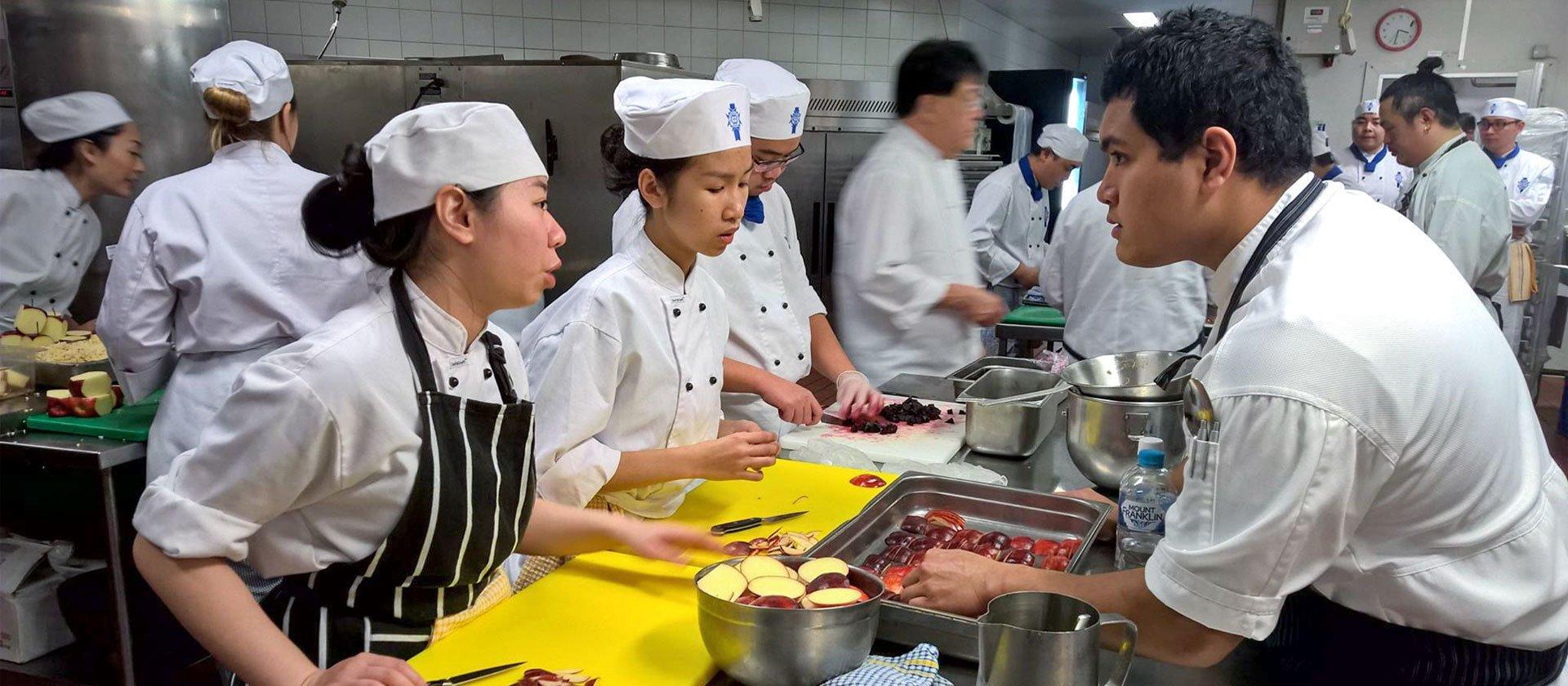
Students learn professional techniques that can be applied in commercial kitchens and hospitality environments. Practical education allows students to repeatedly practise techniques while developing an understanding of professional standards.
Depending on the program, areas of study can include:
· Food preparation
· Cooking techniques
· Kitchen operations
· Food safety
· Menu preparation
· Culinary theory
· Kitchen organisation
· Professional cooking
· Hospitality operations
Practical training is particularly important for students planning to work in professional kitchens because technical ability needs to be developed through repeated hands-on practice.
Pâtisserie
Pâtisserie is another important area of culinary education at Le Cordon Bleu Melbourne.
Students interested in pastry can develop skills in areas such as:
· Baking
· Pastry production
· Desserts
· Chocolate
· Cake production
· Presentation
· Decoration
· Traditional pastry techniques
· Contemporary pastry techniques
Pâtisserie requires precision, creativity and attention to detail.
Students who develop professional pastry skills can explore careers in restaurants, hotels, bakeries, pastry shops, catering businesses and other hospitality environments.
Hospitality Management
Le Cordon Bleu Melbourne also provides opportunities for students who want to move beyond kitchen-based careers into hospitality management.
Hospitality management can involve:
· Hotel operations
· Restaurant management
· Food and beverage management
· Events
· Customer service
· Hospitality marketing
· Business operations
· Leadership
· Staff management
The Melbourne campus also offers higher education programs in areas including business, hospitality management, professional accounting and supply chain management. This allows students to explore management and business careers alongside the institution's culinary programs.
Culinary Arts and Business
Modern culinary careers are not limited to becoming a chef.
Food and hospitality businesses require professionals who understand:
· Operations
· Finance
· Marketing
· Customer experience
· Staff management
· Business planning
· Leadership
· Supply chains
· Strategic management
Le Cordon Bleu's broader hospitality and business programs therefore allow students to explore both the practical and commercial sides of the industry.
Students who eventually want to establish their own restaurant, café, catering company or food business can benefit from understanding how culinary operations connect with business management.
Le Cordon Bleu Melbourne Campus
Le Cordon Bleu Melbourne is located at the Holmesglen Moorabbin campus at 488 South Road, Moorabbin, Victoria 3189.
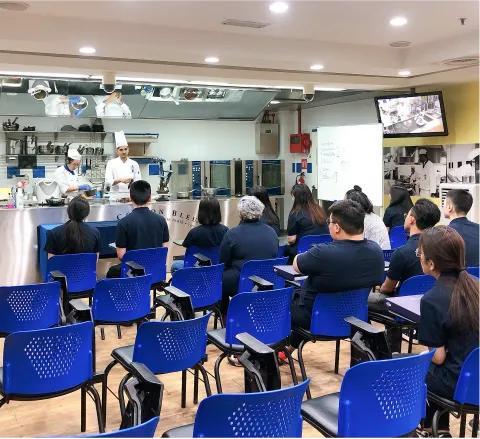
The Melbourne campus provides students with a specialist environment for culinary and hospitality education.
Students can access learning environments that include:
· Practical kitchens
· Culinary training facilities
· Pâtisserie facilities
· Classrooms
· Hospitality learning spaces
· Practical training areas
· Student resources
The campus is designed to support both practical and academic learning.
Students can also explore the campus through tours and learn more about the culinary, business and postgraduate programs available in Melbourne.
Academic Environment
Le Cordon Bleu Melbourne combines academic learning with practical training.
Students do not simply learn culinary concepts from textbooks. Practical sessions allow them to develop professional techniques and understand the standards expected within hospitality workplaces.
The learning environment can involve:
· Practical kitchens
· Demonstrations
· Culinary workshops
· Academic classes
· Hospitality projects
· Assessments
· Work-based learning
· Industry-related activities
This combination is particularly useful for students who prefer learning by doing.
Student Life
Student life at Le Cordon Bleu Melbourne is closely connected to culinary and hospitality education.
Students from different backgrounds can work together during practical classes and develop professional relationships.
The multicultural nature of Melbourne's hospitality industry also means students can experience different cuisines, cultures and approaches to food and hospitality.
Melbourne itself offers:
· Restaurants
· Cafés
· Markets
· Festivals
· Cultural attractions
· Parks
· Sporting events
· Shopping
· Arts and entertainment
· International food experiences
For international students, this can provide opportunities to experience Australian culture outside the classroom.
International Student Experience
Le Cordon Bleu Melbourne welcomes international students who meet the academic and English-language requirements associated with their selected course.
Students should prepare documents such as:
· Passport
· Academic transcripts
· English-language evidence
· Application documents
· Other course-specific documentation
International students should also consider:
· Student visa requirements
· Overseas Student Health Cover
· Accommodation
· Transport
· Living expenses
· Course-related expenses
The exact requirements can vary according to nationality, course and level of study.
Students should carefully review the latest requirements before applying.
Courses at Le Cordon Bleu Melbourne
Le Cordon Bleu Melbourne provides study options across culinary arts, pâtisserie, hospitality, business and management.
Depending on the current course offering, students can explore:
Cuisine
Designed for students interested in professional cooking and culinary careers.
Pâtisserie
Focused on pastry, baking, desserts, chocolate and specialist pastry techniques.
Hospitality Management
Designed for students interested in hotel, restaurant, food and beverage and hospitality operations.
Business
Business-focused programs can provide knowledge in areas such as management, accounting and broader commercial operations.
Higher Education
The Melbourne campus offers higher education options including programs in business, hospitality management, professional accounting and supply chain management.
Students should check the current course catalogue before applying because course availability, structure and fees can change.
What Are the Best Programs at Le Cordon Bleu Melbourne?
There is no single best program for everyone.
Culinary Arts
Best for students who:
· Want to become professional chefs
· Enjoy cooking
· Prefer practical learning
· Want professional kitchen experience
· Are interested in restaurants and hotels
· Want to develop professional culinary techniques
Pâtisserie
Best for students interested in:
· Pastry
· Baking
· Desserts
· Chocolate
· Cake production
· Confectionery
· Specialist pastry careers
Hospitality Management
Best for students who want careers in:
· Hotels
· Restaurants
· Events
· Food and beverage
· Hospitality management
· Tourism
· Business operations
Business and Management
Best for students who want to develop skills in:
· Business management
· Accounting
· Hospitality management
· Supply chain management
· Leadership
· Business operations
Students should select the program according to their intended career rather than simply choosing the most popular course.
Practical Learning
Practical learning is one of the most important elements of culinary education.
Students need to repeatedly practise techniques before they become confident enough to use them professionally.
Practical training can help develop:
· Knife skills
· Food preparation
· Cooking techniques
· Pastry techniques
· Presentation
· Time management
· Kitchen organisation
· Food safety
· Teamwork
· Professional discipline
Hospitality students can also develop customer-service, management and operational skills.
Le Cordon Bleu Melbourne combines theoretical education with practical learning, while work-based learning forms an important component of its vocational programs.
Industry Experience
Industry exposure can be particularly valuable in hospitality.
Students can gain an understanding of professional expectations, workplace communication and operational standards.
Work-based learning can help students apply knowledge gained on campus while developing an understanding of real hospitality workplaces.
Depending on the selected program, students may have opportunities for industry-related experience.
Students should check the exact placement or work-based learning requirements for their chosen course because industry components vary between qualifications.
Careers and Employability
Le Cordon Bleu Melbourne graduates can explore a wide range of hospitality, culinary and business careers.
Culinary Careers
Potential roles include:
· Chef
· Commis Chef
· Chef de Partie
· Sous Chef
· Pastry Chef
· Baker
· Chocolatier
· Catering professional
Hospitality Careers
Potential roles include:
· Restaurant Manager
· Hotel Manager
· Food and Beverage Manager
· Events Coordinator
· Hospitality Supervisor
· Guest Services Manager
· Hospitality Operations Manager
Business Careers
Depending on the selected qualification, graduates can also explore:
· Business management
· Accounting
· Supply chain management
· Hospitality consulting
· Operations
· Marketing
· Management
A qualification does not guarantee employment or business success, but practical skills, industry experience and professional networks can strengthen a graduate's starting position.
International Culinary Career Opportunities
One of the attractions of culinary education is the international nature of hospitality.
Hotels, restaurants, resorts and hospitality groups operate around the world.
Students can potentially pursue opportunities in:
· Australia
· Asia
· Europe
· Middle East
· North America
· Other international markets
Professional experience, culinary skills, communication and adaptability can all influence international career opportunities.
Le Cordon Bleu's international identity can also provide students with exposure to a globally recognised culinary education brand.
Tuition Fees
Le Cordon Bleu Melbourne's tuition fees vary according to the qualification and intake.
Students should check the current official fee schedule for their specific course rather than relying on older fee figures.
Different fees apply to vocational programs, higher education programs and short courses.
International students should also budget for expenses beyond tuition, including:
· Accommodation
· Food
· Transport
· Overseas Student Health Cover
· Visa costs
· Uniforms
· Kitchen equipment
· Books and learning materials
· Personal expenses
Culinary students should pay particular attention to additional practical-study expenses because uniforms and specialised equipment may be required.
Scholarships
Scholarship opportunities can vary by course and intake.
Students should check the current Le Cordon Bleu Australia scholarship information before applying.
Where scholarships are available, applicants should carefully review:
· Eligibility
· Application deadlines
· Academic conditions
· Scholarship value
· Duration
· Whether the scholarship is available to international students
· Eligible courses
Students should not assume that scholarships will cover all tuition and living expenses.
Entry Requirements
Entry requirements vary according to the course.
Applicants generally need to demonstrate the required level of previous education.
Depending on the program, applicants may need:
· Secondary-school qualifications
· Previous tertiary study
· Relevant qualifications
· English-language proficiency
· Identification documents
· Other course-specific documentation
Higher-level programs can have additional academic requirements.
Students should always check the exact admission criteria for their selected course before submitting an application.
English Language Requirements
International students need to demonstrate English proficiency where required.
The exact IELTS or equivalent requirement can depend on the selected program.
Accepted evidence may include recognised English-language tests or other permitted forms of English-language evidence.
Because English requirements can vary between courses, students should verify the current requirement directly with Le Cordon Bleu Melbourne before applying.
How to Apply
The general application process involves:
- Select a Le Cordon Bleu Melbourne course.
- Review the course structure.
- Check academic requirements.
- Check English requirements.
- Prepare academic documents.
- Prepare passport identification.
- Complete the application.
- Submit supporting documents.
- Receive the application outcome.
- Accept the offer if successful.
- Complete enrolment.
- Arrange Overseas Student Health Cover.
- Apply for the Australian student visa where applicable.
- Arrange accommodation.
- Prepare for arrival in Melbourne.
- Attend orientation.
Students should allow sufficient time for international admission and visa processing.
Why Study Culinary Arts in Melbourne?
Melbourne has a strong reputation for food, cafés and multicultural cuisine.
The city provides students with access to:
· Restaurants
· Cafés
· Food markets
· Hotels
· Bakeries
· Food producers
· Hospitality businesses
· Food festivals
· Tourism
· International cuisines
This environment can provide useful exposure to the wider food and hospitality industry.
Students studying culinary arts can experience different cuisines and food cultures while developing their own professional skills.
Living in Melbourne
Melbourne provides students with a diverse urban environment.
Students can benefit from:
· Public transport
· Cultural attractions
· Restaurants
· Shopping
· Parks
· Beaches and coastal areas
· Festivals
· Sporting events
· Entertainment
· Food experiences
The city's multicultural environment can be particularly interesting for international students.
However, students should research current accommodation and living costs before making financial plans.
Student Support
International students may need support with both academic and personal adjustment.
Important areas include:
· Academic assistance
· Student services
· Career guidance
· Accommodation information
· Health and wellbeing
· International student support
· Library resources
Students should familiarise themselves with available services during orientation.
Understanding student support services early can make the transition into a new academic and cultural environment easier.
Professional Skills
Culinary and hospitality education develops more than technical knowledge.
Students can develop:
· Teamwork
· Communication
· Time management
· Leadership
· Creativity
· Organisation
· Problem-solving
· Attention to detail
· Professional discipline
· Adaptability
These transferable skills are valuable across the hospitality industry.
Business and management programs can further develop skills in planning, decision-making, financial understanding and organisational management.
Creativity in Culinary Careers
Food is both technical and creative.
Professional chefs need to understand ingredients, techniques and food safety while also developing creativity.
Students can learn to experiment with:
· Flavours
· Textures
· Presentation
· Menu design
· Ingredients
· Cooking techniques
· Contemporary approaches
Pâtisserie students similarly combine precision with creativity.
The French culinary tradition associated with Le Cordon Bleu provides students with a foundation in classical techniques while allowing them to develop their own approach to food and presentation.
This makes culinary education attractive to students who want a career where practical skills and creativity work together.
The Honest Verdict – Is Le Cordon Bleu Melbourne Worth Considering?
Le Cordon Bleu Melbourne can be a strong choice for students who are genuinely interested in culinary arts and hospitality.
It May Be a Strong Choice If You...
· Want to become a chef
· Are passionate about cooking
· Want professional culinary training
· Are interested in pâtisserie
· Want to work in hotels or restaurants
· Are interested in hospitality management
· Want practical learning
· Want industry experience
· Are interested in food and beverage
· Want to build a culinary career
· Want to study business within a hospitality-focused environment
It May Not Be the Right Fit If You...
· Want a general academic university
· Are primarily interested in technology
· Want engineering or medicine
· Prefer theoretical study
· Do not enjoy practical work
· Are not interested in hospitality or food
· Want a broad range of unrelated academic disciplines
The specialist nature of Le Cordon Bleu is its greatest advantage for the right student.
Frequently Asked Questions About Le Cordon Bleu Melbourne
What is Le Cordon Bleu Melbourne?
Le Cordon Bleu Melbourne is part of the internationally recognised Le Cordon Bleu network and provides culinary, hospitality and higher education programs in Melbourne.
Where is Le Cordon Bleu Melbourne?
The Melbourne campus is located at 488 South Road, Moorabbin, Victoria 3189, at the Holmesglen Moorabbin campus.
What can I study at Le Cordon Bleu Melbourne?
Students can explore culinary arts, pâtisserie, hospitality management, business and related higher education programs, depending on the current course offering.
Is Le Cordon Bleu Melbourne suitable for international students?
Yes. International students can apply to eligible programs if they meet the relevant academic, English-language and visa requirements.
Does Le Cordon Bleu Melbourne teach pâtisserie?
Yes. Pâtisserie is one of the major areas of Le Cordon Bleu's culinary education.
Can I study hospitality management?
Yes. Hospitality management is an important part of Le Cordon Bleu Melbourne's broader educational offering.
Can I become a chef after studying at Le Cordon Bleu?
Culinary programs can provide professional cooking skills and preparation for chef-related careers. Employment depends on the graduate's skills, experience and employer requirements.
Does Le Cordon Bleu Melbourne offer business programs?
Yes. The Melbourne campus offers higher education programs in business and related areas alongside its culinary and hospitality education.
Are scholarships available?
Scholarship opportunities may be available depending on the course and intake. Students should check the latest scholarship information before applying.
What English score do I need?
The required English level depends on the selected program. International applicants should check the current course-specific English requirements.
What careers can I pursue?
Depending on your qualification, potential careers include chef, pastry chef, restaurant manager, hotel manager, food and beverage manager, hospitality professional, business manager and other industry roles.
A Final Word – Why Le Cordon Bleu Melbourne Deserves Consideration
Le Cordon Bleu Melbourne offers students a specialised pathway into culinary arts, pâtisserie, hospitality and related business fields.
Its greatest strength is its focus. Students who already know that they want to work with food, hospitality, restaurants, hotels or culinary business can study in an environment specifically designed around these industries.
The combination of culinary technique, practical learning and hospitality education can help students understand both the creative and commercial sides of the industry.
Melbourne also provides an interesting setting for culinary students. The city's diverse food culture, restaurant scene, café culture and multicultural population create opportunities to experience different approaches to food and hospitality.
For students interested in becoming chefs, pastry professionals or hospitality managers, this environment can complement formal study.
International students should carefully compare the exact qualification, tuition fees, English requirements, practical components and career pathway before applying. They should also budget for accommodation, food, transport, health insurance, visa costs and any equipment or uniforms required by their program.
Most importantly, students should choose Le Cordon Bleu because they genuinely want a career in culinary or hospitality industries. It is a specialist institution, so its value is greatest for students whose career goals align closely with food, hospitality and culinary education.
Overall Verdict: Le Cordon Bleu Melbourne is worth considering for students seeking specialised education in culinary arts, pâtisserie and hospitality. Its international culinary identity, practical learning approach, work-based learning opportunities and location in Melbourne's diverse food environment make it an attractive option for students looking to turn their interest in food and hospitality into a professional career.
Entry Requirements
General Entry Requirement
IELTS 6.5 overall
Fees & Scholarships
Annual Tuition Fees
AUD 31,000 - AUD 62,000
Ready to Apply to Le Cordon Bleu, Melbourne?
Our advisors guide you from eligibility check to offer letter — at no cost to you.
Join our WhatsApp Community
.jpeg)
Scan to join our student community for admission updates & guidance