
Annual FeesUSD 23,000 - USD 34,000
Green River College
LocationUS
Entry RequirementIELTS 6.0 overall
Visa Success Rate75%
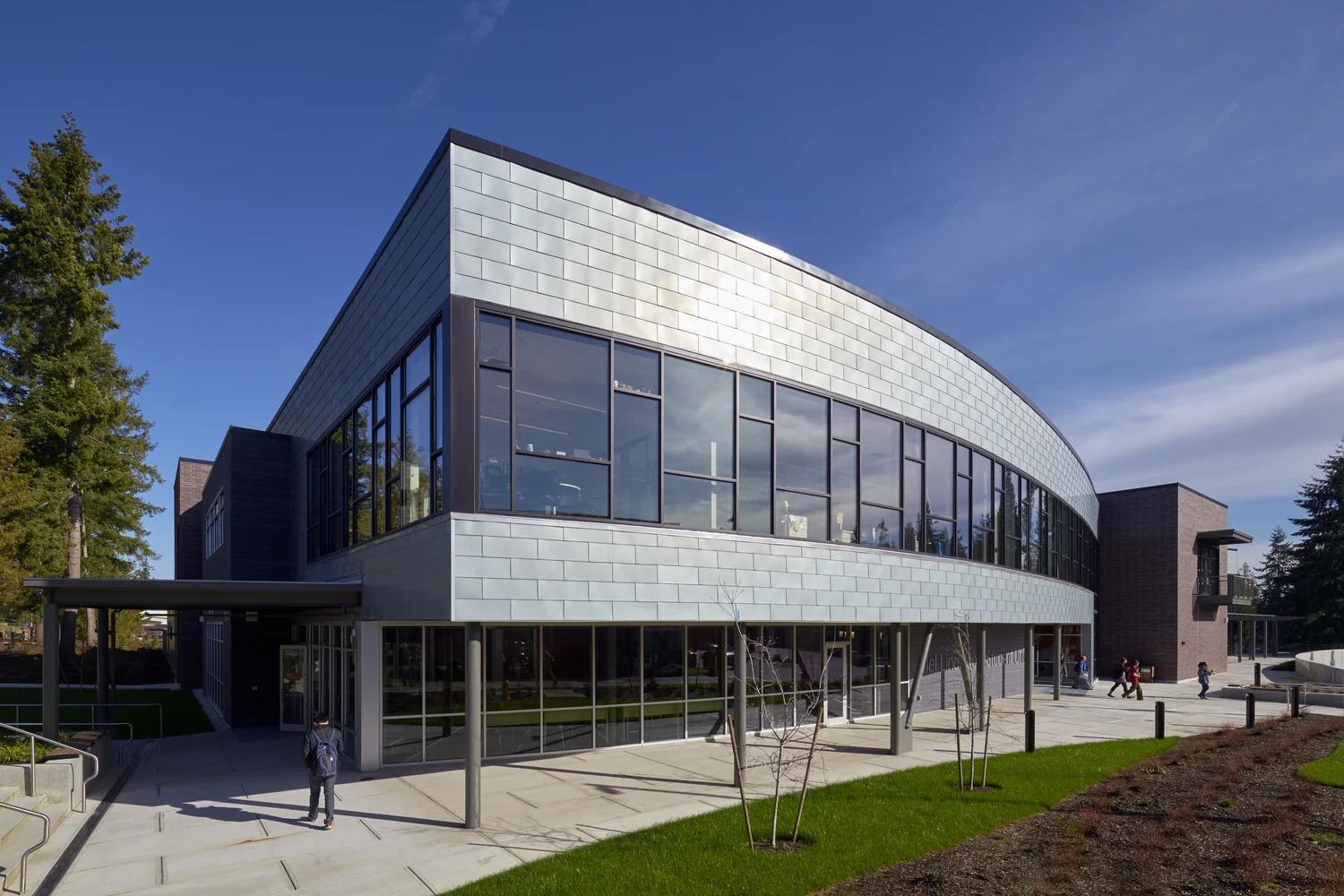
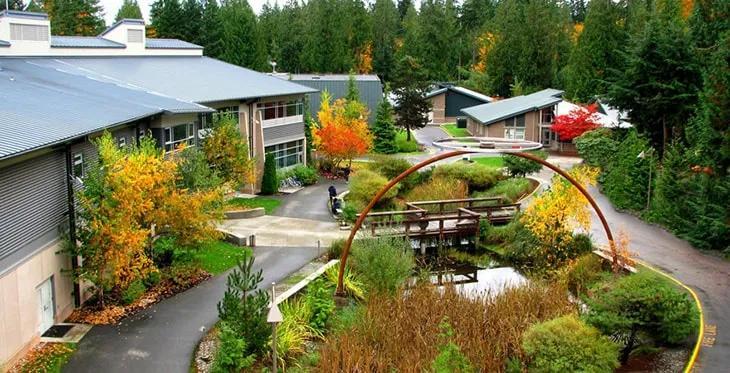
Campus Photos
Green River College
About Green River College
Green River College: Programs, Admissions, Tuition, and Student Life
Overview of Green River College
Green River College is a public community college located in Auburn, Washington, in the Pacific Northwest region of the United States. Founded in 1965, the college has developed a reputation for offering accessible academic pathways, international education, university-transfer opportunities, and career-focused programs. Its location south of Seattle gives students access to a region known for technology, business, healthcare, manufacturing, logistics, and outdoor recreation.
The college serves students pursuing different educational goals. Some enrol to complete an associate degree before transferring to a four-year university, while others seek professional skills, applied bachelor's degrees, English-language preparation, or a structured introduction to American higher education. This range of pathways can make Green River College an option for international students who want to begin their studies in the United States before deciding on their longer-term academic direction.
Green River College offers several pathways for international students, including university transfer programs, bachelor's-level applied study, an Intensive English Program, and other educational options. Program availability, entry requirements, costs, and progression arrangements depend on the chosen pathway.
Students considering the college should understand the distinction between a community college and a traditional four-year university. Green River College provides a range of credentials, but not every subject or program leads directly to a bachelor's degree at the college itself. Students planning to transfer should research the receiving university's requirements from the beginning.
Location and Campus Environment
Green River College is based in Auburn, Washington, a city in the Seattle metropolitan region. The campus offers a college environment within reach of the larger urban area while being situated outside downtown Seattle.
The surrounding region combines residential communities, parks, commercial areas, and access to employment centres. Students can experience the Pacific Northwest's natural scenery while remaining connected to a metropolitan economy with opportunities in technology, healthcare, business, logistics, and other industries.
Auburn and the broader region offer shopping, restaurants, recreation, public services, and transportation connections. Students should still check the route and travel time between their accommodation, the college, and any workplace or internship location they may use. Transportation arrangements can influence both daily convenience and the total cost of living.
The college's setting may appeal to students who prefer a suburban environment rather than studying in the centre of a large city. At the same time, its proximity to the Seattle area provides opportunities to explore a major American region.
Weather is another consideration. Western Washington experiences cool, wet periods during parts of the year, alongside milder seasons. Students arriving from warmer climates should prepare suitable clothing and plan for changing conditions.
Academic Programs and Study Pathways
Green River College offers educational options designed for students at different stages of their academic journeys. The best choice depends on whether the student wants to transfer to a university, complete a career-oriented qualification, strengthen English skills, or pursue another approved program.
University Transfer Programs
University transfer is an important pathway at Green River College. Students can complete courses that may satisfy the first two years of a bachelor's degree before transferring to a four-year institution.
This route can provide a structured way to begin American higher education. Students typically complete general education and subject-related courses before continuing at a receiving university. Depending on the intended major, coursework may include English composition, mathematics, social sciences, natural sciences, humanities, and introductory courses in a chosen discipline.
A transfer pathway can be useful for students who want to build a strong academic foundation before moving into an advanced bachelor's program. It may also give students time to adapt to American teaching methods and improve their academic communication skills.
However, transfer is not automatic in every case. Students must meet the receiving university's admission standards, complete the required courses, maintain the necessary grades, and follow any major-specific prerequisites. Credit acceptance can vary by institution and program.
Students should therefore select their courses with their intended transfer destination in mind. Meeting with an academic adviser and reviewing official transfer agreements can help prevent unnecessary credits, additional semesters, or unexpected costs.
Business and Management
Students interested in business may explore relevant coursework and academic pathways related to management, accounting, marketing, economics, and organisational operations where available.
Business study can introduce students to how organisations operate, how financial decisions are made, how markets respond to customer needs, and how teams work towards shared goals. These foundations can be useful for students considering careers in administration, marketing, sales, finance, entrepreneurship, or management.
Students intending to transfer into a bachelor's degree in business should check the prerequisite courses required by their preferred university. Some programs may require particular mathematics, economics, accounting, or introductory business classes.
Practical experience, communication skills, and the ability to work with data can strengthen a student's preparation for business-related study and employment.
Computer Science and Information Technology
Students interested in technology can investigate available computing, information technology, and related transfer pathways. Depending on the program, students may study programming, computer systems, mathematics, databases, networking, or other foundational subjects.
A student who plans to pursue a bachelor's degree in computer science should pay particular attention to mathematics requirements, programming prerequisites, and the sequence of courses needed for transfer. Computer science programs at four-year universities can be highly structured, so careful planning is important.
Technology-related education can support future study in software development, information systems, IT support, systems analysis, and related areas. Actual career preparation depends on the specific courses completed, practical projects, further qualifications, and the student's technical development.
Students should confirm the current catalogue before assuming that a specialised technology degree is available directly at Green River College.
Science, Mathematics, and Engineering Preparation
University-transfer students can investigate foundational coursework in mathematics, science, and other subjects required for further study in engineering and scientific disciplines.
Students planning to transfer into engineering should begin by reviewing the exact prerequisites of the target university. Mathematics sequences, laboratory science courses, academic grades, and credit-transfer rules can significantly affect the time required to complete a bachelor's degree.
Students interested in environmental science, biology, chemistry, physics, or related areas should likewise confirm the course sequence and laboratory requirements associated with their intended major.
A carefully planned transfer curriculum can help students avoid taking courses that do not count towards their eventual degree.
Bachelor of Applied Science Programs
Green River College offers Bachelor of Applied Science, or BAS, programs designed to provide applied learning and career-oriented preparation. These programs differ from the college's associate-degree and university-transfer routes.
A BAS program may be suitable for students seeking a bachelor's-level qualification that combines academic study with practical applications. Applicants should examine the specific program's entry requirements, curriculum, prerequisites, tuition structure, and career focus.
International students should pay particular attention to the program-specific tuition rate. The cost of a BAS program can be substantially different from the general international academic-year estimate used for many associate-level pathways.
Students should also confirm whether the program accepts their previous qualifications and whether any prerequisite courses must be completed before admission.
Intensive English Program
Green River College provides an Intensive English Program for students who want to improve their English before beginning academic study or who need additional language preparation.
English-language study can help students develop reading comprehension, academic writing, listening, speaking, vocabulary, and classroom communication. These skills are important for understanding lectures, completing assignments, contributing to group projects, and communicating with instructors.
The English program can be relevant to students who are not yet eligible for direct academic admission. Applicants should confirm the available entry routes, program duration, tuition, and progression requirements.
Completing English-language study does not necessarily guarantee admission to every academic program. Students should check how language progression is assessed and whether their intended degree has additional requirements.
High School Completion and Other Pathways
Green River College also provides options that may be relevant to eligible younger international students, including high school completion and college-credit opportunities. Other pathways may include gap-year study, university-transfer arrangements, and short-term educational experiences.
These options have different eligibility rules and educational purposes. Students should confirm age requirements, academic documentation, housing arrangements, program duration, and whether the pathway is suitable for their future plans.
Applicants should choose a program based on their current academic level rather than assuming that all pathways lead to the same qualification.
Admission Requirements for International Students
International admission requirements depend on the program, applicant's academic background, and intended intake. Students should review the official requirements for their chosen route before submitting an application.
Academic Documents
Applicants should prepare academic records from their previous school or college. Transcripts help the admissions team understand the student's educational background and determine eligibility for the intended pathway.
Documents should be submitted in the format requested by the college. If records are not in English, applicants should check whether an official translation is required. Transfer applicants may need to provide additional information about their current institution and previously completed courses.
Students should keep digital copies of their transcripts, passport, application documents, and correspondence so they can respond efficiently if the admissions team requests clarification.
Age and Program Eligibility
Green River College has specific age and arrival requirements for international students. Applicants should confirm that they meet the relevant minimum age by the required arrival or housing move-in date.
Some pathways, such as high school completion, have additional academic and age conditions. Students should not assume that eligibility for one program automatically establishes eligibility for another.
English-Language Proficiency
Applicants seeking academic admission may need to demonstrate English proficiency through an accepted test or another approved method. Published options include recognised English-language examinations, but the accepted tests, minimum scores, and any section-level requirements should be checked against the current official policy.
Students who do not meet the academic English requirements may be able to consider the Intensive English Program, depending on their circumstances and intended progression route.
Applicants should avoid relying on old score requirements because testing policies can change. They should also confirm whether test results are still valid and whether their previous education qualifies them for an exemption.
Financial Documentation
International applicants generally need to demonstrate sufficient financial resources for the required period of study. Green River College publishes an estimated nine-month budget for international academic students and requires applicants to provide financial documentation that meets its instructions.
Financial evidence must follow the college's current requirements regarding account types, documentation, language, and date. Students sponsored by family members or other individuals should confirm which sponsor documents are required.
The amount required for admission documentation is not necessarily the complete cost of every possible program. Students should budget separately for additional expenses, including health insurance, one-time fees, travel, and any program-specific charges.
Tuition Fees and Cost of Attendance
The cost of studying at Green River College depends on the program, course load, and length of enrolment. The college publishes estimated international student expenses for the academic year running from fall 2026 through summer 2027.
For a standard nine-month academic year, the published estimate is USD 23,475. This estimate includes tuition, living expenses, fees, and books. The breakdown is approximately USD 12,330 for tuition, USD 9,900 for living expenses, USD 717 for fees, and USD 528 for books.
For a three-month term, the estimated total is USD 7,825 under the same published budget. These figures are estimates and may change. They should not be treated as a guaranteed invoice for every student or program.
Health insurance is listed separately at USD 402 per term. The college also identifies additional costs for some programs, including the Bachelor of Applied Science and Intensive English Program. A BAS student's tuition can be considerably higher than the general academic estimate.
Students should also plan for application fees, any applicable housing placement fees, initial program charges, travel, personal items, and expenses that arise before or after arrival. Housing choices can change the actual amount spent on living costs.
Before making a final decision, students should calculate the likely cost for their entire intended study period, not just the first term. They should confirm the current rate for their specific program and understand payment deadlines and refund policies.
Scholarships and Financial Planning
Students should investigate the funding opportunities available for their particular program and applicant category. Scholarship availability at community colleges may differ from the funding structures offered by large research universities.
Applicants should ask whether a scholarship is available to international students, whether it applies to their chosen pathway, and whether there are academic or enrolment conditions. Any award should be confirmed in writing before it is included in a final budget.
Financial planning should cover tuition, living expenses, insurance, books, transportation, and unexpected costs. Students should also consider how they will fund later semesters or the remainder of a bachelor's degree after transferring to another institution.
Students who intend to transfer should compare the total cost of the full degree, including tuition at the receiving university. Starting at a community college may offer a different cost structure, but the final financial outcome depends on transfer credits, time to completion, housing, and the receiving institution's tuition.
A realistic financial plan can help students avoid interruptions in study and reduce stress after arrival.
Student Life and Campus Support
College life at Green River extends beyond academic classes. Students can engage with campus activities, student organisations, academic support, and opportunities to meet peers from different backgrounds.
International students may need time to adjust to the American education system. Classes may place considerable emphasis on participation, assignments, group work, independent reading, and meeting deadlines. Developing good study habits early can help students manage these expectations.
Academic advising can be particularly valuable for transfer students. Advisers can help students understand degree requirements, course sequencing, and the relationship between current classes and future university admission.
Students may also benefit from library resources, tutoring, writing support, technology facilities, and other student services available through the college. The exact services and eligibility conditions should be checked with the relevant department.
International students should take advantage of orientation and support services designed to help them understand enrolment procedures, campus policies, immigration responsibilities, and local resources.
Accommodation and Living in Auburn
Housing is an important part of planning for study in Washington. International students should investigate available college housing, approved housing arrangements, and off-campus options before travelling.
Students considering college-arranged housing should check eligibility, costs, move-in dates, placement fees, policies, and the services included. Younger students may have additional requirements, so it is important to read the rules for the intended program.
Off-campus accommodation may provide more independence but requires careful research. Students should compare rent, utilities, internet, transport, food, deposits, lease terms, and the distance from campus. A lower rent may not represent a saving if the location requires expensive or lengthy travel.
Students arriving from overseas should also plan their first days carefully. They should know where they will stay, how they will reach campus, how they will access food and essential supplies, and which college office to contact if plans change.
Living in Auburn can provide a suburban experience while keeping the wider Seattle region within reach. Students should still create a realistic monthly budget and avoid assuming that all city-related expenses are covered by the published academic-year estimate.
Career Development and Transfer Opportunities
Green River College serves students with different professional and academic goals. Some seek a career-oriented qualification, while others plan to transfer to a university to complete a bachelor's degree.
Students in applied programs should review the curriculum and consider how it relates to their intended profession. Projects, practical coursework, communication skills, and relevant experience can help students demonstrate their abilities to employers.
Transfer students should think about career preparation alongside academic planning. Building a strong transcript, developing writing and analytical skills, participating in relevant activities, and learning about professional expectations can support later university study.
Students should understand that employment outcomes depend on individual preparation, the labour market, qualifications, work authorisation, and other factors. Admission to a college or completion of a program does not guarantee a job.
International students must also follow the conditions of their immigration status. Any employment or practical training must be permitted under the applicable rules, and students should obtain guidance from the college's international student advisers before accepting work that may require authorisation.
Student Visa Preparation
International students planning to study in the United States should treat immigration preparation as a separate part of the application process. After meeting the college's admission and documentation requirements, eligible students can proceed with the documentation required for their student visa application.
Students should follow the college's current instructions for receiving their Form I-20 and preparing for the visa process. They may need to complete government forms, pay required fees, schedule a visa interview where applicable, and provide evidence of their academic intentions and financial resources.
Applicants should allow sufficient time for document preparation and appointment availability. They should ensure that information across their application, financial documents, and visa paperwork is accurate and consistent.
Admission and issuance of an I-20 do not guarantee visa approval. Students should consult official government guidance and the college's international student office for current instructions.
How to Apply to Green River College
International applicants can approach the process in a series of manageable steps.
Step 1: Choose the right pathway. Decide whether you want university transfer, an applied bachelor's program, English-language study, high school completion, or another available option.
Step 2: Check eligibility. Review academic prerequisites, age requirements, English proficiency, program availability, and deadlines for your intended intake.
Step 3: Prepare your documents. Gather your passport, academic records, English test results if applicable, financial evidence, and any other required forms.
Step 4: Submit the online application. Use the official international admissions process and provide complete, accurate information.
Step 5: Activate the applicant portal. Follow the college's instructions to access your application account and upload supporting documents.
Step 6: Pay required fees. Review the application fee, any applicable housing placement fee, and other charges that apply to your chosen pathway.
Step 7: Confirm finances and admission status. Respond to document requests and make sure your financial evidence meets the college's current requirements.
Step 8: Prepare for arrival. Arrange accommodation, review orientation dates, understand insurance requirements, and complete the appropriate immigration steps before travelling.
Step 9: Plan your courses. If you intend to transfer, work with an adviser to select courses that support your future degree and confirm how credits may be accepted.
Students should verify all deadlines for their intake because application timing, housing availability, and visa processing can affect their arrival plans.
Is Green River College a Good Choice for International Students?
Green River College may be a good option for international students who want a public college environment, a university-transfer pathway, applied education, or English-language preparation in Washington State.
Its transfer structure can be particularly relevant for students who want to complete foundational coursework before moving to a four-year university. The college also offers different educational routes, allowing students to choose a pathway that matches their academic background and long-term goals.
However, applicants should consider the complete cost of attendance, the program-specific tuition rate, accommodation, and the requirements of any university they plan to attend later. Students interested in a direct four-year bachelor's degree should compare Green River's available programs with other institutions before deciding.
A successful choice depends on understanding exactly which qualification the student will earn, how long the pathway will take, what it will cost, and what steps are required for further study or employment.
Conclusion
Green River College offers international students a range of academic options in Auburn, Washington, including university-transfer study, applied bachelor's programs, and English-language preparation. Its location near Seattle provides access to the wider Pacific Northwest while offering a college setting outside the centre of a major city.
For students planning to transfer to a four-year university, early academic advising and careful course selection are especially important. Applicants should also review program-specific tuition, living costs, insurance, financial documentation, and visa requirements before committing to an intake.
By confirming the current admission rules and building a realistic academic and financial plan, prospective students can make a more informed decision about whether Green River College is the right starting point for their educational journey.
Entry Requirements
General Entry Requirement
IELTS 6.0 overall
Fees & Scholarships
Annual Tuition Fees
USD 23,000 - USD 34,000
Ready to Apply to Green River College?
Our advisors guide you from eligibility check to offer letter — at no cost to you.
Join our WhatsApp Community
.jpeg)
Scan to join our student community for admission updates & guidance