
Annual FeesUSD 40,000 - USD 65,000
Franklin College
LocationUS
Entry RequirementIELTS 6.5 overall
Visa Success Rate70%
Campus Photos
Franklin College
About Franklin College
Franklin College: Programs, Admissions, Tuition, and Student Life
Overview of Franklin College
Franklin College is a private liberal arts college located in Franklin, Indiana, United States. Situated approximately 20 miles south of Indianapolis, the college provides an undergraduate-focused learning environment that combines academic study, practical experiences, research, and student involvement. Its relatively small campus community allows students to develop relationships with professors, participate in extracurricular activities, and explore different academic interests while preparing for future careers.
The college offers a range of undergraduate majors, minors, and pre-professional pathways across disciplines such as business, biology, psychology, communication, education, the humanities, and the sciences. Students can select a major aligned with their interests while developing transferable skills in critical thinking, writing, teamwork, research, and problem-solving.
Franklin College emphasizes experiential learning alongside traditional classroom instruction. Depending on their academic interests, students may participate in internships, undergraduate research, creative projects, practical coursework, and study-away opportunities. These experiences can help students connect academic concepts with real-world situations and better understand potential career paths.
For international students, Franklin College offers the opportunity to study in a smaller American college community while remaining within reach of Indianapolis and its professional, cultural, and recreational resources. Prospective applicants should carefully evaluate the available programs, total cost of attendance, scholarship eligibility, English-language requirements, and student visa procedures before making a decision.
Location and Campus Environment
Franklin College is located in Franklin, a city in Johnson County, Indiana. The area offers a small-city environment with residential neighbourhoods, local businesses, parks, and community facilities. Its proximity to Indianapolis provides additional access to employment centres, professional events, entertainment, healthcare facilities, and cultural attractions.
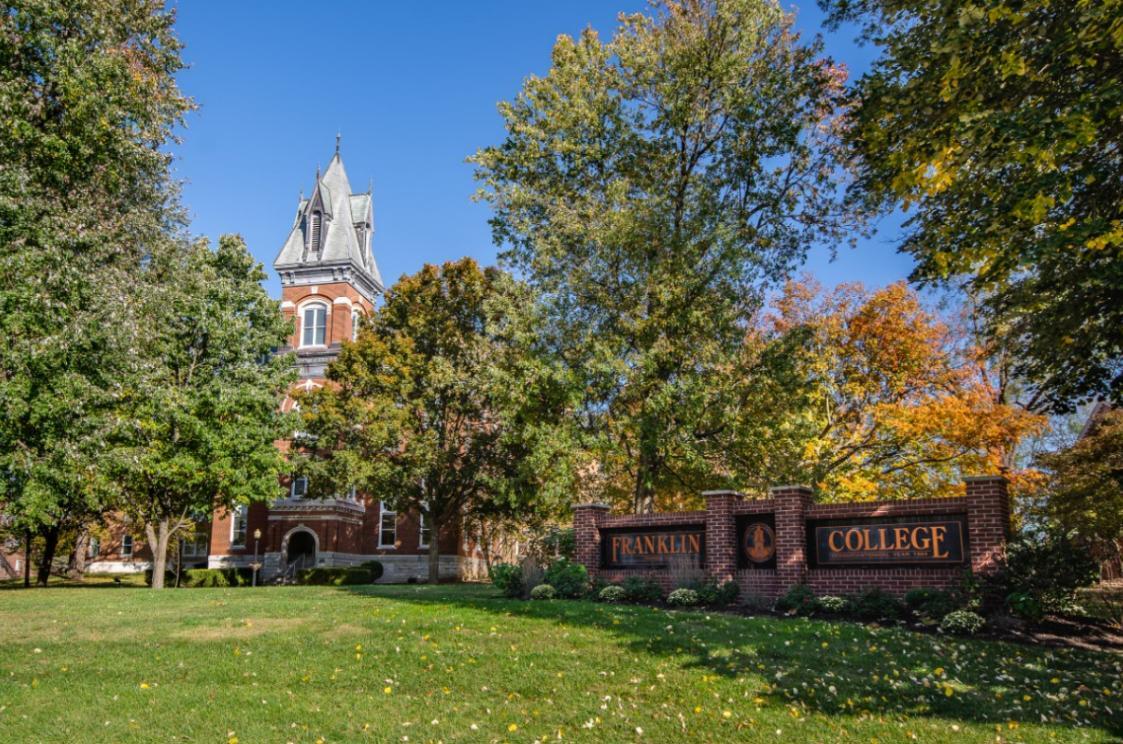
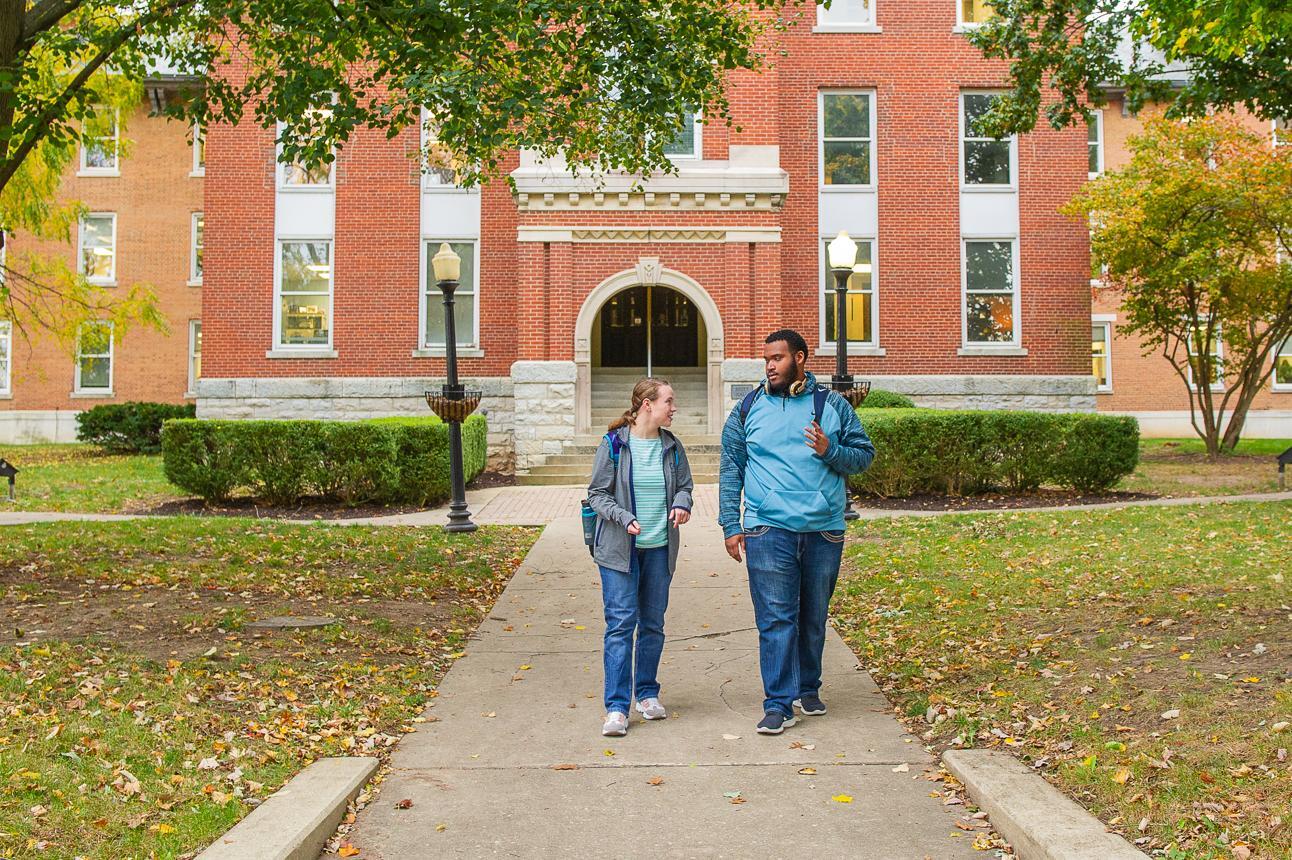
The campus includes academic buildings, classrooms, laboratories, student residences, dining facilities, recreational spaces, and areas for student activities. The campus environment supports both academic work and social engagement, allowing students to participate in college life beyond scheduled classes.
Franklin's location may appeal to students who prefer a close-knit campus rather than a large university situated in the centre of a major metropolitan area. A smaller community can make it easier to build relationships with classmates and faculty members, although each student's experience depends on their interests, participation, and chosen academic program.
Students should also consider transportation when planning their stay. Although Indianapolis is relatively close, access to off-campus destinations may require a car, public transportation, rideshare services, or other arrangements. International students should investigate their transport options before assuming that they can easily commute to internships or activities throughout the region.
The local climate includes four distinct seasons, with cold winters and warm summers. Students arriving from countries with different climates may need to prepare for seasonal changes in clothing, transportation, and daily routines.
Academic Programs and Areas of Study
Franklin College offers a broad selection of academic majors and minors, together with pre-professional pathways designed for students considering specialized careers or further education. The precise curriculum, availability of courses, and requirements for graduation depend on the chosen program.
Business and Economics
Business-related studies can introduce students to management, accounting, finance, marketing, economics, entrepreneurship, and organizational decision-making. These subjects help students understand how businesses operate, how markets influence decisions, and how organizations manage financial and human resources.
Students may develop skills in communication, quantitative analysis, research, presentations, and teamwork. Group assignments and practical projects can provide opportunities to apply classroom knowledge to business situations.
Graduates may explore careers in business operations, marketing, accounting, financial services, sales, management, and related fields. Career progression often depends on practical experience, technical skills, and professional qualifications. Students interested in finance or accounting should investigate whether their preferred career requires additional certifications or graduate study.
Biology and Health-Related Studies
Students interested in biological sciences can explore subjects related to living organisms, laboratory methods, scientific investigation, and the natural world. Biology can provide a foundation for further education in healthcare, research, environmental science, and other scientific fields.
Students considering medicine, dentistry, pharmacy, veterinary medicine, or other healthcare professions should plan their academic pathway carefully. Admission to professional schools is separate from admission to an undergraduate college and may involve specific prerequisite courses, entrance examinations, clinical experience, and competitive academic standards.
Franklin College's pre-professional pathways can help students prepare for further study, but students should confirm the requirements of the professional schools they eventually intend to apply to. A suitable academic adviser can help them identify the courses and experiences needed for their goals.
Psychology and Social Sciences
Psychology and other social sciences help students understand human behaviour, social relationships, communities, and institutions. Depending on the selected program, students may study research methods, development, cognition, social behaviour, statistics, and the relationship between individuals and their environments.
These disciplines can support careers or further study in human services, education, research, community work, organizational settings, and related areas. Students may also develop useful skills in observation, evidence evaluation, communication, and analytical reasoning.
Some careers in clinical psychology, counselling, and other regulated areas require graduate degrees, supervised experience, and professional licensing. Students should distinguish between the opportunities available with an undergraduate qualification and those requiring advanced credentials.
Communication and Media
Communication-related studies can help students develop skills in writing, public speaking, media analysis, interpersonal communication, and the creation of messages for different audiences. These abilities are valuable in journalism, public relations, marketing, corporate communication, digital media, and other professional settings.
Students may undertake presentations, writing assignments, group projects, or media-related activities. Practical experience can help students build a portfolio that demonstrates their communication abilities to potential employers.
Students interested in digital communication should also consider developing complementary skills in content strategy, social media, visual storytelling, data interpretation, and audience research. Combining communication knowledge with technical or business skills can broaden future career options.
Education and Teacher Preparation
Students interested in education can explore the principles of teaching, learning, curriculum development, and educational practice through relevant academic pathways. Education-related programs may prepare students for further professional training or roles connected with schools and learning environments.
Students who intend to become licensed teachers should carefully review the certification rules that apply in their intended state or country. Completing an undergraduate degree does not automatically guarantee eligibility for every teaching licence.
International students planning to teach outside the United States should also research qualification recognition in their home country. Requirements may include teacher training, examinations, supervised teaching, or additional coursework.
Humanities, History, and Literature
Humanities subjects encourage students to examine culture, history, language, literature, ethics, and the development of ideas. These areas help students build the ability to interpret information, evaluate arguments, write clearly, and understand different viewpoints.
Students may complete research papers, presentations, reading assignments, and collaborative projects. These experiences strengthen communication and reasoning skills that are useful in many professions.
Graduates may pursue further study or careers in education, communications, public service, research, publishing, nonprofit organizations, and other areas. Some specialized professions require additional qualifications beyond a bachelor's degree.
Mathematics and Natural Sciences
Mathematics and natural sciences provide students with methods for analysing evidence, solving problems, testing ideas, and understanding natural processes. Depending on their chosen subjects, students may work with mathematical models, laboratory experiments, statistical techniques, or scientific research.
Students considering technical or research-oriented careers should investigate opportunities to participate in faculty-led projects and develop practical experience. Research experience can be particularly valuable for those considering graduate school.
Course prerequisites and laboratory requirements vary across programs, so students should examine the academic catalog and discuss their plans with an adviser before selecting courses.
Why Choose Franklin College?
One potential advantage of Franklin College is its small-college learning environment. Students who value regular interaction with professors, classroom participation, and opportunities to become involved in campus activities may find this setting appealing.
The college's range of majors and minors can help students explore academic interests while building a foundation for professional or graduate study. Students may also have opportunities to combine classroom learning with research, internships, and other practical experiences.
Franklin College reports that its students complete an internship or undergraduate research experience as part of the college's experiential-learning approach. Students should ask how this requirement operates within their particular program and what support is available for identifying suitable opportunities.
The location near Indianapolis offers another consideration. Students may be able to explore professional events, cultural attractions, employers, and community organizations in the broader region. However, the availability of specific opportunities depends on the student's field, qualifications, transportation, and work authorization.
Financial assistance is also relevant. Franklin College offers scholarships for eligible international undergraduate students, including a renewable award that may reach USD 29,000 per year. Awards are subject to the college's eligibility criteria and conditions, so applicants should obtain confirmation of their individual award before calculating their final costs.
Admission Requirements for International Students
Franklin College welcomes international undergraduate applicants and provides guidance for students completing the application process from outside the United States. Applicants should review the current requirements for their intended intake because document rules, deadlines, and admission policies can change.
Undergraduate Application
International first-year applicants can generally apply through the college's online application or the Common Application. The published application fee is USD 40.
Applicants must provide official secondary-school academic records showing the courses they completed and the grades they received. Their school should also provide an explanation of the grading system used to evaluate academic performance. Records issued in another language must be translated into English in accordance with the college's instructions.
Electronic transcripts may be accepted for provisional admission, but official hard copies may be required before course registration. Students should check the exact document-submission process and avoid waiting until the last minute to request records from their schools.
The college reviews applications holistically, considering academic and personal achievements in the context of each applicant's educational opportunities and circumstances. Applicants should ensure that their applications are complete and that all required supporting documents have been submitted.
Standardized Tests
Franklin College is test-optional for SAT and ACT scores. International applicants may choose to submit scores if they believe these results provide additional evidence of their academic preparation.
Students should not assume that submitting a standardized test score guarantees admission or that omitting one guarantees rejection. Applicants should focus on presenting a complete and accurate application that demonstrates their academic readiness and relevant achievements.
English-Language Proficiency
International applicants must demonstrate English proficiency unless they qualify for an approved exemption. Franklin College lists several accepted tests and pathways.
Published minimum requirements include a TOEFL iBT score of 79 or paper-based TOEFL score of 550, IELTS Academic 6.5, Cambridge English at B2 level, Duolingo English Test 105, or Pearson score 53. The college also lists qualifying completion levels for certain approved English-language programs and other accepted pathways.
Applicants should verify the currently accepted tests, minimum scores, and exemption rules before registering for an examination. Test results may need to be sent directly from the testing organization.
Strong English skills are important beyond admission. Students must be able to understand lectures, participate in class discussions, write academic papers, complete examinations, and communicate effectively with professors and classmates.
Transfer Applicants
Students who have already completed college-level coursework may ask Franklin College to evaluate their previous academic work for transfer credit. The college indicates that transfer coursework is reviewed after the required enrollment deposit and submission of transcripts.
Transfer credit depends on the courses completed, grades earned, academic equivalency, and applicable institutional rules. Students should not assume that all previous coursework will count toward their intended degree.
Applicants should arrange for official transcripts to be sent directly by their previous institution and ask the college how credit evaluation affects their expected graduation date. Students transferring from institutions outside the United States should follow the college's instructions for international academic records.
Tuition Fees and Cost of Attendance
Tuition is an important part of planning for Franklin College. For the 2026–2027 academic year, the published full-time undergraduate tuition is USD 40,230 per year, with mandatory fees of USD 1,050.
Additional expenses depend on the student's living arrangements. The published on-campus budget includes housing of USD 7,340, a full food plan of USD 5,520, and USD 535 for food during the January Immersive Term. Books, transportation, and personal expenses are estimated separately.
The total published cost of attendance is USD 61,755 for students living on campus. The estimated total is USD 56,440 for students commuting from a parent's home and USD 65,360 for students living off campus. These figures represent budget estimates rather than identical bills for every student. Actual expenses can vary by housing choice, meal plan, transportation needs, and personal spending.
International students should prepare a budget based on the cost category that best reflects their circumstances. They should also consider expenses such as international travel, visa-related charges, deposits, clothing for seasonal weather, and unexpected costs.
Scholarships for International Students
Franklin College offers scholarships to eligible international undergraduate students. The college lists a renewable international student scholarship of up to USD 29,000 per year, subject to the relevant eligibility conditions. The published international admissions guidance states that no additional scholarship application is required to qualify for this particular award, although applicants should confirm the process for their intake.
A scholarship can reduce the financial burden, but it may not cover the full cost of tuition, fees, housing, food, and personal expenses. Students should calculate their expected remaining cost using their actual scholarship offer rather than the maximum advertised amount.
International applicants must also demonstrate sufficient funding for one full year of educational and living expenses. Acceptable financial evidence may include liquid bank deposits, qualifying investment statements, scholarship letters, lines of credit, or government funding. The college does not treat all financial documents as acceptable, so applicants should follow the official requirements carefully.
Campus Housing and Student Life
Franklin College offers on-campus housing and dining facilities for students who meet the relevant eligibility requirements. Living on campus can help students become involved in college activities, build friendships, and access academic facilities more conveniently.
Students should review housing options, room arrangements, meal plans, residence policies, and deadlines before confirming their plans. They should also understand the financial commitments associated with housing deposits and meal plans.
Student life includes opportunities to participate in clubs, organizations, leadership activities, cultural events, and recreational programs. Franklin College reports a range of student organizations, providing ways for students to meet people with shared interests and contribute to the campus community.
International students may benefit from joining student groups and attending campus events soon after arrival. These activities can help them practise English, build relationships, and learn about academic expectations and local culture.
Students should also take responsibility for their daily routines, including budgeting, time management, academic preparation, and personal wellbeing. A structured schedule can help them balance assignments, extracurricular activities, and social life.
January Immersive Term and Experiential Learning
An important feature of Franklin College is its January Immersive Term. This period allows students to participate in courses and experiences that differ from the traditional semester format. Depending on the available options, activities may include study-away experiences, internships, and interactive courses.
The college requires students to complete a minimum of two Immersive Term courses before graduation. Students should consult academic advisers to understand how these requirements fit into their degree plans and whether additional costs apply to a particular experience.
Experiential learning can help students develop independence, research skills, teamwork, and practical understanding of their chosen field. Students interested in internships should begin preparing early by identifying relevant opportunities, developing a résumé, and discussing career goals with advisers or faculty members.
The availability of a particular internship or study-away opportunity is not guaranteed for every student. Placement depends on the program, eligibility requirements, scheduling, and available opportunities.
Career Preparation and Employment Prospects
Franklin College's academic and experiential-learning environment can help students prepare for future employment or graduate study. Career outcomes depend on the chosen major, academic performance, professional experience, communication skills, and the requirements of individual employers.
Business graduates may pursue opportunities in marketing, finance, accounting, sales, or management. Students from the sciences may explore laboratory work, research, healthcare-related pathways, or advanced study. Communication and humanities graduates may pursue roles in media, public relations, education, public service, and other fields related to their skills.
Students can strengthen their professional preparation through internships, research, faculty mentorship, campus leadership, and relevant projects. They should also learn how to write a professional résumé, prepare for interviews, and explain the skills they gained through their academic work.
International students must understand that employment in the United States is subject to immigration rules and authorization requirements. Admission to Franklin College does not guarantee a job, internship, work authorization, or a specific salary after graduation.
Students intending to pursue further education should research graduate program prerequisites early. Relevant coursework, strong academic performance, recommendations, research experience, and entrance examinations may influence eligibility for advanced study.
Student Visa Considerations
International students who require F-1 status must complete the college's immigration documentation process. After admission and payment of the required enrollment deposit, Franklin College begins preparing the Form I-20 for eligible students.
Applicants must provide financial evidence showing that they can cover the required educational and living expenses for one full year. They should also ensure that their passport and other documents meet the current requirements.
After receiving the Form I-20, students can proceed with the applicable U.S. student visa application process. This generally includes paying the relevant government fees, completing required forms, and arranging an interview when instructed.
An admission offer or Form I-20 does not guarantee visa approval. Visa decisions are made by U.S. authorities, and applicants should follow official instructions rather than relying on claims about a college's visa success rate.
International students must maintain the conditions of their immigration status while studying. They should contact the appropriate college office before making decisions that may affect their enrollment, employment eligibility, or immigration documentation.
Is Franklin College the Right Choice?
Franklin College may suit students who prefer a private liberal arts college with a relatively small student community, broad academic options, and opportunities for experiential learning. Its location in Indiana offers a quieter campus setting while keeping Indianapolis within reach for additional cultural and professional activities.
The college's international scholarship opportunities can make it worth considering for students who meet the eligibility criteria. However, applicants should compare their confirmed financial package with the full estimated cost of attendance, including housing, meals, books, transportation, and personal expenses.
Before applying, prospective students should examine the available majors, review academic requirements, confirm English-language proficiency rules, and understand the documentation required for an F-1 visa. They should also investigate housing, student support services, internship opportunities, and the requirements of any intended graduate or professional pathway.
Franklin College offers a combination of academic study, campus involvement, and practical learning experiences. With careful research and financial planning, prospective students can decide whether its educational environment aligns with their academic interests, personal preferences, and long-term career goals.
Entry Requirements
General Entry Requirement
IELTS 6.5 overall
Fees & Scholarships
Annual Tuition Fees
USD 40,000 - USD 65,000
Ready to Apply to Franklin College?
Our advisors guide you from eligibility check to offer letter — at no cost to you.
Join our WhatsApp Community
.jpeg)
Scan to join our student community for admission updates & guidance