
Annual FeesUSD 35,700 - USD 54,300
Felician University
LocationUS
Entry RequirementIELTS 6.5 overall
Visa Success Rate70%
Campus Photos
Felician University

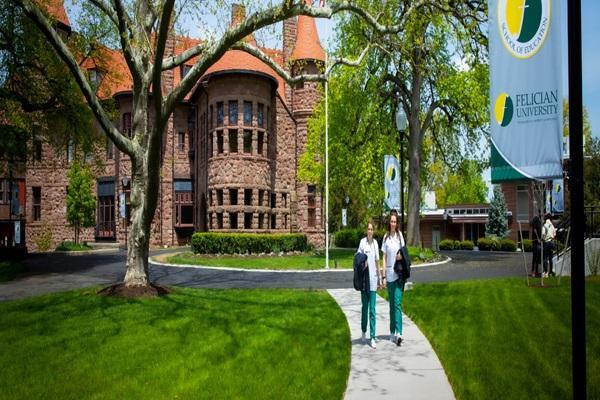
About Felician University
Felician University: Programs, Admissions, Tuition, and Student Life
Overview of Felician University
Felician University is a private Catholic university located in New Jersey, United States. Founded in 1923 by the Felician Sisters, the institution has developed into a coeducational university offering undergraduate, graduate, professional, and selected online programs. Its educational approach combines academic preparation with personal development, ethical responsibility, community engagement, and career-focused learning.
The university operates two suburban campuses in Rutherford and Lodi, New Jersey. Both locations provide access to the wider New York metropolitan region while maintaining a university environment suited to academic study and student activities. This geographical setting can appeal to students who want to study outside the centre of a major city while remaining within reach of its professional, cultural, and educational opportunities.
Felician University offers programs across areas including arts and sciences, business, education, nursing, and information sciences. Its academic options are intended to accommodate students with different interests, from those beginning their first undergraduate degree to professionals seeking graduate qualifications or further specialisation.
For international students, Felician provides admissions guidance, English-language requirements, information about scholarships, and support with documentation associated with studying in the United States. Applicants should evaluate the university according to their intended degree, academic eligibility, available financial support, and personal career objectives.
Choosing a university is an important financial and academic decision. Prospective students should confirm current program availability, tuition, scholarship conditions, campus arrangements, and immigration requirements before committing to an offer.
Location and Campus Environment
Rutherford Campus
Felician University's Rutherford campus is located in Rutherford, New Jersey, within the broader New York metropolitan area. Rutherford is a suburban community that provides a residential setting while offering connections to the surrounding region.
The campus environment allows students to focus on coursework, interact with faculty, and participate in university activities. Students can explore academic resources, student organisations, events, and services intended to support their educational experience.
One advantage of the location is its proximity to New York City. The surrounding metropolitan area includes businesses, hospitals, educational institutions, financial organisations, technology companies, cultural venues, and hospitality employers. This regional environment can be useful for students researching industries connected to their academic interests.
However, proximity does not guarantee an internship or job. Students need to develop relevant skills, build professional relationships, and understand employment eligibility requirements. Transportation costs and commuting time should also be included in their budget.
Prospective students should confirm which programs are delivered at Rutherford and whether their intended degree requires any specific campus attendance or practical placement.
Lodi Campus
Felician University's Lodi campus is situated in Lodi, New Jersey. Like Rutherford, Lodi offers a suburban environment within reach of the New York metropolitan region.
The university's two-campus structure gives students the opportunity to consider location as part of their educational decision. Campus facilities, program delivery, housing arrangements, and student services may differ, so applicants should verify the arrangements that apply to their particular degree.
Students should also investigate transportation options between their accommodation, classes, and other destinations. Although the campuses are in the same general region, daily travel requirements can affect both their schedules and expenses.
Studying Near New York City
The wider New York region provides access to a diverse economic and cultural environment. Students may explore museums, public events, professional gatherings, community organisations, and other experiences outside the classroom.
The region includes industries such as finance, business services, healthcare, technology, education, logistics, media, and hospitality. Depending on their qualifications and eligibility, students may investigate opportunities connected to these sectors.
Nevertheless, the cost of living in the region can be significant. Students should compare housing options, meals, transport, health insurance, and personal expenses before deciding where to live. They should avoid assuming that the availability of part-time employment will cover their tuition or living costs.
Academic Programs and Areas of Study
Felician University offers a range of programs through its academic schools and institutes. The precise courses available depend on the degree level, campus, and current university catalogue.
Students should examine individual program requirements rather than relying solely on a broad subject category. The curriculum, entry prerequisites, practical learning opportunities, and professional outcomes can vary substantially between degrees.
Business and Information Sciences
Business education can help students understand how organisations manage resources, evaluate opportunities, communicate with customers, and make strategic decisions. Depending on the program, students may explore management, accounting, finance, marketing, business administration, information systems, or related subjects.
Business students often develop analytical reasoning, teamwork, communication, and organisational skills. Assignments may involve presentations, research, group projects, and the application of business concepts to realistic scenarios.
Felician's business and information sciences offerings may appeal to students interested in combining business knowledge with technology or data-related skills. Applicants should review the current course catalogue to determine which specialisations are available and how each curriculum relates to their career plans.
Students who want to pursue business careers should consider the skills employers commonly seek in their chosen field. Practical experience, professional communication, digital literacy, and the ability to interpret information can complement formal academic qualifications.
Computer Science and Information Technology
Technology-related programs can suit students interested in computing, software, information systems, cybersecurity, and digital innovation. Felician's academic offerings include information sciences and technology-focused areas, with individual options depending on the current catalogue.
Students should carefully review the technical content of their intended degree. Relevant subjects may include programming, databases, systems analysis, networking, cybersecurity, data management, and software development, depending on the course.
Applicants should check whether a program is available in person, online, or through another delivery format. They should also verify prerequisites, laboratory requirements, and any additional fees associated with technical courses.
Technology students can strengthen their learning by developing practical projects and documenting their work. A portfolio, internship experience where available, and evidence of problem-solving ability can help demonstrate competence beyond academic grades.
Because technology changes quickly, graduates should be prepared to update their skills throughout their careers. The ability to learn independently and communicate technical concepts clearly is valuable in many computing roles.
Nursing and Health-Related Study
Nursing is an important part of Felician University's academic identity. Nursing education combines academic study with preparation for professional responsibilities involving patient care, health assessment, clinical judgement, communication, and ethical practice.
Students interested in nursing should investigate the precise degree and entry route available to them. Nursing programs can have stricter admission criteria than general undergraduate courses, including prerequisite subjects, health documentation, clinical requirements, and additional testing or evaluation.
International applicants should confirm whether they meet the academic requirements and whether their intended program accepts students in their circumstances. Transfer credit, previous nursing education, and clinical experience may be evaluated under specific policies.
A nursing degree does not automatically authorise a graduate to practise in every jurisdiction. Professional registration, licensing examinations, clinical requirements, and other conditions depend on the location where the graduate intends to work.
Students should therefore research licensing rules early, especially if they plan to return to their home country after graduation. Understanding professional recognition can help them decide whether the course aligns with their long-term goals.
Arts and Sciences
Felician University's arts and sciences offerings provide opportunities to study subjects that develop research, critical thinking, communication, and an understanding of human behaviour and the natural world.
Depending on the current catalogue, students may explore disciplines related to the humanities, social sciences, psychology, biology, and other areas. These subjects can provide foundations for further study, research, public service, education, and a variety of professional careers.
Students should consider how their chosen major relates to their intended next step. Some careers require postgraduate qualifications, professional certification, or supervised experience. A bachelor's degree may provide a foundation without representing the final credential needed for a regulated occupation.
Applicants should review the available majors, elective options, research opportunities, and any laboratory or practical requirements before selecting a course.
Education
Education-related programs can prepare students for roles involving teaching, educational support, leadership, and related areas. The exact opportunities depend on the degree and applicable professional requirements.
Students interested in teaching should distinguish between academic study in education and a qualification that satisfies a particular state's teacher-certification rules. Requirements may include supervised teaching, examinations, background checks, and additional coursework.
International applicants who intend to teach outside the United States should also investigate how the qualification will be recognised in their intended country of employment.
Graduate and Professional Programs
Felician University offers graduate study in selected fields, including business, nursing, education, information sciences, and other professional areas. These programs are designed for students seeking advanced subject knowledge, professional development, or a pathway to further specialisation.
Graduate admission requirements vary by program. Applicants generally need a recognised prior qualification and official academic records. Depending on the course, they may also need a personal statement, résumé, recommendations, evidence of professional experience, or additional examinations.
Some programs use different tuition rates and may include specific course, laboratory, clinical, or technology fees. Applicants should review the complete requirements and cost information for the exact degree before applying.
International Undergraduate Admission Requirements
International applicants should begin by confirming the academic requirements for their intended program. First-year undergraduate applicants generally need to submit the online application and official secondary-school transcripts showing their academic history.
The university may also require graduation documents, examination results, or other records depending on the applicant's education system. Documents should be submitted in the format specified by the admissions office, with official English translations where necessary.
The international undergraduate application process includes the following key elements:
- A completed online application.
- Official secondary-school transcripts and relevant graduation credentials.
- A personal statement.
- Evidence of English-language proficiency or an approved exemption.
- A copy of the passport information page.
- Financial certification and supporting documents for applicants seeking F-1 student visa sponsorship.
- The applicable application fee.
Felician's published international undergraduate guidance lists a USD 30 application fee. Fees and requirements can change, so applicants should check the current instructions before submitting payment.
SAT and ACT scores are generally optional for many international undergraduate applicants, although the university identifies exceptions, including nursing and certain specified programs. Students should verify the requirements that apply to their chosen degree.
Applicants should provide complete information about their educational history and respond promptly if the university requests additional records. Missing transcripts or unclear documentation can delay an admission decision.
Transfer Admission
Students who have already completed university-level study may be eligible to apply as transfer applicants. The university evaluates previous academic records to determine which credits can be accepted toward the intended degree.
International transfer applicants should prepare official transcripts from all relevant postsecondary institutions. Felician requires credential evaluations for foreign university work in specified circumstances. The university's international admissions guidance identifies evaluation services that are members of the National Association of Credential Evaluation Services.
Applicants should follow the university's current instructions regarding the required evaluation type and the submission of official reports. They should not assume that all previously completed courses will transfer or that the total duration of the degree will automatically be shortened.
Before enrolling, transfer students should seek clarification about accepted credits, remaining coursework, academic prerequisites, and the estimated time needed to complete their degree.
Graduate Admission Requirements
International graduate applicants must meet the entry criteria for their chosen program. They generally need to submit a completed application and official university transcripts demonstrating the required prior qualification.
The university lists a USD 40 application fee for graduate applicants in its international admissions guidance. Program-specific requirements may include a personal statement, résumé, letters of recommendation, credential evaluation, professional experience, or additional academic materials.
English-language proficiency must be demonstrated through an accepted test or an approved exemption where applicable. Graduate programs may require higher scores than undergraduate courses, so students should check the requirements for their intended degree.
Applicants whose previous qualifications were earned outside the United States should determine whether a formal credential evaluation is required. They should also confirm that their previous degree meets the academic standard for entry to the specific program.
English-Language Proficiency
International students whose native language is not English generally need to demonstrate that they can study effectively in an English-speaking academic environment, unless they qualify for an approved exemption.
Felician's published international admissions guidance lists the following minimum scores:
|
Test |
Undergraduate |
Graduate |
|
TOEFL iBT |
70 |
79 |
|
IELTS Academic |
6.0 |
6.5 |
|
Duolingo English Test |
100 |
105 |
|
Pearson PTE |
50 |
56 |
These scores are subject to the university's current policy and may vary for specific programs. Applicants should verify accepted tests, score validity, and exemption criteria before registering for an examination.
English proficiency is important for understanding lectures, reading academic material, participating in discussions, and completing written assignments. Students can prepare by practising academic writing, expanding subject-specific vocabulary, and developing listening and speaking skills before arrival.
Applicants who do not meet the required score should ask the university whether an approved pathway or alternative admission option is available. They should not assume that every program offers the same alternative.
Tuition Fees and Estimated Cost of Attendance
Tuition is a major factor in deciding whether a university is financially suitable. Felician University publishes an international undergraduate cost estimate and a separate tuition schedule for the 2026–2027 academic year.
The international bachelor's cost page lists tuition and fees of USD 35,700. It also estimates annual living expenses, including room and board, at USD 13,400, health insurance at USD 1,950, personal expenses at USD 1,950, and books and supplies at USD 1,300. Together, these amounts produce an estimated annual total of USD 54,300.
Separately, the university's 2026–2027 general tuition schedule lists full-time traditional undergraduate tuition of USD 19,730 per semester for students taking 12 to 18 credits. The schedule includes additional charges, and the rate structure differs by course type and program.
These figures describe different published cost categories and should not be treated as interchangeable. International applicants should obtain a current individual estimate from the university for their program, campus, and intake.
Graduate tuition varies by degree and credit load. Certain programs charge tuition per credit, and some have specific clinical, laboratory, technology, or course fees. Housing costs also depend on the accommodation type, and meal arrangements may be included in some residential charges.
Students should budget for more than tuition alone. Their financial plan should include accommodation, food, insurance, books, supplies, transportation, personal expenses, travel, and an emergency reserve. Initial costs may include deposits, travel to the United States, and items needed to establish a new residence.
Applicants should review payment deadlines and ask the university about the conditions of any payment arrangement. Tuition rates and fees can change, so students should base their decision on the most current published information and a written estimate when available.
Scholarships and Financial Support
Scholarships can help reduce the cost of an undergraduate or graduate education. Felician University advertises scholarships for international students, with awards subject to eligibility and academic review.
Its published international admissions information lists international freshman and transfer scholarships ranging from USD 5,000 to USD 20,000. These awards are applied toward tuition, and eligibility depends on the applicant's academic credentials and the university's assessment.
The university also lists a graduate international student scholarship of USD 1,000 per year for eligible incoming graduate international students. Students should verify the current terms, renewal conditions, and duration of the award before relying on it in their budget.
A scholarship should be evaluated alongside the total cost of attendance. Even a substantial tuition award may leave students responsible for housing, meals, insurance, transportation, and other expenses.
Applicants should read the award letter carefully to understand whether the scholarship is renewable, what academic conditions apply, and whether it covers only tuition. They should also confirm how the award interacts with any other financial assistance.
Students who require F-1 visa sponsorship should prepare the financial evidence requested by the university. They should demonstrate a credible plan for covering the expenses associated with study and living in the United States, rather than depending on uncertain future income.
Student Life and Campus Involvement
Felician University promotes a campus experience that includes academic learning, extracurricular activities, student organisations, athletics, cultural engagement, and opportunities for personal development.
Joining student organisations can help students develop friendships, explore interests, and build leadership and teamwork skills. Activities may also give students opportunities to practise communication, organise events, and participate in the university community.
International students may benefit from joining campus activities early, particularly when adapting to a new academic environment. Orientation programmes and student services can help them understand university procedures, locate resources, and connect with classmates.
Students should maintain a healthy balance between coursework, social activities, and personal responsibilities. Planning assignments, attending classes, communicating with instructors, and seeking help when necessary can contribute to a more successful academic experience.
Athletics and Campus Activities
Felician participates in NCAA Division II athletics and offers opportunities for students to engage with university sports and campus events. Students who enjoy athletics may attend competitions, join recreational activities where available, or participate in other university programmes.
Sports and extracurricular involvement can support teamwork, time management, and social connections. However, students should confirm the eligibility rules, schedules, and participation requirements for any activity they intend to pursue.
Housing and Daily Living
Students should research accommodation well before travelling to New Jersey. On-campus housing, where available, may offer convenience and easier access to university activities. Off-campus accommodation can provide different levels of independence but may require additional planning for transport, utilities, and meal expenses.
The cost of living near New York City can be substantial. Students should compare housing contracts, deposits, meal plans, transport costs, and commuting times before selecting accommodation.
A practical arrival plan should also cover mobile connectivity, banking, healthcare, local transport, weather-appropriate clothing, and everyday supplies. Preparing these arrangements in advance can help students settle in and concentrate on their studies.
Career Development and Professional Opportunities
Felician University's programs can help students develop academic knowledge and professional skills relevant to their chosen fields. Career outcomes depend on the degree, individual performance, experience, professional requirements, and conditions in the relevant labour market.
The university promotes experiential learning, career development, and opportunities to gain practical experience. Depending on the program, students may investigate internships, research, applied projects, study abroad, and other learning opportunities that connect coursework with professional practice.
Business students may explore careers related to management, finance, accounting, marketing, or information systems. Computing students can develop technical projects and practical skills. Students in nursing and other regulated fields must pay particular attention to professional registration and licensing requirements.
Students should take responsibility for building their career readiness. Creating a strong résumé, developing communication skills, documenting projects, practising interviews, and seeking feedback can help them present their abilities effectively.
The university's New Jersey location may provide access to a broad professional region, but employment is not guaranteed. Students should research the industries they want to enter and identify the qualifications, skills, and experience employers expect.
International students must also understand the immigration rules governing employment during and after study. They should consult the university's international student advisers before accepting work or making plans that depend on employment authorisation.
Preparing a Strong Application
Applicants can improve their preparation by following a clear process. First, they should identify the program and campus that best fit their academic background and career objectives. They should then review the current admission requirements and confirm that they satisfy the relevant academic and language criteria.
Academic transcripts, graduation documents, translations, and credential evaluations should be arranged early. Students should allow enough time for official records to be issued and delivered, particularly when they must be obtained from institutions in another country.
Applicants should also prepare their financial plan before accepting an offer. This plan should include tuition, living expenses, insurance, transportation, books, personal spending, and any additional program-specific costs. Scholarship awards should be incorporated only after their terms have been confirmed.
Students requiring an F-1 visa should follow the university's instructions for financial certification and immigration documents. They should allow time for the separate government visa application and avoid assuming that university admission guarantees visa approval.
Before making a final decision, applicants should compare Felician University with other institutions offering similar programs. Useful factors include curriculum, total cost, scholarships, campus environment, student support, professional recognition, and the opportunities available in their intended field.
Conclusion
Felician University offers undergraduate and graduate education in New Jersey, with academic options across business, information sciences, nursing, education, arts, sciences, and related professional areas. Its Rutherford and Lodi campuses provide suburban settings within reach of the New York metropolitan region.
For international students, the most important considerations include selecting the right program, meeting admission and English-language requirements, preparing official academic records, understanding campus arrangements, and establishing a realistic financial plan. Published tuition and scholarship figures should be checked against the student's individual program and intake.
Students should also investigate housing, student support, career development, and any licensing requirements connected to their intended profession. Careful preparation can help them assess whether Felician University's academic offerings, costs, and campus environment match their personal and professional objectives.
By reviewing current university information and comparing available alternatives, prospective applicants can make an informed decision about pursuing higher education at Felician University.
Entry Requirements
General Entry Requirement
IELTS 6.5 overall
Fees & Scholarships
Annual Tuition Fees
USD 35,700 - USD 54,300
Ready to Apply to Felician University?
Our advisors guide you from eligibility check to offer letter — at no cost to you.
Join our WhatsApp Community
.jpeg)
Scan to join our student community for admission updates & guidance