
Annual FeesUSD 70,950 – USD 73,600
Eckerd College
LocationUS
Entry RequirementIELTS 6.5 overall
Visa Success Rate68%
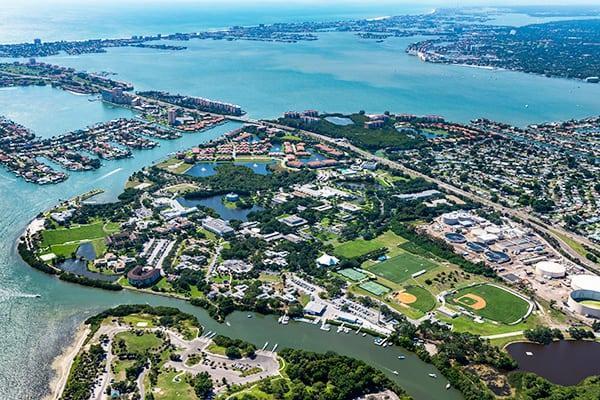
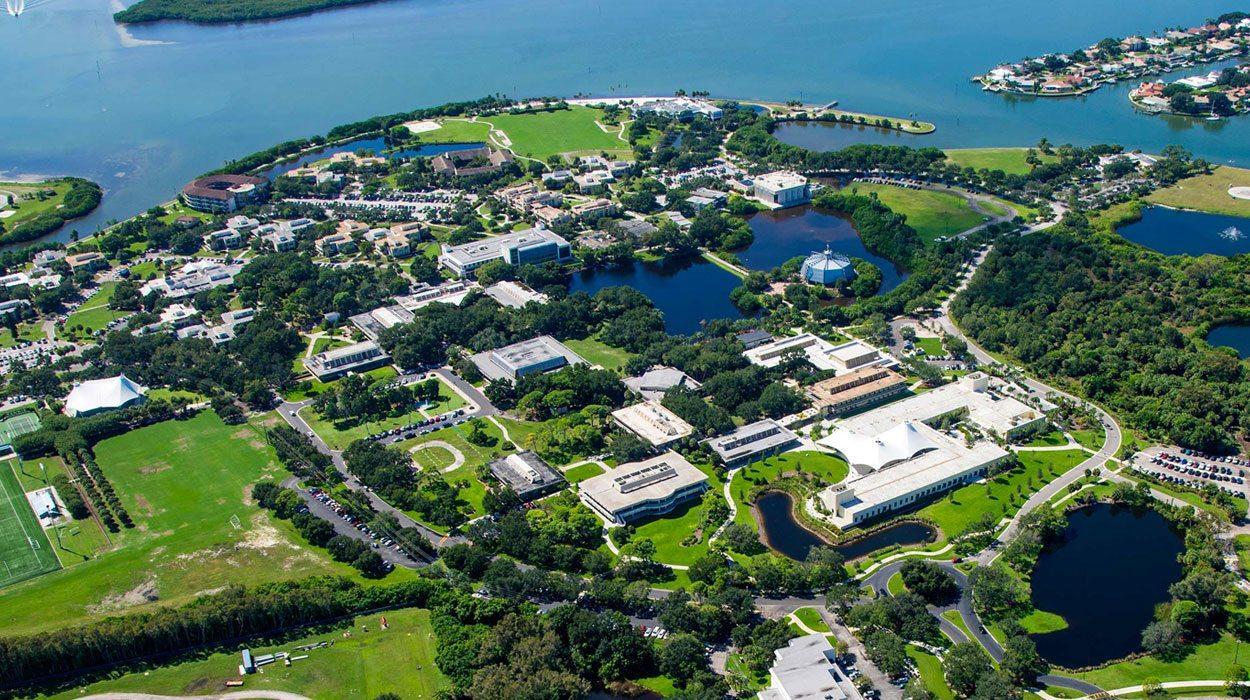
Campus Photos
Eckerd College
About Eckerd College
Eckerd College: Courses, Fees, Admissions and Campus Life
Overview of Eckerd College
Eckerd College is a private liberal arts college located in St. Petersburg, Florida, United States. Its waterfront campus offers an academic environment shaped by interdisciplinary learning, close faculty interaction and opportunities to connect classroom study with practical experiences.
The college offers undergraduate degrees, including Bachelor of Arts (BA), Bachelor of Science (BS) and Bachelor of Fine Arts (BFA) programs. Its academic approach emphasizes critical thinking, communication, problem-solving and learning across different disciplines.
Eckerd College may appeal to international students who prefer a smaller college environment, opportunities for faculty mentorship and a curriculum that combines a chosen major with broader general education. Students can explore academic subjects while developing skills that are useful across different careers.
The college works with international applicants from a range of educational backgrounds. Applicants should review the current entry requirements, English-language criteria, scholarship availability and estimated costs before choosing a program.
Why Study at Eckerd College?
Choosing a college in the United States involves considering the academic environment, cost, campus location, student support and long-term goals. Eckerd College has several features that prospective international students may find attractive.
Liberal Arts Education
Eckerd follows a liberal arts approach that encourages students to study subjects beyond their main area of specialization. This broader education can help students develop analytical reasoning, writing, communication and decision-making skills.
Students can build a foundation in their chosen discipline while exploring related fields and different perspectives. This approach may be particularly useful for students who want to understand how their subject connects with wider social, scientific or professional issues.
Small-College Learning Environment
A smaller college setting can offer opportunities to engage with faculty members, participate in classroom discussions and receive academic guidance. Students can work with faculty mentors to plan their studies and explore academic interests.
The learning experience depends on the chosen program, course structure and individual participation. Applicants should examine the available majors, class formats and academic support services to determine whether the environment suits their learning preferences.
Waterfront Campus in Florida
Eckerd College is situated in St. Petersburg, on Florida's Gulf Coast. The campus has a distinctive waterfront setting and provides a residential college experience.
The location offers a warm-weather environment and access to the wider St. Petersburg and Tampa Bay region. Students should consider transportation, accommodation, weather conditions and living expenses when evaluating the location.
Study Abroad and Experiential Learning
Eckerd encourages students to connect classroom learning with experiences beyond campus. Depending on the program, students may explore study-abroad opportunities, internships, research and community-based learning.
These experiences can help students build independence, cultural awareness and practical skills. Participation requirements, availability and additional costs vary, so students should confirm the details before making plans.
International Student Support
International students must adjust to a different academic system, cultural environment and immigration process. Eckerd provides international admissions information and student support to help students understand application requirements and prepare for enrollment.
Students should use the college's official guidance when preparing financial documents, immigration paperwork and other requirements associated with studying in the United States.
Popular Courses and Academic Areas
Eckerd College offers undergraduate majors and minors across the arts, humanities, sciences and social sciences. Program availability and individual course requirements should be checked in the current academic catalog.
Marine Science and Environmental Studies
Students interested in marine environments, conservation and environmental challenges may explore relevant scientific and environmental programs. Florida's coastal location provides a useful regional context for studying marine and environmental topics.
Applicants should review the curriculum, laboratory or fieldwork components and any prerequisites associated with their intended major. Opportunities for specialized research depend on the program and the student's academic progress.
Biology and Biochemistry
Biology-related study can introduce students to living systems, scientific investigation and laboratory-based learning. Biochemistry combines aspects of biology and chemistry to examine the chemical processes associated with living organisms.
Students considering these areas should examine laboratory requirements, mathematics and science preparation, and potential postgraduate or professional pathways. An undergraduate science degree does not automatically qualify a student for admission to a specialized professional program.
Computer Science and Mathematics
Students interested in technology, computing and quantitative problem-solving can investigate the relevant majors and courses available at Eckerd. A strong foundation in analytical thinking can support further study or entry-level work in technical and related fields.
Before applying, students should review the current course catalog to confirm the available curriculum, prerequisites and opportunities for project-based learning.
Business and Management
Students interested in organizations, entrepreneurship, finance and management can explore relevant academic options and interdisciplinary combinations. A liberal arts education can support business-related development through communication, research, quantitative reasoning and problem-solving.
Applicants should check the current list of majors and minors rather than assuming that every business specialization offered at a larger university is available at Eckerd.
Psychology and Social Sciences
Psychology and other social science subjects can help students understand human behavior, social systems and the factors that influence individuals and communities.
Students can explore how these subjects connect with education, research, community engagement and further study. Requirements for careers in clinical or other regulated professions may involve additional education and licensing.
Humanities, Arts and Creative Subjects
Students interested in literature, history, languages, visual arts and creative expression can explore relevant undergraduate offerings. These disciplines encourage interpretation, critical analysis, research and communication.
Eckerd awards Bachelor of Fine Arts degrees as well as other undergraduate qualifications. Students interested in creative programs should review portfolio requirements, specialist facilities and course-specific expectations where applicable.
Eckerd College is an undergraduate institution and does not offer graduate-level programs. Students planning to pursue a master's degree or doctorate should investigate other universities for postgraduate study after completing their bachelor's degree.
Admission Requirements for International Students
International admission requirements vary according to whether the applicant is entering college for the first time or transferring from another institution.
First-Year Undergraduate Admission
Students who have completed secondary school and have not undertaken postsecondary study generally apply as first-year applicants.
The college's international application checklist includes:
- A completed Eckerd College or Common Application.
- A personal statement or essay.
- Official secondary-school transcripts and relevant examination certificates.
- An admission recommendation letter.
- Proof of English-language proficiency, where required.
- The application fee and any additional materials requested by the admissions office.
Applicants whose original records are not in English should arrange certified English translations in accordance with the college's instructions.
Eckerd evaluates applications holistically. Academic performance, personal qualities, interests, recommendations and potential contributions to the campus community can form part of the review. Meeting a particular academic profile does not guarantee admission.
English-Language Requirements
International applicants whose native language is not English generally need to demonstrate English proficiency through an accepted test or another approved qualification.
Eckerd lists the following English-language options for international applicants:
- IELTS Academic: overall band score of at least 6.5.
- TOEFL iBT: at least 79, or the alternative score specified by the college for the relevant test format.
- Duolingo English Test: at least 110.
- Other accepted options, including specified SAT or ACT English-related scores and approved English-language qualifications.
Applicants should check the latest official requirements before booking a test or submitting scores. Accepted test formats, exemptions and minimum scores can change.
Transfer Admission
Students who have attended a college or university after completing secondary school may be eligible to apply as transfer students.
Transfer applicants generally need to submit their application, personal statement, secondary-school records, university transcripts, recommendation or dean's report, and proof of English proficiency where required.
The college reviews previous academic work individually when considering transfer credit. The amount of credit awarded depends on the courses completed, academic records and the college's transfer policies. Applicants should not assume that every previous course will transfer.
Application Deadlines
Eckerd offers Early Action and Rolling Admission for relevant undergraduate applicants. The college also accepts applications for a January start, subject to the applicable application process and deadlines.
Deadlines depend on the entry term and application route. Students should confirm the current dates, document requirements and decision timeline with the admissions office before submitting their applications.
Applying Through an INTO-Related Route
International students considering Eckerd through an INTO-supported route should confirm which application and support arrangements apply to them. The applicable entry requirements, academic preparation, English-language conditions, tuition and scholarship terms must be checked for the specific route.
Applicants should obtain written confirmation of their program, total cost and progression conditions before accepting an offer. They should not assume that a pathway arrangement automatically guarantees admission or progression under every circumstance.
Tuition Fees and Cost of Attendance
Tuition is a major expense for international students, but the full cost of attending college also includes housing, meals, books, transportation, insurance and personal expenses.
For the 2026–2027 academic year, Eckerd College publishes the following full-time tuition and selected charges:
|
Expense |
Annual estimate |
|
Full-time tuition |
USD 54,270 |
|
Student activity fee |
USD 436 |
|
Technology fee |
USD 330 |
|
Traditional double-room housing |
USD 8,194 |
|
Tier A-250 meal plan |
USD 7,438 |
|
Tuition, listed fees, double room and meal plan |
USD 70,668 |
These figures represent a specific housing and meal-plan combination. Different accommodation choices and meal plans will change the total.
Other Estimated Expenses
Students should also plan for books and supplies, transportation, personal expenses, health insurance and other required or incidental costs.
Eckerd's published annual cost-of-attendance overview estimates additional expenses beyond tuition and direct campus charges. The total budget can therefore be higher than the amount billed directly by the college.
International students should use the current cost information provided for their admission year and chosen living arrangement. Costs for summer study, extra courses or other special arrangements may be separate.
Understanding the Total Budget
Before accepting an offer, students should prepare a complete annual budget that includes:
- Tuition and mandatory college fees.
- Housing and meals.
- Books, supplies and course-related expenses.
- Health insurance.
- Transportation and personal spending.
- Visa-related and initial travel expenses.
The amount required for immigration documentation may differ from the direct college bill because it can include estimated living and incidental expenses. Students should follow the college's current financial-document instructions.
Scholarships and Financial Aid
Scholarships can make studying in the United States more affordable, but eligibility and award values vary.
Eckerd College automatically considers eligible international first-year applicants for an International Student Grant of up to USD 27,000 per year. The award is based on the application for admission, and an additional scholarship application is generally not required for this particular consideration.
Eligible transfer students may have access to transfer scholarships. Additional talent-based awards may be available for qualifying artistic achievement, research or community engagement and leadership.
International students are not eligible for need-based financial aid from Eckerd under the college's published policy. Students should therefore plan carefully for the portion of the total cost that is not covered by a confirmed award.
How to Plan for Scholarships
Applicants should:
- Submit a complete application by the appropriate deadline.
- Provide accurate academic records and supporting documents.
- Check whether the scholarship applies to their student category and intended program.
- Confirm the award amount, renewal conditions and duration.
- Calculate the remaining annual cost after any confirmed scholarship.
Students should not assume that the maximum advertised scholarship will be awarded to every applicant. They should also confirm whether an award is renewable and what academic conditions must be maintained.
Campus Life and Student Experience
Campus life can influence a student's academic experience, social connections and personal development. Eckerd's residential setting provides opportunities to participate in student activities and become involved in the campus community.
Residential Campus
Many students experience college life through campus accommodation, shared facilities and student activities. Housing options and charges vary, so students should compare available room types and meal plans before choosing their living arrangement.
International students should arrange accommodation early and confirm the dates when they can move in, particularly if they plan to arrive from overseas.
Clubs and Student Organizations
Student organizations provide opportunities to explore interests, meet classmates and develop leadership skills. Depending on the academic year, students may find groups focused on culture, academics, volunteering, recreation and creative activities.
Participation can help international students become familiar with campus life and build relationships outside the classroom.
Faculty Mentorship and Academic Support
Students can work with faculty mentors to plan their academic progress, explore majors and select courses. Academic guidance can be particularly valuable for students who are deciding between subject areas or considering research and internships.
Students should make use of academic advising and other college resources early rather than waiting until they experience difficulties.
Community Engagement
Community-based learning and service opportunities can help students connect their studies with local issues. These activities may support the development of teamwork, communication and practical problem-solving skills.
Availability varies by program and opportunity, so students should review the college's current offerings.
Life in St. Petersburg, Florida
St. Petersburg offers a coastal setting in the wider Tampa Bay region. Students can explore local cultural, recreational and community activities while studying.
The cost of living, transportation requirements and weather conditions should be considered when planning a move. Florida's climate includes a tropical storm and hurricane season, so students should familiarize themselves with campus safety and emergency procedures.
Career Development and Future Opportunities
Eckerd's liberal arts approach aims to develop skills that can be applied across a variety of professional settings. Critical thinking, writing, communication, teamwork and analytical reasoning can support career development in many fields.
Students can investigate internships, research opportunities, career guidance and community-based experiences relevant to their intended profession. The opportunities available will depend on the student's program, interests and eligibility.
Potential career directions depend on the major selected. Graduates may pursue roles related to their subject area, enter the workforce in positions that value transferable skills or continue their education at another institution.
Students interested in regulated professions or specialist careers should research the additional qualifications, licensing requirements or postgraduate education needed for entry.
International students must also understand that employment in the United States is subject to immigration rules. Enrollment at a college does not automatically provide unrestricted permission to work. Students should consult the appropriate college office before accepting employment or beginning an internship.
How to Apply to Eckerd College
International students can organize their application using the following steps.
Step 1: Choose an undergraduate program. Review the available majors, minors and curriculum to identify a course that fits your interests and academic background.
Step 2: Check entry requirements. Confirm the required school qualifications, English proficiency and any program-specific expectations.
Step 3: Prepare your documents. Collect transcripts, examination certificates, your personal statement, recommendation letter and other required materials.
Step 4: Submit your application. Apply through the college's application system or the Common Application, following the instructions for your chosen admission route.
Step 5: Review your admission decision. If accepted, read the offer carefully and confirm the program, scholarship terms, deposit requirements and deadlines.
Step 6: Arrange financial documentation. Prepare the required evidence of financial support and follow the instructions for obtaining the immigration documents needed for study.
Step 7: Plan your arrival. Confirm accommodation, travel, health insurance, orientation and any required pre-arrival tasks.
Applicants should allow enough time for document processing, financial arrangements and visa procedures. Requirements can change, so official guidance should be checked before each major step.
Frequently Asked Questions
1. Is Eckerd College suitable for international students?
Eckerd accepts international applicants and provides information about admissions, English proficiency, financial documentation and student support. Whether it is suitable depends on the student's academic goals, budget and preferred campus environment.
2. What is the tuition fee at Eckerd College?
For 2026–2027, published full-time tuition is USD 54,270 per year before housing, meals and other expenses. A listed annual combination of tuition, fees, a traditional double room and the Tier A-250 meal plan totals USD 70,668. Actual costs vary by living arrangement and additional expenses.
3. What IELTS score is required for international admission?
Eckerd lists an overall IELTS Academic score of at least 6.5 for international applicants who need to demonstrate English proficiency. Applicants should confirm the latest accepted tests and requirements before applying.
4. Does Eckerd College offer scholarships to international students?
Yes. Eligible international first-year applicants are automatically considered for an International Student Grant of up to USD 27,000 annually. Award values and eligibility conditions vary, and international students are not eligible for need-based aid under the college's published policy.
5. Does Eckerd College offer master's degrees?
No. Eckerd College awards undergraduate degrees, including BA, BS and BFA qualifications, and does not offer graduate-level programs. Students seeking a master's degree should explore other universities.
6. Can international students transfer credits to Eckerd?
Transfer applicants can submit their previous university records for review. The college evaluates academic work individually, and the number of credits accepted depends on its transfer-credit policies.
7. Where is Eckerd College located?
Eckerd College is located in St. Petersburg, Florida, in the Tampa Bay region of the United States. Its campus has a distinctive waterfront setting.
8. Can international students work while studying at Eckerd?
Employment opportunities depend on immigration status and the applicable authorization rules. Students should seek guidance from the college's international student services team before accepting employment.
Conclusion
Eckerd College offers an undergraduate liberal arts education in a distinctive waterfront setting in St. Petersburg, Florida. Its academic approach emphasizes broad learning, critical thinking, communication and opportunities to connect classroom study with practical experiences.
International applicants should carefully evaluate the available majors, English-language requirements, tuition and living expenses before making a decision. Scholarship opportunities may reduce costs for eligible students, but the remaining financial commitment should be planned in advance.
A well-informed application begins with choosing an appropriate undergraduate program, checking the latest official requirements and preparing complete academic and financial documentation. Students who confirm these details early can make a more confident decision about whether Eckerd College fits their educational and career goals.
Entry Requirements
General Entry Requirement
IELTS 6.5 overall
Fees & Scholarships
Annual Tuition Fees
USD 70,950 – USD 73,600
Ready to Apply to Eckerd College?
Our advisors guide you from eligibility check to offer letter — at no cost to you.
Join our WhatsApp Community
.jpeg)
Scan to join our student community for admission updates & guidance