
Annual FeesUSD 49,550 – USD 60,000
Drew University
LocationUS
Entry RequirementIELTS 6.0 overall
Visa Success Rate70%
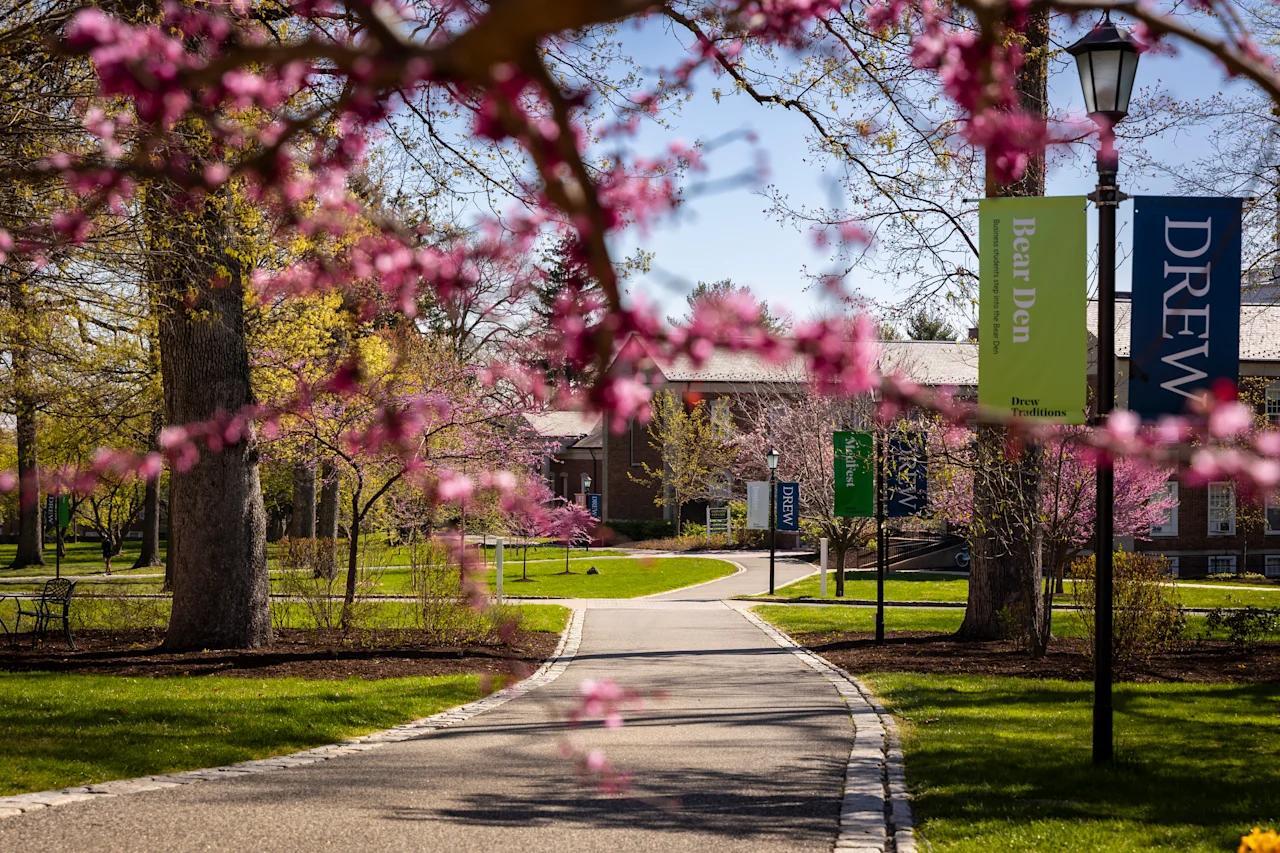
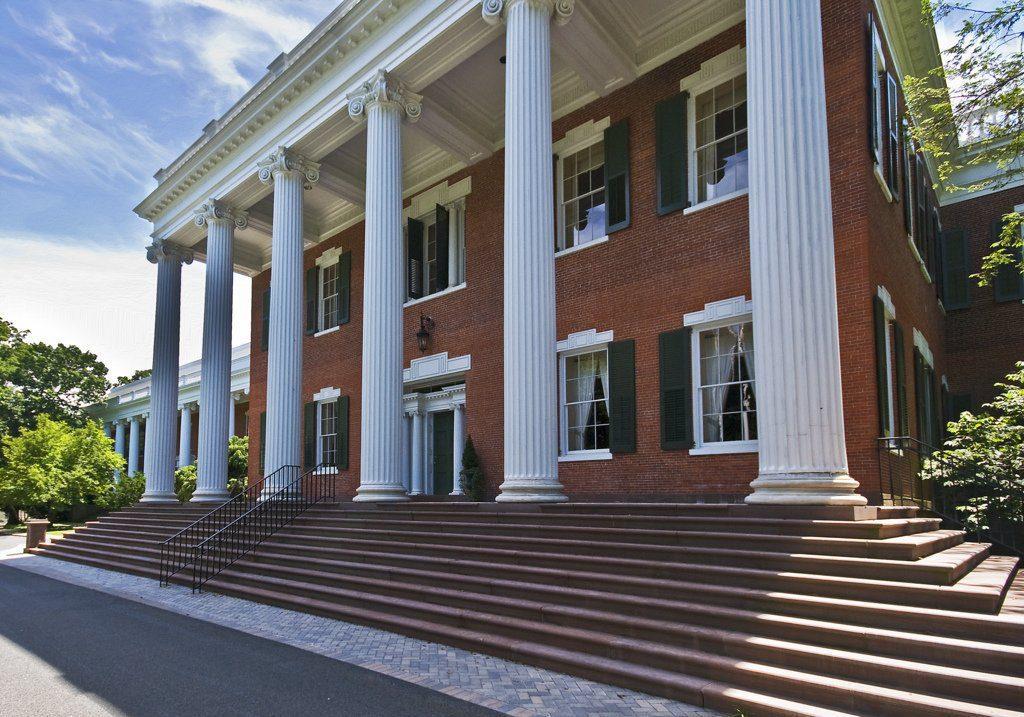
Campus Photos
Drew University
About Drew University
Drew University: Programs, Admission, Tuition Fees, Scholarships and Study in the USA
Overview of Drew University
Drew University is a private university located in Madison, New Jersey, United States. Established in 1867, the university offers undergraduate and graduate education in a close-knit academic environment that emphasises liberal arts, interdisciplinary learning, research, and personal development. Its campus provides students with opportunities to engage with faculty, participate in academic activities, and develop skills relevant to further study and professional careers.
Drew University is located in the New York metropolitan region, giving students access to the cultural, educational, and professional opportunities of northern New Jersey and nearby New York City. Students can explore museums, cultural institutions, business networks, and professional events while studying in a university setting outside the centre of a major city.
The university offers degree programs across several academic disciplines, including the humanities, social sciences, natural sciences, business-related fields, and selected professional areas. It also supports international applicants through its international admissions services and Tilghman International Center, which provides academic English and pathway options for eligible students who need additional preparation before progressing to a degree.
For international students, Drew University can be an option for those seeking a personalised academic experience in the United States. Applicants should carefully compare direct admission and pathway routes, review program-specific requirements, understand tuition and living expenses, and investigate scholarships before making their decision.
Why Choose Drew University?
Drew University may appeal to students who prefer a smaller university community, interdisciplinary education, and opportunities to work closely with faculty. Its academic approach encourages students to examine ideas from different perspectives, communicate effectively, and apply their learning to academic and professional challenges.
One of the university's distinguishing characteristics is its liberal arts tradition. Students can build a broad academic foundation while developing expertise in their chosen major. Depending on their program, they may have opportunities to participate in research, internships, practical projects, and other forms of experiential learning.
Drew's location in Madison offers a different experience from studying directly in a large city. Students can live and study in a campus environment while remaining within reach of the wider New York metropolitan region. This location may be useful for students interested in cultural activities, professional networking, and exploring opportunities beyond campus.
Other factors students may consider include:
- Undergraduate and graduate study options across multiple disciplines.
- A campus community that supports academic engagement and student development.
- Opportunities to develop research, communication, and critical-thinking skills.
- International student guidance through university support services.
- Academic English and pathway options for eligible international applicants.
- Access to the cultural and professional environment of the New York metropolitan region.
Students should evaluate the specific program, total cost, available funding, and admission requirements to determine whether Drew University matches their goals.
Academic Programs at Drew University
Drew University offers undergraduate degrees through its College of Liberal Arts and graduate education through the Caspersen School of Graduate Studies and Drew Theological School. The range of available courses, degrees, and specialisations differs by school and academic year.
Students should consult the current academic catalogue to confirm the precise program title, curriculum, prerequisites, and graduation requirements for their intended degree.
Undergraduate Programs
Undergraduate education at Drew University combines specialised study with broader academic learning. Students develop subject knowledge alongside skills such as analytical reasoning, writing, communication, collaboration, and independent research.
Depending on the current program catalogue, students can explore areas such as:
Business and Economics: Students interested in organisations, markets, management, and financial decision-making can investigate relevant business and economics courses and degree pathways.
Humanities: These subjects provide opportunities to study literature, history, philosophy, languages, and cultural traditions. Students can develop research and communication skills while examining historical and contemporary questions.
Social Sciences: Students can explore human behaviour, communities, political systems, social relationships, and other topics through relevant academic disciplines.
Natural Sciences: Students interested in scientific investigation can explore available programs in the sciences. Course requirements and laboratory components depend on the selected major.
Arts and Interdisciplinary Studies: Students may investigate academic opportunities that combine creative practice, critical thinking, and learning across different disciplines.
Students should confirm current majors, minors, and specialisations directly through Drew's academic catalogue because program availability and requirements may change.
Graduate Programs
Graduate education at Drew University is designed for students seeking advanced academic knowledge, professional preparation, or specialised study after completing an appropriate undergraduate qualification.
The Caspersen School of Graduate Studies offers graduate programs in selected academic and professional areas. The university also has a Drew Theological School with programs designed for students interested in theological education and related fields.
Graduate applicants should identify the school and degree that match their goals. Admission requirements may include a recognised bachelor's degree, academic transcripts, a statement of purpose, letters of recommendation, a résumé, and English proficiency results where applicable.
Some programs require additional documents or specific academic preparation. Tuition also varies by program, so applicants should review the current fee schedule rather than relying on a single university-wide graduate tuition estimate.
International Pathway Programs Through Tilghman International Center
Drew University provides international academic preparation through its Tilghman International Center. These options can help eligible students who need additional English language development or academic preparation before entering a degree program.
The available route depends on the student's academic background, English proficiency, and intended course of study. Students should confirm their eligibility and progression requirements before applying.
Undergraduate Pathway Options
Drew offers pathway options for international students who may not meet all the requirements for direct undergraduate admission. These routes can combine academic coursework, English language development, and support with adjusting to the American university environment.
Pathway options have been available in areas including business, humanities and social sciences, pre-engineering, sciences, and the arts. The exact routes and progression conditions should be checked for the intended entry term.
Students enrolled in a pathway program must satisfy its academic and other progression requirements before continuing into the relevant degree stage. They should not assume that simply completing an English course automatically guarantees admission to every undergraduate program.
Graduate Pathway Options
Graduate pathway programs can provide academic and language preparation for eligible students who need additional support before continuing into a master's degree. Available programs and progression conditions vary by discipline.
Students should check the current program information to understand the pathway's duration, academic requirements, tuition, English language expectations, and the degree stage they can enter after successful completion.
Pathway applicants should also confirm which institution or program will issue their immigration documentation and whether the intended study route is suitable for their circumstances.
Admission Requirements for International Students
Drew University maintains separate admission guidance for international undergraduate and graduate applicants. The documents required depend on the applicant's previous education, intended degree, and admission route.
Students should begin preparing their applications early, particularly if they need translated transcripts, English proficiency test results, financial documentation, or additional materials from previous institutions.
Undergraduate Admission Requirements
International first-year applicants generally need to demonstrate completion of secondary education and submit the documents required for undergraduate admission.
The international application checklist includes:
- A completed online application, generally through the Common Application.
- Payment of the applicable application fee, where required.
- Official secondary-school transcripts or academic records.
- A letter of recommendation.
- English proficiency results where required.
- Additional academic or application materials requested by the university.
Applicants who have previously attended a college or university should check whether the transfer application process is more appropriate. Transfer applicants may need official college transcripts and proof of secondary-school completion, along with other documents required for their applicant category.
Students should ensure that academic records issued in another language are accompanied by acceptable English translations. The university may provide further instructions about the format and submission of international documents.
English Language Requirements
Applicants whose first language is not English are generally expected to demonstrate English proficiency unless they qualify for a waiver under the university's policy.
Drew accepts several English proficiency examinations, including TOEFL, IELTS, and Duolingo English Test, along with other listed options. The minimum score depends on the admission route and program.
For undergraduate direct entry, the published international pathway information lists IELTS 6.5, with minimum section scores, and TOEFL iBT 80 as reference requirements. Eligible pathway applicants may qualify for routes with lower English score thresholds, but those routes involve additional academic and language preparation.
Students should verify the current requirements for the exact program and intake before booking an examination. Meeting the English requirement alone does not guarantee admission, as academic qualifications and other application materials are also assessed.
Graduate Admission Requirements
Graduate admission requirements differ across Drew's schools and individual degree programs. Applicants should review the instructions for their intended program to ensure that they submit all required materials.
Common requirements may include:
- A recognised bachelor's degree or equivalent qualification.
- Academic transcripts from previous institutions.
- A completed graduate application.
- A personal statement or statement of purpose.
- Letters of recommendation, where required.
- A résumé or curriculum vitae, where applicable.
- English proficiency examination results for applicants who must demonstrate proficiency.
- Additional documents specified by the program.
Drew's graduate international admissions guidance lists TOEFL iBT 80 and IELTS 6.5, with minimum section scores, as general English proficiency requirements for applicable graduate study. The Caspersen School of Graduate Studies also lists a Duolingo English Test score of 105 or higher as an accepted alternative. Drew Theological School has different rules for accepted examinations, so applicants should verify the requirements for their specific school.
Some applicants may qualify for an English proficiency exemption. Students should request clarification from admissions if they believe they meet the criteria.
Tuition Fees and Cost of Studying at Drew University
Tuition is an important part of planning an international education. At Drew University, the total cost depends on the degree level, program, credit load, accommodation, meal plan, insurance, and personal spending.
The university publishes separate tuition and fee schedules for undergraduate and graduate programs. Students should use the figures applicable to their intended academic year and degree rather than treating a general estimate as a guaranteed total.
Undergraduate Tuition Fees
For the 2026–2027 academic year, Drew University's published tuition schedule lists undergraduate tuition for the College of Liberal Arts at USD 49,550 per academic year for the stated full-time credit range of 12–21 credits per semester.
The published schedule also lists a general fee of USD 800 per academic year and a technology fee of USD 350 per academic year. These charges are separate from tuition.
Students who live on campus should budget for housing and meals in addition to academic charges. The university publishes different prices for residence and meal-plan options, so the final amount depends on the selected arrangement.
Students should also allow for books, course materials, transportation, personal expenses, health insurance, and other applicable costs. The total cost of attendance will therefore be higher than tuition alone.
Graduate Tuition Fees
Graduate tuition varies according to the school and program. Drew's published 2026–2027 schedule lists tuition of USD 1,510 per credit for many Caspersen School of Graduate Studies programs, while certain education and theological programs have different per-credit rates.
Additional charges may apply, including general fees, international student administrative fees, and program-specific costs. Students should check the schedule for their intended degree and calculate the expected cost using the total number of credits required.
Graduate applicants should also investigate whether their program offers scholarships, assistantships, or other funding opportunities. Such support may be limited and should not be included in a financial plan unless it has been confirmed.
Living Expenses in Madison, New Jersey
Madison is part of the wider northern New Jersey and New York metropolitan region. Students should prepare a realistic budget for accommodation, food, transportation, health insurance, books, and personal expenses.
On-campus housing and meal plans may simplify budgeting, but prices depend on the selected residence and plan. Students considering off-campus housing should research rent, utilities, deposits, transport connections, and lease conditions.
An international student's budget should include:
- Tuition and mandatory university fees.
- Accommodation and meals.
- Health insurance and medical expenses.
- Books, supplies, and other course materials.
- Local transportation and occasional travel.
- Personal expenses and emergency savings.
Students should use the university's current financial information and their own circumstances to calculate the amount needed for the full academic year. Fees and living costs may change from one year to the next.
Scholarships and Financial Aid for International Students
Drew University offers financial support options for eligible students, but the type and availability of funding depend on the applicant category, academic performance, program, and applicable scholarship policies.
International applicants should review scholarship requirements early and determine whether additional forms or documents are necessary.
Undergraduate Scholarships
International undergraduate applicants may be considered for merit-based scholarships and other eligible financial support. Drew encourages international students to apply early because the availability of funding may be affected by the timing of the application.
Students should provide accurate academic information and complete the required application materials. Some awards may be based on academic achievement, while others may have additional criteria.
A scholarship can reduce the amount a student must pay, but applicants should not assume that any particular award will cover all tuition, accommodation, or personal expenses. Students should calculate their remaining costs using the confirmed award amount.
Graduate Funding Opportunities
Graduate financial support varies by school and program. Applicants may investigate scholarships, departmental awards, assistantships, or other funding options where available.
Students should ask their intended department about eligibility, application deadlines, renewal conditions, and whether any funding is linked to teaching, research, or other responsibilities.
Not every program offers the same funding opportunities, and awards are not guaranteed. Applicants should develop a financial plan that accounts for tuition and living expenses even if they are still waiting for a funding decision.
Financial Planning for International Students
International students should prepare evidence that they can meet the cost of their education and living expenses. Financial documentation may be required during the process of obtaining the documents needed for an F-1 student visa.
Applicants should keep records of available funds, sponsorship arrangements, and confirmed scholarships. They should also review payment deadlines, refund policies, and any conditions associated with financial awards.
Careful financial planning helps students compare direct-entry and pathway options and understand the total commitment required for their intended degree.
Campus Life at Drew University
Drew University offers a campus-based student experience that combines academic study with extracurricular activities, student organisations, and opportunities for personal development.
Students can explore clubs, events, cultural activities, and community initiatives according to their interests. Participation can help them build friendships, practise leadership, and develop skills that complement their academic work.
The campus environment provides opportunities for students to engage with faculty and classmates through lectures, group projects, discussions, and academic activities. Students should investigate the facilities, services, and activities available to them through their school and student category.
International students may benefit from orientation activities and university support services as they adjust to studying and living in the United States. Connecting with classmates, asking questions, and learning about local services can make the transition more manageable.
Living in Madison, New Jersey
Madison offers students a university-town environment in northern New Jersey. Its location gives students the opportunity to experience campus life while remaining within reach of the wider New York metropolitan region.
Students can explore local shops, restaurants, parks, cultural activities, and community events. Depending on transport arrangements and their schedules, they may also visit nearby towns and New York City.
The region provides a variety of professional and cultural environments, but students should research travel times and costs before planning regular trips. Transportation expenses can add up, particularly for students who travel frequently beyond campus.
When choosing accommodation, students should compare cost, access to campus, transportation, utilities, and lease requirements. Those living on campus should review housing deadlines and meal-plan arrangements well before the start of the academic year.
Career Development and Academic Opportunities
Drew University's academic approach encourages students to develop analytical reasoning, communication, writing, collaboration, and independent learning skills. Depending on their degree, students may be able to explore research, internships, practical projects, and other activities that support professional development.
Students should investigate the resources available through their department and the university's career services. Opportunities can differ according to the student's field, academic level, qualifications, and eligibility.
The university's location in the New York metropolitan region may provide access to professional events and organisations in a variety of sectors. However, employment outcomes depend on individual skills, experience, the job market, and applicable work authorisation. Studying at Drew University does not guarantee employment or a particular salary.
International students should understand the rules governing on-campus employment, internships, and other work during their studies. They should consult the appropriate university office before beginning employment or making post-graduation work plans.
Support Services for International Students
Drew University supports international applicants through admissions guidance and its international student services. The Tilghman International Center provides resources for eligible students enrolled in academic English and pathway programs.
Students should pay attention to university instructions about admission, orientation, academic placement, financial documentation, and immigration procedures. Students beginning a pathway program may have additional placement assessments and progression requirements.
Before travelling to the United States, students should confirm their admission status, housing arrangements, tuition payment schedule, health insurance, orientation dates, and immigration documentation.
Students should keep copies of important records, including their passport, admission documents, financial evidence, academic transcripts, and visa-related paperwork. Understanding university policies before arrival can help reduce avoidable difficulties during the transition.
Frequently Asked Questions About Drew University
Is Drew University a public or private university?
Drew University is a private university located in Madison, New Jersey, United States.
Does Drew University accept international students?
Yes. Drew University accepts international applicants for eligible undergraduate and graduate programs and provides application guidance for students with international academic qualifications.
What is the undergraduate tuition at Drew University?
For 2026–2027, the published full-time undergraduate tuition for the College of Liberal Arts is USD 49,550 per academic year. General and technology fees, housing, meals, insurance, and other expenses are additional.
What English proficiency scores are required?
Requirements depend on the program and admission route. Published direct-entry undergraduate guidance lists IELTS 6.5 and TOEFL iBT 80 as reference requirements. Eligible pathway routes may have lower thresholds, and graduate requirements vary by school. Applicants should verify the current requirements for their intended program.
Does Drew University offer pathway programs?
Yes. The Tilghman International Center offers academic English and pathway options for eligible international students who need additional preparation before entering or progressing through a degree program.
Are scholarships available for international students?
Eligible international applicants may be considered for merit-based scholarships and other available funding. Awards depend on the applicable criteria and availability, so students should confirm their eligibility and remaining costs with the university.
What graduate programs are available?
Drew offers graduate study through the Caspersen School of Graduate Studies and Drew Theological School. Available degrees, tuition, and admission requirements depend on the selected program.
Can international students work while studying?
Employment depends on immigration status, university policies, and applicable regulations. International students should consult the university's international student services office before beginning employment.
Conclusion
Drew University offers international students undergraduate and graduate study in a private university environment in Madison, New Jersey. Its liberal arts tradition, interdisciplinary learning, campus community, and international preparation services may appeal to students seeking a personalised educational experience in the United States.
Prospective applicants should compare their intended program's academic requirements, English proficiency rules, tuition schedule, scholarships, housing costs, and total cost of attendance before applying. Students who need additional preparation should also investigate the available pathway routes and their progression requirements.
By preparing documents early, verifying current program details, and developing a realistic financial plan, students can make a more informed decision about whether Drew University aligns with their academic interests and long-term goals.
Entry Requirements
General Entry Requirement
IELTS 6.0 overall
Fees & Scholarships
Annual Tuition Fees
USD 49,550 – USD 60,000
Ready to Apply to Drew University?
Our advisors guide you from eligibility check to offer letter — at no cost to you.
Join our WhatsApp Community
.jpeg)
Scan to join our student community for admission updates & guidance