
Annual FeesUSD 41,000 - USD 60,000
Dallas Baptist University
LocationUS
Entry RequirementIELTS 6.5 overall
Visa Success Rate70%
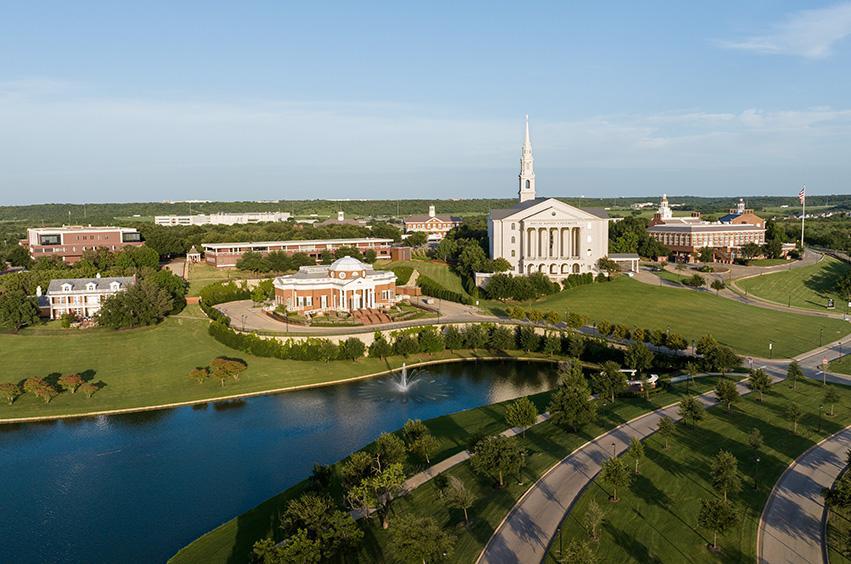
Campus Photos
Dallas Baptist University

About Dallas Baptist University
Dallas Baptist University: Programs, Admission Requirements, Tuition Fees, and Student Life in Texas
Introduction to Dallas Baptist University
Dallas Baptist University (DBU) is a private Christian university located in Dallas, Texas, United States. Founded in 1898 as Decatur Baptist College, the institution has developed into a comprehensive university offering undergraduate, graduate, and doctoral education. Its educational philosophy combines academic learning, professional development, Christian values, and a commitment to service and leadership.
The university offers programs across business, computer and natural sciences, education, fine arts, humanities, social sciences, leadership, and Christian studies. Students can explore a variety of academic and professional pathways while studying in an environment that emphasizes ethical responsibility, personal development, and community involvement.
Dallas Baptist University may appeal to students who want a private university experience in a major metropolitan region while studying at an institution with an explicitly Christian mission. Its location provides access to the Dallas–Fort Worth area, a large economic and cultural region with opportunities across business, technology, healthcare, education, logistics, and other sectors.
International applicants should consider the university's academic offerings, tuition costs, English-language requirements, faith-based educational environment, and immigration procedures before applying. Choosing DBU involves evaluating both the practical benefits of its location and programs and the importance of its institutional values to the student's own educational preferences.
Overview of Dallas Baptist University
Dallas Baptist University provides undergraduate, master's, doctoral, associate-degree, and certificate programs. Its educational approach emphasizes the integration of faith and learning, encouraging students to connect academic knowledge with ethical judgment, service, and professional responsibility.
The university is organized into several academic divisions, including the Carter School of Business, Mary C. Crowley College of Christian Faith, Dorothy M. Bush College of Education, College of Fine Arts, College of Humanities and Social Sciences, College of Natural Sciences and Mathematics, Gary Cook School of Leadership, and Graduate School of Ministry.
This academic structure allows students to pursue professional qualifications as well as studies in the humanities, sciences, education, and ministry. Program availability, degree requirements, and professional recognition vary by department.
Dallas Baptist University is accredited by the Southern Association of Colleges and Schools Commission on Colleges to award associate, bachelor's, master's, and doctoral degrees. Several individual programs also hold specialized accreditation or professional recognition. Applicants should verify the accreditation applicable to their intended degree rather than assuming that every program has identical specialized credentials.
The university's Christian identity is central to its educational mission. Students should review its approach to faith integration, community life, and learning to determine whether the environment suits their preferences and expectations.
Location and Campus Environment
Dallas Baptist University is located at 3000 Mountain Creek Parkway, Dallas, Texas 75211. Its campus occupies approximately 368 acres in southwest Dallas, overlooking Mountain Creek Lake.
The setting combines landscaped campus grounds with access to a large metropolitan region. Dallas and the wider Dallas–Fort Worth area offer cultural institutions, shopping, professional organizations, business districts, entertainment, and a diverse population.
The location may be useful for students who want to study in a major American metropolitan region without living directly in a dense downtown environment. Students can experience a campus-centered atmosphere while remaining within reach of wider urban activities.
However, transportation and living arrangements require planning. Public transportation coverage and commuting times vary by neighborhood, and students may need to combine different transportation options to reach internships, workplaces, or off-campus activities.
Texas also experiences hot summers, occasional severe weather, and seasonal temperature changes. International students should familiarize themselves with local weather conditions and campus safety guidance.
The university's location may provide access to professional and cultural opportunities, but students should assess actual travel distances, housing options, and the cost of transportation before making a decision.
Academic Programs at Dallas Baptist University
Dallas Baptist University offers a broad selection of programs across its academic colleges. Students can pursue traditional academic disciplines, professional preparation, leadership education, and faith-related studies.
Business and Management
The Carter School of Business offers programs for students interested in business administration, management, accounting, finance, marketing, and related areas.
Business students can develop knowledge of organizational behavior, business communication, financial decision-making, marketing strategy, management principles, and other subjects relevant to modern organizations. Specific coursework depends on the selected major and degree level.
Business education may be suitable for students interested in corporate roles, entrepreneurship, consulting, operations, or management-related careers. Students should investigate opportunities for internships, experiential learning, faculty engagement, and career preparation.
The university's Bachelor of Business Administration, Bachelor of Business Studies, and Master of Business Administration programs hold accreditation from the Accreditation Council for Business Schools and Programs. Applicants should verify the current status and scope of accreditation for their chosen program.
Computer Science and Natural Sciences
The College of Natural Sciences and Mathematics offers educational opportunities in scientific and quantitative disciplines. Students interested in computing, mathematics, laboratory sciences, or related subjects should review the current program catalog to identify available majors and their prerequisites.
Depending on the program, coursework may develop analytical reasoning, quantitative skills, scientific investigation, programming knowledge, and technical problem-solving.
Students considering technology-related careers should evaluate the precise curriculum, opportunities for practical projects, elective choices, and available computing facilities. A degree's suitability depends on the technical content it offers and how closely that content aligns with the student's intended career.
Students interested in research or graduate study should also review the mathematical and scientific prerequisites of their prospective advanced programs.
Education and Professional Development
The Dorothy M. Bush College of Education prepares students for educational and related professional pathways. Programs may cover teaching, curriculum development, learning, leadership, and educational practice, depending on the qualification.
Applicants should check whether their chosen degree leads to professional certification or licensure and whether additional examinations, supervised practice, or state-specific requirements apply.
DBU's educator preparation programs hold relevant accreditation and approval, including recognition through the Association for Advancing Quality in Educator Preparation and Texas education authorities for applicable programs.
International students considering careers in teaching should also investigate how their qualifications may be recognized outside Texas. Professional certification rules differ between jurisdictions, and completing a degree does not automatically authorize someone to teach in every country or state.
Humanities and Social Sciences
The College of Humanities and Social Sciences offers opportunities for students interested in communication, history, literature, social sciences, and related academic areas.
These disciplines can help learners strengthen writing, critical thinking, research, interpretation, and communication skills. Such abilities can support a variety of careers and provide preparation for further study.
Students should consider how their chosen major connects to their future plans. Some career paths require additional professional education or postgraduate qualifications, while others emphasize transferable skills and relevant experience.
Fine Arts and Creative Studies
The College of Fine Arts serves students interested in artistic expression, creative practice, music, and other available arts disciplines.
Creative programs can combine theory, performance, practical assignments, and collaborative projects. Students should review the current curriculum to understand portfolio expectations, auditions, equipment needs, and any additional program requirements.
DBU's music department holds accreditation from the National Association of Schools of Music. Applicants interested in music should confirm which degrees and activities are covered by the relevant accreditation.
Leadership and Ministry
The Gary Cook School of Leadership and Graduate School of Ministry offer programs connected to leadership, organizational development, Christian studies, and ministry.
Students may explore leadership theory, ethical decision-making, organizational change, service, and the relationship between faith and professional responsibilities.
These programs may be relevant to learners interested in nonprofit organizations, educational leadership, ministry, community service, or other leadership-oriented roles.
Applicants should examine the exact degree requirements, professional outcomes, and any expectations associated with the university's Christian educational philosophy.
Undergraduate and Graduate Study Options
Dallas Baptist University offers several levels of study, allowing applicants to choose a pathway based on their previous education and career goals.
Undergraduate students can pursue bachelor's degrees and selected associate degrees. These programs combine major-specific coursework with broader academic requirements. Students should review degree plans and graduation requirements before choosing their courses.
Graduate students can explore master's programs in areas such as business, education, leadership, ministry, and other professional or academic disciplines. Certain programs offer flexible formats, including online or accelerated study options, subject to eligibility and program availability.
Doctoral study is available in selected fields, including leadership-related areas and education. Doctoral programs generally involve more advanced academic work, research, leadership development, or professional specialization.
DBU also offers certificate programs for students seeking focused study or additional professional knowledge. Certificates differ from degrees and may not satisfy the requirements for a particular professional license or postgraduate program.
Applicants should confirm the current program list, study mode, course availability, program duration, and entry requirements through the university's latest catalog.
Admission Requirements for International Students
International applicants must meet the university's academic, English-language, documentation, and financial requirements. The precise process depends on the applicant's intended degree level and academic history.
Undergraduate Academic Requirements
International undergraduate applicants generally need to have completed secondary education equivalent to United States high school.
DBU's published international undergraduate guidance includes a minimum academic GPA equivalent of 2.5 on the United States 4.0 scale. Applicants should confirm how qualifications from their home country will be evaluated and whether their intended major has additional criteria.
Meeting the minimum academic requirement does not guarantee admission. The university may consider the completeness of the application and any additional requirements relevant to the student's circumstances.
Students should prepare official transcripts, graduation certificates, and other academic documents. Records issued in languages other than English should be accompanied by the required English translations.
Applicants who have attended another university or college should check whether postsecondary transcripts must also be submitted.
English Language Proficiency
International applicants who do not qualify for an English-language exemption generally need to demonstrate proficiency through an accepted test or qualification.
DBU's published English proficiency options include TOEFL iBT, IELTS Academic, PTE Academic, Cambridge English Advanced, Duolingo English Test, iTEP, MELAB, and certain standardized examination or academic qualifications.
Published minimums include TOEFL iBT 71, IELTS Academic 6.0 with no band below 5.0, PTE Academic 48, Cambridge English Advanced 163, and Duolingo English Test 100 with no subsection below 90.
Applicants should verify that their test and score format remain accepted for the intended intake. English requirements may differ by degree level, academic program, or pathway.
Students who do not meet the standard English requirement should ask whether an approved alternative or intensive English pathway is available. They should confirm the conditions, additional costs, and progression requirements before selecting this route.
Application Materials
Undergraduate applicants should prepare the international application, academic records, the required essay, proof of English proficiency where applicable, and other documents specified by the university.
DBU's published international undergraduate process requests an essay of at least 250 words explaining why the applicant wants to study at the university. Applicants should write a genuine response that reflects their academic interests and reasons for choosing DBU.
Additional documentation may include a valid passport copy, financial forms, and information required for immigration processing. Transfer students and graduate applicants may need to submit further records.
Students should follow the current application checklist and avoid relying on a general list if their program has separate requirements.
Graduate Admission Requirements
Graduate applicants generally need an appropriate bachelor's degree or equivalent qualification. Specific admission standards vary by program.
A department may request a minimum GPA, résumé, statement of purpose, recommendations, writing sample, prerequisite courses, or other supporting documents. Certain professional programs may have additional academic or experience requirements.
International graduate applicants must also satisfy the applicable English proficiency and financial documentation standards. Before applying, students should review the individual program's entry requirements and confirm that their previous qualification is considered appropriate.
Financial Documentation
International students seeking F-1 status must demonstrate that they can finance the expected costs of study and living in the United States.
The university may require a financial statement, bank documentation, sponsor information, or other evidence of sufficient funds before issuing the relevant immigration document. The amount required depends on the current estimated cost of attendance and the university's financial certification rules.
Applicants should use current forms and confirm which documents are acceptable. Financial evidence must be accurate, complete, and consistent with the student's application.
Tuition Fees and Cost of Attendance
Dallas Baptist University is a private institution, and tuition represents a significant part of the overall study budget. The amount depends on the academic year, degree level, course load, program, and applicable charges.
For the 2026–2027 academic year, the university lists undergraduate block tuition of approximately USD 20,595 per semester for students enrolled in 12–18 credit hours. Across two semesters, this amounts to approximately USD 41,190 before additional charges.
Published annual undergraduate tuition and fees are estimated at approximately USD 43,560. This is a planning estimate rather than a guaranteed bill. The final amount can vary with course registration, program requirements, and any changes to the fee schedule.
The university's estimated total annual cost of attendance for an on-campus undergraduate student is approximately USD 60,640. This broader estimate includes expenses beyond tuition, such as housing, meals, books, transportation, and personal costs.
Graduate students should request the current tuition rate for their specific program. Some graduate and online programs use per-credit-hour pricing, and the total cost may differ significantly from the undergraduate block tuition model.
Accommodation and Living Expenses
Students should plan for housing, meals, transportation, utilities, healthcare, personal expenses, and other daily costs.
Possible accommodation arrangements depend on availability and eligibility. Applicants should ask the university about residence options, housing applications, move-in dates, and whether accommodation is guaranteed.
Students living off campus should compare rent, deposits, utilities, commuting costs, and access to essential services. The total budget can vary substantially depending on the neighborhood and lifestyle.
International students should also account for initial arrival expenses, such as airfare, temporary accommodation, winter or summer clothing as appropriate, and the purchase of basic household items.
Scholarships and Financial Assistance
Scholarships and other funding opportunities depend on the student's academic record, degree program, eligibility, and application timing.
International applicants should explore DBU's current scholarship options and ask whether they qualify for merit-based awards or other institutional assistance. Students should confirm award amounts, renewal conditions, deadlines, and any academic requirements.
They should not assume that every scholarship is available to international students or that an award will cover the full cost of attendance.
Many U.S. federal and state financial aid programs have citizenship or residency requirements. International applicants should confirm eligibility rather than include unverified aid in their budget.
A realistic financial plan should account for the remaining cost after confirmed scholarships and other reliable funding have been applied.
Campus Life and Student Experience
Campus life at Dallas Baptist University is shaped by its academic programs, Christian mission, student organizations, community activities, and location in the Dallas metropolitan region.
Faith and Community
DBU emphasizes the integration of faith and learning throughout its educational environment. Students encounter an institutional culture that connects academic development with Christian values, service, and leadership.
Applicants should review the university's mission and campus expectations to understand how faith is incorporated into its educational philosophy. This is particularly important for students comparing DBU with institutions that have a secular or different religious identity.
Student Organizations and Activities
Student organizations and campus activities can help students develop friendships, pursue interests, and build leadership skills.
Participation may provide opportunities to work with peers, take part in university events, and become more familiar with the local community. International students can benefit from joining suitable groups and learning about campus resources early in their studies.
Academic Advising and Learning Support
Academic advising helps students select courses, understand graduation requirements, and plan their progress. Students should consult advisors when choosing electives, changing majors, or preparing for postgraduate study.
University learning resources can also support writing, research, and academic development. Students who need assistance should seek help early rather than waiting until academic difficulties affect their grades.
Career Preparation
Career preparation may include résumé development, job-search guidance, networking activities, and information about internships or employment opportunities.
Students can strengthen their professional readiness by developing relevant skills, completing projects, participating in suitable activities, and building connections with faculty and peers.
International students must distinguish career preparation from authorization to work. Employment and internship eligibility depends on the applicable immigration rules and any required authorization.
International Student Visa Considerations
International applicants who need an F-1 student visa must complete DBU's admission and financial certification procedures and follow the applicable U.S. immigration process.
After an eligible student has been admitted and submitted the required documentation, the university may issue Form I-20. The student must then complete the relevant steps for the visa, which can include paying the SEVIS fee, completing the visa application, and attending an interview.
Admission to the university and issuance of Form I-20 do not guarantee visa approval. Visa decisions are made by the relevant U.S. authorities.
Applicants should prepare accurate academic and financial records and be able to explain their intended program and educational plans clearly. They should consult official government guidance for current visa procedures and required documentation.
A reliable, independently verified DBU-specific F-1 visa approval percentage is not publicly established for use as a guarantee. Applicants should avoid relying on unsupported claims about institutional visa success rates.
After arriving, international students must comply with the conditions of their immigration status. They should maintain the required enrollment, keep their records current, and consult the university's international student office before dropping courses, transferring, changing academic plans, or accepting employment.
Career Opportunities and Professional Development
Dallas Baptist University's range of academic programs can support students pursuing careers in business, education, technology, the sciences, creative fields, leadership, and other professional areas.
Business graduates may explore opportunities in management, marketing, accounting, finance, operations, or related functions, depending on their degree and experience.
Students in science and technology-related disciplines may pursue further study or opportunities aligned with their specific technical preparation. Education graduates must consider the certification requirements associated with their intended role and location.
Students in creative, leadership, and ministry programs may pursue opportunities linked to their specialization, practical experience, and professional goals.
Employment outcomes depend on the student's qualification, skills, academic performance, work experience, professional network, location, and labor market. Completing a degree does not guarantee employment or a specific salary.
International students should also understand that U.S. employment authorization is governed by immigration regulations. They should obtain guidance from the university's international student office before beginning internships or other work.
Advantages of Studying at Dallas Baptist University
Dallas Baptist University offers a broad selection of academic pathways in a private university environment. Its programs span business, education, sciences, humanities, fine arts, leadership, and Christian studies.
Its location in Dallas provides access to a major metropolitan region with business, cultural, and professional activities. Students may find this setting appealing if they want a campus-based education while remaining connected to a large urban area.
The university's Christian mission and emphasis on service-oriented leadership distinguish its educational environment. Students who value this approach may appreciate the relationship between academic study, ethical responsibility, and personal development.
Institutional accreditation and relevant specialized program accreditations provide additional information for applicants evaluating academic quality. Students should verify the recognition applicable to their particular degree.
At the same time, applicants must weigh these advantages against tuition costs, living expenses, transportation needs, program requirements, and their own preferences regarding a faith-based institution.
Things to Consider Before Applying
Prospective students should begin by identifying the exact degree they want to pursue and reviewing its curriculum, admission standards, duration, and professional outcomes.
International applicants should confirm that their academic qualifications meet the university's requirements and that they can satisfy the applicable English proficiency standards. They should also prepare transcripts, passport documentation, financial records, and other required materials early.
Financial planning should include tuition, fees, accommodation, meals, books, insurance, transportation, and personal expenses. Students should rely only on scholarships and other financial support that have been confirmed.
Applicants should consider the university's Christian educational philosophy and decide whether its values and learning environment fit their expectations. They should also research transportation, housing, and campus services before committing to a particular living arrangement.
Finally, students who intend to work in the United States or pursue professional licensure should investigate the relevant immigration, certification, and employment requirements before choosing a program.
Conclusion
Dallas Baptist University is a private Christian university in Dallas, Texas, offering associate, undergraduate, graduate, and doctoral education across a broad range of academic disciplines. Its programs combine professional and academic learning with an institutional emphasis on faith, service, and leadership.
The university may be suitable for students seeking a private university experience in a major metropolitan region, particularly those interested in business, education, sciences, fine arts, humanities, leadership, or Christian studies.
International applicants should carefully evaluate program requirements, tuition fees, living expenses, English proficiency, financial documentation, and visa procedures before applying. They should also consider the university's Christian mission and determine whether its educational environment aligns with their own priorities.
With careful research and realistic financial and academic planning, prospective students can assess whether Dallas Baptist University is a good match for their educational objectives and long-term career plans.
Entry Requirements
General Entry Requirement
IELTS 6.5 overall
Fees & Scholarships
Annual Tuition Fees
USD 41,000 - USD 60,000
Ready to Apply to Dallas Baptist University?
Our advisors guide you from eligibility check to offer letter — at no cost to you.
Join our WhatsApp Community
.jpeg)
Scan to join our student community for admission updates & guidance