
Annual FeesAUD 18,000 - AUD 30,000
Analytics Institute of Australia
LocationAustralia
Entry RequirementIELTS 6.0 overall
Visa Success Rate60%
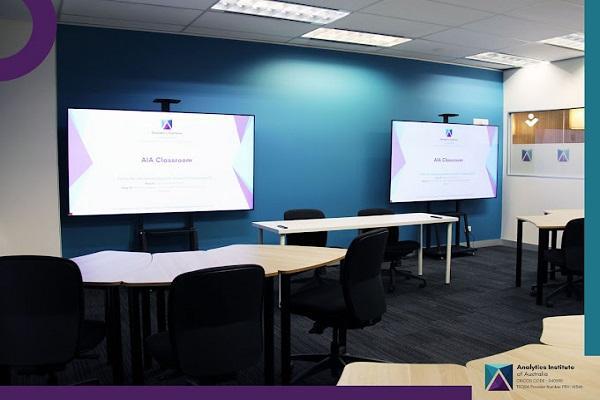
Campus Photos
Analytics Institute of Australia

About Analytics Institute of Australia
Analytics Institute of Australia: Courses, Fees, Entry Requirements & Student Life
The Analytics Institute of Australia (AIA) is a specialist Australian higher-education institution focused on analytics, business transformation and data-driven decision-making. Located in Melbourne, AIA has developed its academic offering around the growing relationship between business, technology, artificial intelligence, data and human-centred decision-making.
AIA describes its approach as operating in the area of social intelligence, exploring the space between human intelligence and artificial intelligence and developing analytics and frameworks that can support decision-making and organisational transformation. Its stated goal is to equip students with knowledge, techniques and skills relevant to future jobs, organisations and business environments.
Unlike a traditional university with a very broad collection of faculties, AIA has a highly focused academic portfolio. Its current courses are centred on three qualifications:
- Bachelor of Analytics
- Bachelor of Business Transformation
- Master of Business Analytics
The Tertiary Education Quality and Standards Agency (TEQSA) currently lists all three as active accredited courses. The Bachelor of Analytics and Bachelor of Business Transformation have accreditation through June 2027, while the Master of Business Analytics has accreditation through August 2032. AIA's provider registration is listed under CRICOS code 04059D.
This specialist approach makes AIA particularly relevant to students who are interested in data, analytics, business transformation and technology-driven decision-making.
What Is Analytics Institute of Australia Known For?
Analytics Institute of Australia is particularly known for:
- Data analytics
- Business analytics
- Business transformation
- Data-driven decision-making
- Artificial intelligence
- Data visualisation
- Business intelligence
- Customer experience
- Digital transformation
- Human-centred business transformation
- Practical analytics education
- Work-integrated learning
- Melbourne-based higher education
AIA's academic philosophy is built around the idea that businesses increasingly need people who can combine analytical thinking with creativity, technology and an understanding of human behaviour.
The institute highlights the impact of the Fourth Industrial Revolution and the increasing importance of data science, intelligence and modelling in modern organisations.
For students who are interested in both business and technology, this creates a distinctive study environment.
Bachelor of Analytics
The Bachelor of Analytics is one of AIA's flagship undergraduate programs.
The degree is designed to develop students' ability to work with data and translate analytical information into useful business intelligence.
AIA's course learning outcomes include selecting and applying appropriate data-modelling tools, critically analysing and translating big data into business intelligence, understanding the role of analytics in systems thinking and communicating effectively in professional environments.
Students can develop knowledge in areas including:
- Data analytics
- Data modelling
- Business intelligence
- Data visualisation
- Python
- Predictive analytics
- Consumer analytics
- Social media analytics
- Business systems
- Data storytelling
- Analytics projects
The curriculum also includes units such as Data Analytics Fundamentals, Data Wrangling and Analysis with Python, Predictive Analytics, Communication and Data Storytelling, Social Media Analytics, Consumer Analytics and Analytics Projects.
This makes the degree suitable for students who want to combine technical analytics skills with business applications.
Work-Integrated Learning
A particularly important part of the Bachelor of Analytics is its work-integrated learning component.
In the final year, students undertake a Work Integrated Learning capstone involving 120 hours of work placement. AIA describes this as a capstone unit designed to connect students' academic learning with workplace experience.
This can help students develop:
- Workplace communication
- Teamwork
- Professional behaviour
- Analytical problem-solving
- Practical data skills
- Industry awareness
The placement component can be particularly valuable for students who want to graduate with practical experience rather than relying solely on classroom learning.
Bachelor of Business Transformation
The Bachelor of Business Transformation focuses on the changing relationship between business, technology and innovation.
The program is designed for students who want to understand how organisations can adapt to technological, social and market changes.
Students can explore areas related to:
- Business transformation
- Innovation
- Digital technologies
- Business strategy
- Customer experience
- Entrepreneurship
- Data
- Artificial intelligence
- Organisational change
- Business decision-making
AIA describes the program as part of its broader mission to educate future entrepreneurs and managers who can use analytics, intelligence and modern technologies to transform organisations.
The program can therefore suit students who are interested in business but want to understand the technological changes shaping modern organisations.
Customer Experience and Business Transformation
A distinctive feature of the business transformation curriculum is its focus on customer experience.
Students can encounter subjects relating to:
- Introduction to Design in Business
- Introduction to Customer Experience Design
- Customer Experience Strategy Design
- Customer Experience Implementation and Measurement
- E-Portfolio development
This approach recognises that business transformation is not simply about introducing new technology.
Successful transformation also requires organisations to understand customers, design better experiences and measure the impact of changes.
This combination of technology, business and customer experience can be useful for students interested in consulting, digital transformation, innovation and strategy.
Master of Business Analytics
For students who already hold an appropriate bachelor's degree or equivalent qualification, AIA offers the Master of Business Analytics.
The program is designed for students seeking more advanced knowledge of analytics and data-driven decision-making.
At postgraduate level, students can develop their ability to:
- Analyse business data
- Interpret complex information
- Apply analytics methods
- Support strategic decisions
- Understand business intelligence
- Communicate analytical findings
- Apply technology to business problems
The Master of Business Analytics is currently listed by TEQSA as an accredited AIA course, with accreditation extending to 31 August 2032.
The program can be particularly relevant to graduates from business, commerce, IT, economics, mathematics, statistics or related fields, subject to AIA's current admission requirements.
Data Analytics
Data analytics is at the centre of AIA's academic identity.
Modern organisations generate huge quantities of information through:
- Websites
- Applications
- Social media
- Customer transactions
- Business systems
- Digital platforms
- Sensors
- Online interactions
The challenge is no longer simply collecting information.
Organisations need professionals who can interpret that information and turn it into useful insights.
AIA's analytics education addresses this need by combining data analysis with business intelligence and decision-making.
Students can learn to identify patterns, interpret information and communicate findings to people who may not have technical backgrounds.
Data Visualisation
Data visualisation is an important part of analytics because complex information often needs to be communicated clearly.
AIA's Bachelor of Analytics includes data-visualisation-related learning within its analytics curriculum.
Students can develop the ability to present information in ways that help decision-makers understand:
- Trends
- Patterns
- Comparisons
- Relationships
- Performance
- Business opportunities
Effective visualisation is particularly important because analytics professionals often need to communicate with managers, executives and other non-technical stakeholders.
Python and Analytical Tools
The Bachelor of Analytics includes Data Wrangling and Analysis with Python.
Python is widely used in analytics because of its extensive ecosystem for:
- Data manipulation
- Analysis
- Visualisation
- Machine learning
- Automation
- Statistical work
Students studying analytics at AIA therefore have the opportunity to develop programming-based analytical capabilities alongside broader business knowledge.
This combination can be useful for students who want careers that sit between business and technology.
Business Intelligence
Business intelligence involves turning organisational data into information that supports decision-making.
Students can learn how analytics can be used to help organisations understand:
- Customers
- Operations
- Performance
- Markets
- Risks
- Opportunities
The Bachelor of Analytics specifically includes learning outcomes focused on translating big data into business intelligence.
This can prepare students for environments where data is used as part of strategic and operational decision-making.
Academic Environment
AIA's academic environment is focused on analytics and business transformation rather than a broad range of unrelated disciplines.
The institution's stated educational philosophy emphasises practical and relevant courses that prepare students for a changing world of work.
Students can encounter:
- Case studies
- Projects
- Reports
- Presentations
- Problem-solving activities
- Reflections
- Journals
- Tests
- Quizzes
- Selected examinations
The Bachelor of Analytics specifically identifies these assessment methods as part of its course structure.
This variety allows students to demonstrate both technical knowledge and their ability to communicate and apply what they have learned.
Quick Facts
- Institution: Analytics Institute of Australia
- Short name: AIA
- Location: Melbourne, Victoria
- Address: Level 10, 601 Bourke Street, Melbourne VIC 3000
- CRICOS Code: 04059D
- TEQSA Provider Number: PRV14346
- Study levels: Bachelor's and Master's
- Current courses: Bachelor of Analytics, Bachelor of Business Transformation, Master of Business Analytics
- Currency: Australian Dollar
- Main focus: Analytics and business transformation
- Parent group: PassEd Group
TEQSA currently lists AIA as a registered higher-education provider and identifies its three active accredited courses.
Student Life at AIA
Student life at AIA is closely connected with academic, professional and digital learning.
The institute's student-support information identifies several support channels, including:
- Professional support
- Online support
- Online resources
- Student hubs
- Academic calendar information
AIA states that its student support team helps students with getting started, accessing support and connecting with others.
The Melbourne location also gives students access to one of Australia's largest student cities.
Students can explore:
- Melbourne CBD
- Cafes
- Restaurants
- Libraries
- Cultural venues
- Parks
- Shopping
- Sporting events
- Public transport
- Arts and entertainment
For international students, Melbourne can provide a multicultural environment in which to develop both academic and social connections.
Melbourne Campus
AIA's current contact information identifies its campus at:
Level 10, 601 Bourke Street, Melbourne VIC 3000.
The central Melbourne location places students within the city's business and professional environment.
Being located in Melbourne can be particularly useful for students studying business transformation and analytics because the city contains a large concentration of businesses, professional services organisations, technology companies and other employers.
Students should confirm current campus facilities and teaching arrangements directly with AIA before enrolment because these can change.
International Student Experience
AIA accepts international students and maintains a dedicated international admissions process.
International applicants need to satisfy:
- Academic requirements
- English-language requirements
- Course-specific requirements
- Australian student-visa requirements
AIA's admission policy states that international students must satisfy the visa requirements of the Australian Department of Home Affairs.
International students also need to maintain appropriate Overseas Student Health Cover.
AIA's fees policy states that OSHC is a condition of an international student visa and that students must maintain cover for the duration of their visa period in Australia.
AIA Courses
AIA currently lists three courses.
Bachelor of Analytics
A three-year full-time undergraduate program focused on analytics, data, business intelligence and applied analytical skills.
Bachelor of Business Transformation
A three-year full-time undergraduate program focused on innovation, technology, business transformation and customer-centred organisational change.
Master of Business Analytics
A two-year full-time postgraduate program focused on advanced business analytics.
The Australian Government's Study Australia course-search platform currently lists the Bachelor of Analytics and Bachelor of Business Transformation as three-year full-time programs and the Master of Business Analytics as a two-year full-time program.
What Are the Best Programs at AIA?
The best program depends on the student's academic background and career goals.
Bachelor of Analytics
Best suited to students who enjoy:
- Data
- Mathematics
- Technology
- Python
- Business intelligence
- Data visualisation
- Problem-solving
Bachelor of Business Transformation
Suitable for students interested in:
- Business
- Innovation
- Digital transformation
- Entrepreneurship
- Customer experience
- Technology
- Organisational change
Master of Business Analytics
Suitable for graduates who want to specialise further in:
- Analytics
- Business intelligence
- Data-driven decision-making
- Advanced business analysis
Students should compare course structure, entry requirements, tuition fees and career objectives before choosing.
Practical Learning
AIA emphasises practical and relevant education.
The Bachelor of Analytics provides a particularly clear example through its work-integrated learning capstone.
Students complete 120 hours of work placement in their final year as part of the WIL unit.
This gives students an opportunity to apply academic knowledge in a workplace setting.
Practical learning can help students develop:
- Professional communication
- Teamwork
- Problem-solving
- Data analysis
- Business understanding
- Workplace confidence
- Professional responsibility
The experience can also help students understand how analytical methods are applied to real organisational problems.
Work-Integrated Learning
The WIL component is one of the strongest features of the Bachelor of Analytics.
The final-year WIL unit acts as a capstone experience after students complete the required earlier core units.
Students can potentially apply their knowledge in areas such as:
- Data analysis
- Business intelligence
- Customer analytics
- Business reporting
- Digital transformation
- Data visualisation
The precise placement arrangements depend on AIA's current requirements and available opportunities.
Students should therefore confirm the latest WIL conditions before enrolment.
Careers and Employability
AIA's courses are designed around future-oriented careers involving analytics, business transformation and technology.
Analytics Careers
Graduates may explore roles such as:
- Data Analyst
- Business Analyst
- Business Intelligence Analyst
- Analytics Consultant
- Reporting Analyst
- Customer Analyst
- Marketing Analyst
Business Transformation Careers
Graduates may explore:
- Business Transformation Analyst
- Digital Transformation Analyst
- Business Consultant
- Innovation Analyst
- Customer Experience Analyst
- Business Development roles
Business Analytics Careers
Master's graduates may pursue more advanced positions involving:
- Business analytics
- Data-driven strategy
- Business intelligence
- Analytics consulting
- Decision support
- Digital transformation
Actual career outcomes depend on the student's skills, experience, portfolio, professional networks, employer requirements and Australian work rights.
Analytics in Modern Business
Analytics is increasingly used across almost every sector.
Financial organisations use data to assess risk and understand customers.
Retail companies use analytics to understand purchasing behaviour.
Marketing teams use data to measure campaign performance.
Technology companies use analytics to improve products.
Healthcare organisations use information to improve services and planning.
Government organisations use data to support policy and public services.
Because of this wide application, analytics skills can be transferable across industries.
Business Transformation
Business transformation involves changing how an organisation operates in response to technology, customer expectations, competition and broader social changes.
Transformation can involve:
- New technology
- New business models
- Digital services
- Customer experience
- Organisational processes
- Data
- Artificial intelligence
- Innovation
AIA's Business Transformation degree is designed around these types of changes.
Students can therefore develop a broader perspective than simply learning how to analyse data.
AIA Tuition Fees
AIA states that tuition fees are payable each trimester and that the exact amount and due dates are specified in the student's offer letter or student agreement.
The Australian Government's Study Australia course-search platform currently estimates total tuition for the Bachelor of Analytics and Bachelor of Business Transformation at AUD $90,000 for the three-year full-time programs.
An older Study Melbourne listing showed a previous annual fee of AUD $18,000, but because fees can change annually, prospective students should use the current offer letter and AIA fee schedule rather than relying on an older published figure.
AIA explicitly states that it reserves the right to change tuition and non-tuition fees annually and will provide notice before an increase takes effect.
Students should therefore budget using the current fee schedule applicable to their commencement year.
Additional Costs
Tuition is only one part of the total cost of studying at AIA.
International students should also consider:
- Overseas Student Health Cover
- Accommodation
- Food
- Transport
- Visa expenses
- Textbooks
- Computer equipment
- Software
- Stationery
- Personal expenses
AIA's course information specifically notes that tuition does not include items such as textbooks, computer equipment, software, other equipment, mandatory checks, travel and stationery.
Students should therefore prepare a complete study budget rather than looking only at tuition.
Application Fee
AIA currently states that applications must be accompanied by a AUD $250 non-refundable application fee.
Students should check the current application requirements before submitting an application because policies and charges can change.
Scholarships and Financial Support
Scholarship availability should be checked directly with AIA for the student's intended intake.
Students should not assume that scholarship funding will cover all education and living expenses.
A complete financial plan should include:
- Tuition
- OSHC
- Accommodation
- Food
- Transport
- Visa costs
- Study materials
- Personal expenses
Where applicable, students should also investigate external scholarship opportunities and other legitimate funding options.
Entry Requirements
AIA's admission policy states that admission is based on merit and the applicant's perceived likelihood of successfully completing the course.
International applicants must satisfy:
- Academic requirements
- English-language requirements
- Course-specific requirements
- Student-visa requirements
The Bachelor of Analytics, for example, has specific admission criteria for applicants with recent secondary-school education.
AIA states that applicants with recent secondary-school education within the previous two years can be considered for admission. Applicants outside that category may be considered where they have successfully completed at least one unit of study in an accredited higher-education program.
Special consideration can also be available for applicants who can demonstrate the ability to undertake study at the required level.
English Language Requirements
English-language requirements are course and applicant dependent.
AIA's admission framework includes an English Language Proficiency Policy as part of its admission requirements.
Students should check the current English-language requirement for their exact course before applying rather than assuming that one IELTS score applies to every program.
Applicants should also make sure that their English-language evidence meets the validity and test requirements specified by AIA.
How to Apply
The general application process involves:
- Choose your AIA course.
- Review the academic requirements.
- Check the English-language requirements.
- Prepare academic documents.
- Prepare identification documents.
- Prepare English-language evidence where required.
- Complete the AIA application.
- Pay the applicable application fee.
- Submit supporting documentation.
- Wait for the admissions assessment.
- Receive an offer if successful.
- Review the offer and student agreement.
- Complete the required payment and enrolment steps.
- Obtain the required Confirmation of Enrolment.
- Arrange Overseas Student Health Cover.
- Apply for the Australian student visa where applicable.
- Prepare for arrival in Melbourne.
- Begin the course.
AIA recommends lodging applications as early as possible. Its application process information states that domestic and international onshore applications should generally be lodged no later than the week before the commencement of the trimester.
Offshore international applicants should allow additional time for visa processing and travel preparation.
Study Structure
The Bachelor of Analytics is structured across three academic levels.
AIA's course structure specifies:
- Level 100: 8 units
- Level 200: 8 units
- Level 300: 8 units
The complete degree contains 24 units, including 18 core units and 6 electives.
A full-time student normally completes the degree over three trimesters per academic level, resulting in a standard three-year full-time pathway.
A fast-track option may be available when the required units are scheduled appropriately, but students should confirm current availability before relying on a shorter completion period.
Student Support
AIA provides student-support services intended to help students navigate higher education.
The institute identifies:
- Professional support
- Online support
- Online resources
- Student hubs
- Academic information
- Academic calendar resources
AIA recognises that higher education can be challenging and provides support to help students get started and connect with others.
For international students, this support can be particularly useful during the transition into Australian education.
The Honest Verdict – Is AIA Worth Considering?
Analytics Institute of Australia is a particularly specialised institution.
AIA May Be a Strong Choice If You...
- Want to study Data Analytics
- Are interested in Business Analytics
- Like working with data
- Want to learn Python for analytics
- Are interested in business intelligence
- Want to study Business Transformation
- Are interested in digital transformation
- Want a specialist analytics institution
- Want practical work-integrated learning
- Want to study in Melbourne
- Are interested in the intersection of business and technology
It May Not Be the Right Fit If You...
- Want a traditional large university
- Want hundreds of unrelated courses
- Are interested in medicine
- Want engineering or natural sciences
- Prefer a large residential campus
- Want a research university with many faculties
- Are not interested in analytics or business transformation
AIA's specialist focus is both its greatest strength and the main factor students should consider.
Frequently Asked Questions About Analytics Institute of Australia
What is Analytics Institute of Australia?
A. Analytics Institute of Australia is a specialist Australian higher-education institution focused on analytics, business transformation and data-driven decision-making.
Where is AIA located?
A. AIA's current contact address is Level 10, 601 Bourke Street, Melbourne VIC 3000.
Is AIA a recognised higher-education provider?
A. Yes. TEQSA currently lists Analytics Institute of Australia Pty Ltd as a registered higher-education provider and lists its active accredited courses.
What courses does AIA offer?
A. AIA currently lists the Bachelor of Analytics, Bachelor of Business Transformation and Master of Business Analytics.
How long is the Bachelor of Analytics?
A. It is normally a three-year full-time program consisting of 24 units.
Does the Bachelor of Analytics include work experience?
A. Yes. The final year includes a 120-hour work-integrated learning placement as a capstone unit.
Does AIA teach Python?
A. Yes. The Bachelor of Analytics includes Data Wrangling and Analysis with Python.
How much does the Bachelor of Analytics cost?
A. Study Australia currently estimates the total three-year tuition cost at approximately AUD $90,000. Students should confirm the exact fee applicable to their commencement year with AIA.
Does AIA offer Business Transformation?
A. Yes. The Bachelor of Business Transformation is one of AIA's three active accredited courses.
Does AIA offer a Master's degree?
A. Yes. AIA offers the Master of Business Analytics, currently listed by TEQSA as an accredited active course.
Does AIA accept international students?
A. Yes. AIA provides international admission processes and its courses are registered for international students under CRICOS code 04059D.
Is Melbourne a good location for studying analytics?
A. Melbourne provides access to a large business, technology and professional-services environment. AIA's campus is centrally located on Bourke Street, placing students within Melbourne's CBD.
Does AIA provide student support?
A. Yes. AIA identifies professional support, online support, online resources and student hubs among its student-support services.
Is there an application fee?
A. AIA currently requires a AUD $250 non-refundable application fee when lodging an application.
A Final Word – Why Analytics Institute of Australia Deserves Your Consideration
Analytics Institute of Australia offers a highly specialised approach to higher education.
Rather than attempting to cover dozens of unrelated academic fields, AIA concentrates on areas that sit at the intersection of data, technology, business and organisational transformation.
For students interested in analytics, the Bachelor of Analytics provides a particularly relevant pathway. The course includes data analytics, Python, predictive analytics, data storytelling, consumer analytics, social media analytics and analytics projects.
The work-integrated learning component is another significant advantage. Students undertake a 120-hour placement in the final year, giving them an opportunity to apply their analytical knowledge in a professional environment.
For students more interested in the business side of technological change, the Bachelor of Business Transformation provides a different pathway. It focuses on how organisations can use innovation, technology, analytics and customer experience to adapt to changing environments.
Postgraduate students can pursue the Master of Business Analytics to develop more advanced analytical and business capabilities.
The Melbourne location is another consideration. AIA is based at 601 Bourke Street in Melbourne's CBD, providing students with access to a major Australian business and education environment.
International students should carefully examine the current tuition fees, English requirements, visa conditions, living costs and course structure before applying. AIA's fees are payable by trimester, and the institution states that fees may be changed annually.
Most importantly, students should choose AIA because its specialised academic focus matches their career goals, rather than choosing it simply because analytics is a growing field.
Overall Verdict: Analytics Institute of Australia is a specialised option for students who want to build careers around analytics, business intelligence, data-driven decision-making and business transformation. Its focused course portfolio, Melbourne location, practical analytics curriculum and work-integrated learning component make it particularly relevant to students who want to combine business knowledge with modern data and technology skills.
Entry Requirements
General Entry Requirement
IELTS 6.0 overall
Fees & Scholarships
Annual Tuition Fees
AUD 18,000 - AUD 30,000
Ready to Apply to Analytics Institute of Australia?
Our advisors guide you from eligibility check to offer letter — at no cost to you.
Join our WhatsApp Community
.jpeg)
Scan to join our student community for admission updates & guidance