Working in the UK on a Student Visa in 2026: From Part-Time Work to Long-Term Settlement
 Verified read
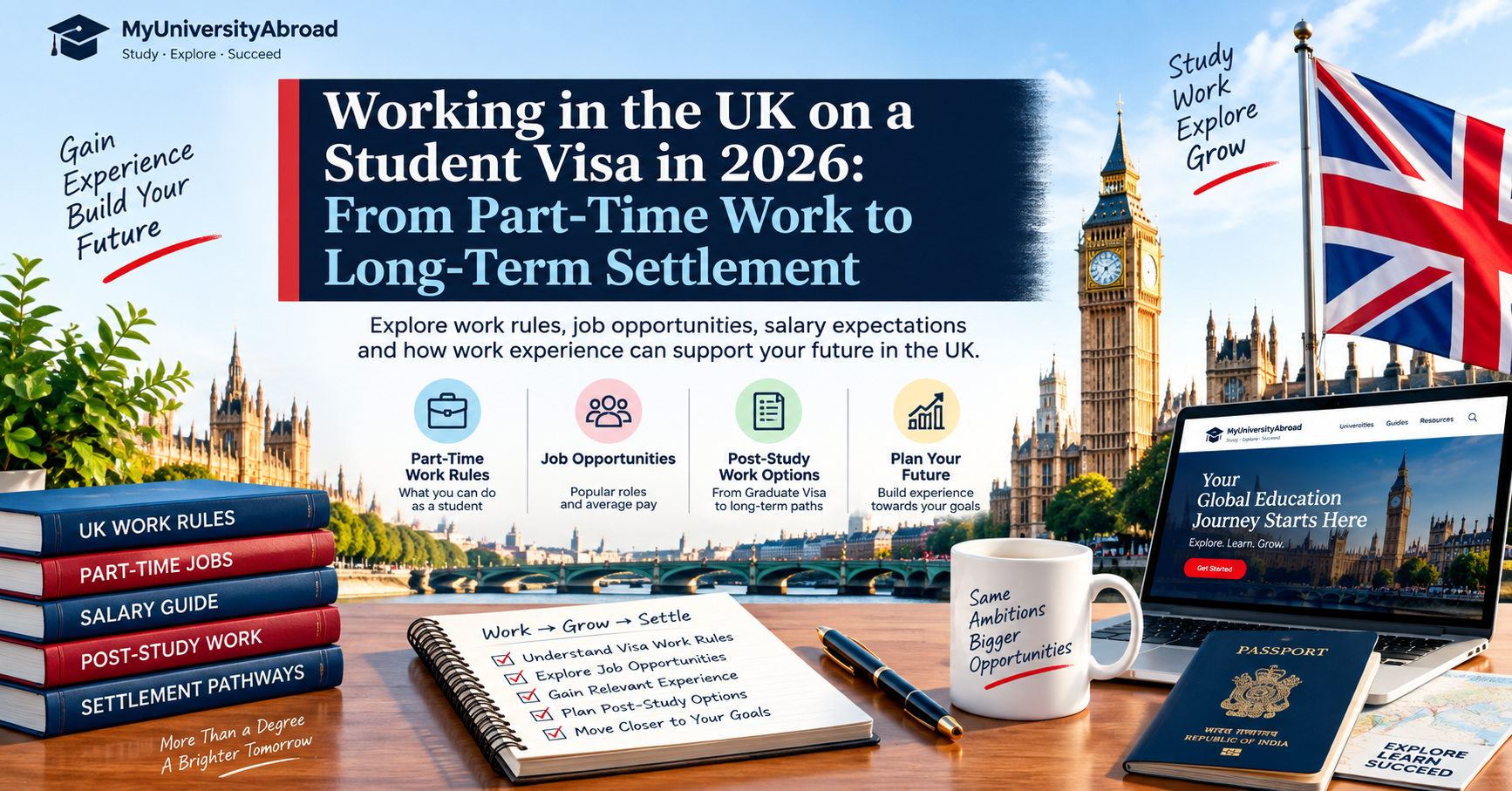
Most guides to UK student visa work rules stop at the 20-hour limit. That's the easy part. The harder, more consequential question — and the one that actually determines whether your time in the UK becomes a long-term career rather than a two-year bridge — is what happens after your degree, and what the points-based immigration system now actually requires to get there. Here's the full chain: part-time work rules, the Graduate Route, Skilled Worker sponsorship, and genuine settlement.
The part-time work rules, briefly
While you're studying, the framework is straightforward: up to 20 hours a week in term time for degree-level courses (10 hours below degree level), full-time during official vacations, with self-employment, professional sport, and full-time permanent roles off-limits regardless of hours. None of this affects your later visa options directly — but it's worth getting right, since a recorded breach can count against the "good character" requirement much further down the line, at the point you're applying for something as significant as settlement.
The Graduate Route: a genuinely unsponsored bridge
Once you complete your degree, the Graduate Route lets you stay and work with no job offer, no minimum salary, and no employer sponsorship required — a real contrast to everything that follows it. The timing here matters more than usual right now: applications submitted on or before 31 December 2026 receive the full 2 years (3 years for PhD graduates); applications from 1 January 2027 onward receive 18 months for the same degree levels.
The Graduate Route is genuinely useful, but it's worth being clear-eyed about what it is: a temporary, unsponsored window to find and start a role that can carry you into a sponsored route — not a settlement pathway itself. Time spent on it doesn't count toward the qualifying period for Indefinite Leave to Remain.
What actually qualifies for Skilled Worker sponsorship now
This is where the picture has genuinely tightened, and it directly affects what "good use of your Graduate Route window" looks like in 2026:
- The minimum skill level rose from RQF Level 3 to RQF Level 6 (graduate level) from 22 July 2025 — meaning a meaningful share of roles that used to qualify for sponsorship, including many junior analyst or support-level positions, no longer do. If you're using your Graduate Route time to build toward a sponsored role, the target now needs to be genuinely graduate-level, not just a foot in the door.
- The general salary threshold is £41,700 a year, or the going rate for your specific occupation code, whichever is higher — a real bar that many early-career salaries, especially outside London, don't automatically clear without negotiation or a more senior role.
- English requirements for new Skilled Worker applications rose to CEFR B2 (up from B1) from 8 January 2026, applying to fresh applications specifically — a higher bar than what's required to extend or settle later.
- A Temporary Shortage List of roughly 60 critical roles at RQF Level 3–5 exists as a time-limited exception, but it's due to end in December 2026, doesn't allow dependants, and doesn't carry the usual fee discounts — treat it as a narrow, temporary option rather than a reliable long-term route.
The practical implication: if long-term UK settlement is genuinely your goal, the subject you study and the career track you build toward during your Graduate Route window need to plausibly clear both the skill-level and salary bar within that 2-year (or 18-month) window — this is worth factoring into your course choice well before you ever reach the Graduate Route stage.
The real path to settlement — and the trap most people miss
If you secure Skilled Worker sponsorship, Indefinite Leave to Remain becomes possible after 5 years of continuous residence on the route (or a qualifying predecessor like Tier 2 General) — but the requirements at that point are reassessed, not locked in from when you started:
- Your salary is tested against the threshold in force on the date of your ILR application, not the rate you were originally sponsored at. If you entered on a lower new-entrant or transitional rate, you still need to meet the full current general threshold — currently £41,700 or your occupation's going rate, whichever is higher — by year five. Pay that hasn't kept pace with rising thresholds is one of the most common reasons settlement gets delayed.
- Continuous residence means keeping absences under 180 days in any rolling 12-month period throughout the qualifying period.
- You must still be actively sponsored by a licensed employer in your sponsored role at the point of application — if your sponsor's licence lapses, or you've changed roles without updating your visa, your ILR application is at genuine risk.
- You'll need to pass the Life in the UK test and meet English at CEFR B1 (the settlement-stage requirement, distinct from and lower than the B2 needed for a fresh Skilled Worker application).
- The fee is currently £3,226 for the ILR application itself, plus a small biometric enrolment charge.
The part worth knowing now: time spent on the Student or Graduate Route does not count toward this 5-year Skilled Worker qualifying period — only time actually spent on Skilled Worker (or a qualifying predecessor) counts. It can, however, count toward a separate, longer 10-year continuous residence route to settlement, which is a genuinely different and slower path.
What's proposed but not yet law
A November 2025 government white paper proposed a significant "Earned Settlement" overhaul, and it's worth knowing about even though it isn't in force:
- Extending the qualifying period to 10 years for Skilled Worker roles at RQF Level 6 or below
- A faster track for high earners — salaries above roughly £50,270 or £125,140 sustained for several years could qualify for accelerated settlement
- A new requirement to have paid National Insurance contributions for at least three years before applying
- Possible restrictions on recourse to public funds even after ILR is granted for some cohorts
The consultation on these changes closed in February 2026 with a very high volume of responses, and government statements as of mid-2026 suggested a finalised policy announcement was expected in autumn 2026, though the effective date for any changes remained unset at that point. None of this is current law — but if you're several years into a Skilled Worker sponsorship and planning your settlement timeline, it's a live risk worth tracking rather than assuming the current 5-year rule will still apply by the time you reach it.
The planning takeaway
Compliant part-time work during your studies, a well-used Graduate Route window, and a genuinely sponsorable career track aren't three separate decisions — they're one continuous plan. If settlement is the real goal, the choice that matters most happens earliest: picking a subject and career direction with a realistic path to an RQF Level 6, £41,700+ role within your post-study work window, well before you ever reach the point of needing Skilled Worker sponsorship.
Frequently asked questions
Does time on a Graduate visa count toward settlement (ILR)? No — only time spent on the Skilled Worker route (or a qualifying predecessor like Tier 2 General) counts toward the standard 5-year ILR qualifying period. Graduate Route time can count toward the separate, longer 10-year long residence route instead.
What salary do I need for a Skilled Worker visa in 2026? The general threshold is £41,700 a year, or the going rate for your specific occupation code, whichever is higher. This applies at entry, at extension, and is reassessed again at the point of your ILR application — not fixed at whatever rate applied when you were first sponsored.
Has the Skilled Worker visa gotten harder to qualify for recently? Yes, in two significant ways: the minimum skill level rose from RQF Level 3 to RQF Level 6 (graduate level) in July 2025, and the English requirement for new applications rose to CEFR B2 in January 2026. Both changes narrow the range of roles that now qualify for sponsorship compared to previous years.
Will the qualifying period for settlement change from 5 years to something longer? It's been proposed, not yet enacted. A November 2025 white paper suggested extending the Skilled Worker settlement qualifying period to 10 years for roles at RQF Level 6 or below, with a faster track for high earners. The consultation closed in February 2026; as of mid-2026, no confirmed start date had been set, so the current 5-year rule remains in force for now.