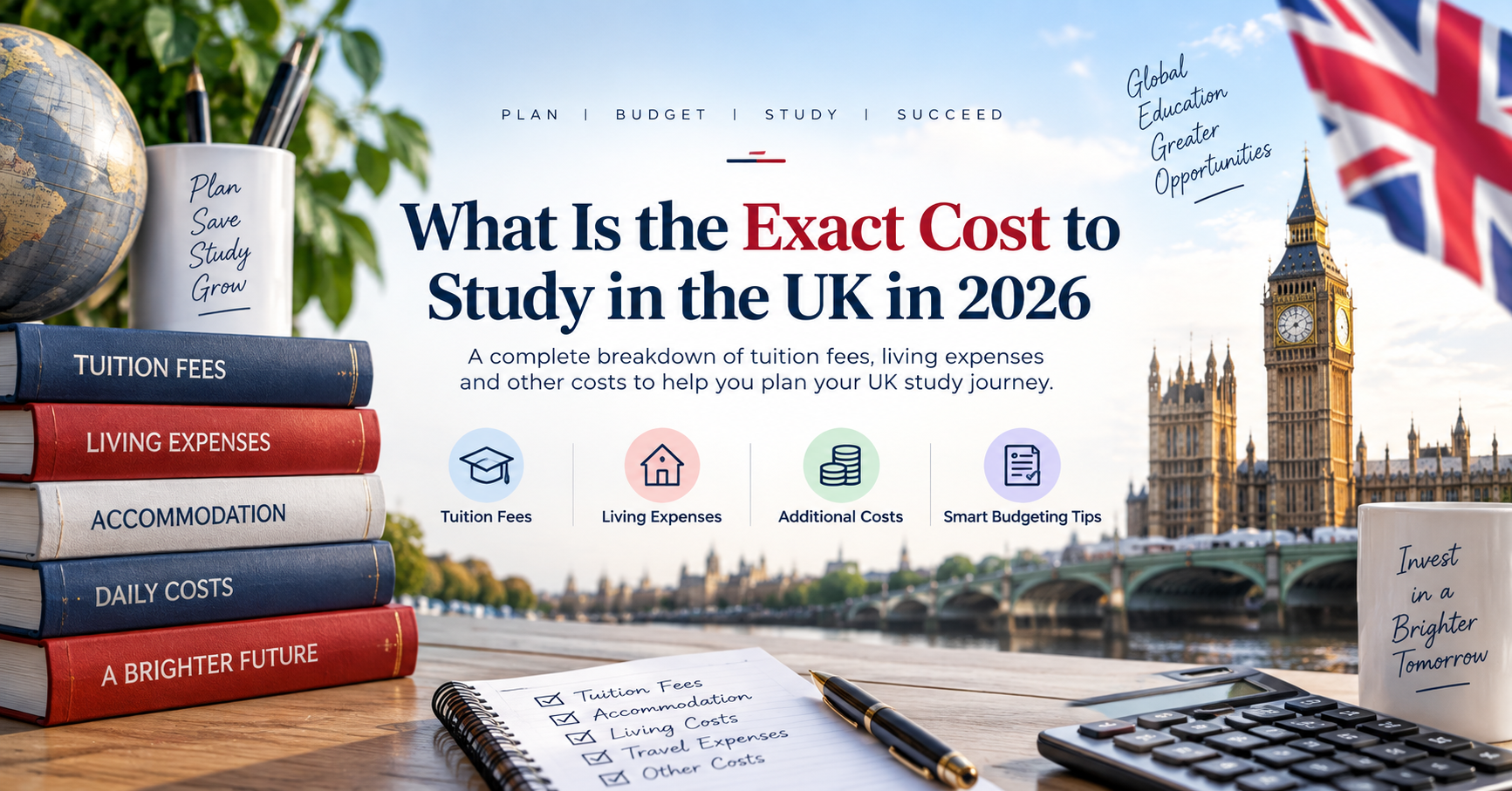
What Is the Exact Cost to Study in the UK in 2026
 Verified read
Most cost guides give you a range so wide it barely helps with actual planning. This walks through one specific, realistic scenario — a one-year Master's student in a mid-sized UK city — line by line, so you can see exactly where every rupee goes rather than a vague estimate.
The scenario: one-year MSc, Manchester, mid-range tuition
We'll use a genuinely representative case: a Master's programme with tuition of £18,500 a year, studied in Manchester, a common choice for its balance of university quality and living costs.
Tuition: £18,500
This is the figure straight from the offer letter — no surprises here, since tuition is published upfront and rarely changes once you've accepted a place. Most one-year Master's programmes in the UK fall somewhere between £12,000 and £45,000 depending on subject and institution, with £18,500 sitting comfortably in the typical range for a non-specialist postgraduate course.
Living costs: £1,050/month × 9 months = £9,450
Manchester sits in the mid-tier of UK cities for cost of living — meaningfully cheaper than London, somewhat above the most budget-friendly regional cities. £1,050 a month covers accommodation, food, local transport, and personal spending at a reasonable, non-extravagant level. Nine months reflects a typical one-year taught Master's academic calendar.
University deposit: £2,500 (credited against tuition)
Paid upfront to secure your place, usually required before a visa application can even be submitted. This isn't an additional cost on top of your £18,500 tuition — it's simply the first instalment, paid earlier than the rest.
Student visa application fee: £558
A flat, one-time government fee, unrelated to your course length or tuition amount.
Immigration Health Surcharge: £1,552
This is the line item almost every student underestimates. The IHS is charged at £776 per year of your visa's validity — not your course length. A one-year Master's typically comes with a visa valid for around 16 months, which rounds up to two full years of IHS. So instead of paying £776 once, you're paying it twice: £1,552 total.
English test fee (if required): ₹18,000 (approximately £165)
Not every applicant needs this — many qualify for a waiver through Medium of Instruction certificates or strong Class 12 English marks — but where a test is required, IELTS or PTE typically costs in this range.
TB test certificate: ₹3,200 (approximately £30)
Required for most Indian applicants as part of the visa process.
Adding it up
| Item | Cost (GBP) |
|---|---|
| Tuition | £18,500 |
| Living costs (9 months) | £9,450 |
| Visa application fee | £558 |
| Immigration Health Surcharge (2 years) | £1,552 |
| English test (if required) | £165 |
| TB test | £30 |
| Total | £30,255 |
At a representative exchange rate of roughly ₹106 per £1, this comes to approximately ₹32.1 lakh for the full year — tuition, living costs, and every mandatory visa-related expense included.
What this exact figure doesn't include
To keep this genuinely representative rather than optimistic, a few things sit outside this total and are worth budgeting separately:
- A contingency buffer of 5–10% (roughly £1,500–£3,000 in this scenario) to cover currency movement between now and your actual payment dates, or any unplanned cost.
- Flights, typically £500–£900 return depending on season and how far in advance you book.
- Initial setup costs after arrival — furnishing if your accommodation is unfurnished, winter clothing, and basic household items — commonly ₹80,000–₹1,50,000 in the first month.
- Currency conversion fees, typically 1–3% on international transfers, adding a modest but real cost across tuition and living-cost payments over the year.
Including a realistic allowance for these, the genuinely all-in figure for this scenario is closer to ₹36–38 lakh, rather than the £30,255 core calculation alone.
Why this scenario, and how your own number will differ
This example uses Manchester and a mid-range tuition figure specifically because it represents a common, realistic choice — not the cheapest possible option, and not London's higher costs either. Your own exact number will move based on three main variables: your specific university's tuition (which can range from £12,000 to £45,000+ depending on course and institution), your city (London living costs run £1,300–£1,600/month versus this scenario's £1,050), and how many years of IHS your specific visa duration requires.
Frequently asked questions
Why does the Immigration Health Surcharge cost more than expected for a one-year course?
Because it's charged per year of your visa's validity, not your course length. A one-year Master's typically receives a visa valid for around 16 months, which rounds up to two years of IHS — £1,552 instead of the £776 a "one year, one year" assumption would suggest.
Is £30,255 the absolute total I should budget for a one-year UK Master's?
That figure covers tuition, living costs, and mandatory visa-related expenses specifically. A realistic full budget should add flights, initial setup costs, currency conversion fees, and a contingency buffer — bringing a genuinely complete figure closer to £32,000–£34,000 for this specific scenario.
How much would this same scenario cost in London instead of Manchester?
Swapping in London living costs (roughly £1,450/month instead of £1,050) adds approximately £3,600 over nine months, bringing the core total to around £33,850 rather than £30,255 — tuition and visa costs stay the same, since those don't vary by city.
Does every student need to budget for an English test fee?
No — many Indian applicants qualify for a waiver through a Medium of Instruction certificate or sufficiently strong Class 12 English marks, depending on the specific university's policy. Confirm this directly with your target university before assuming the test fee applies to you.