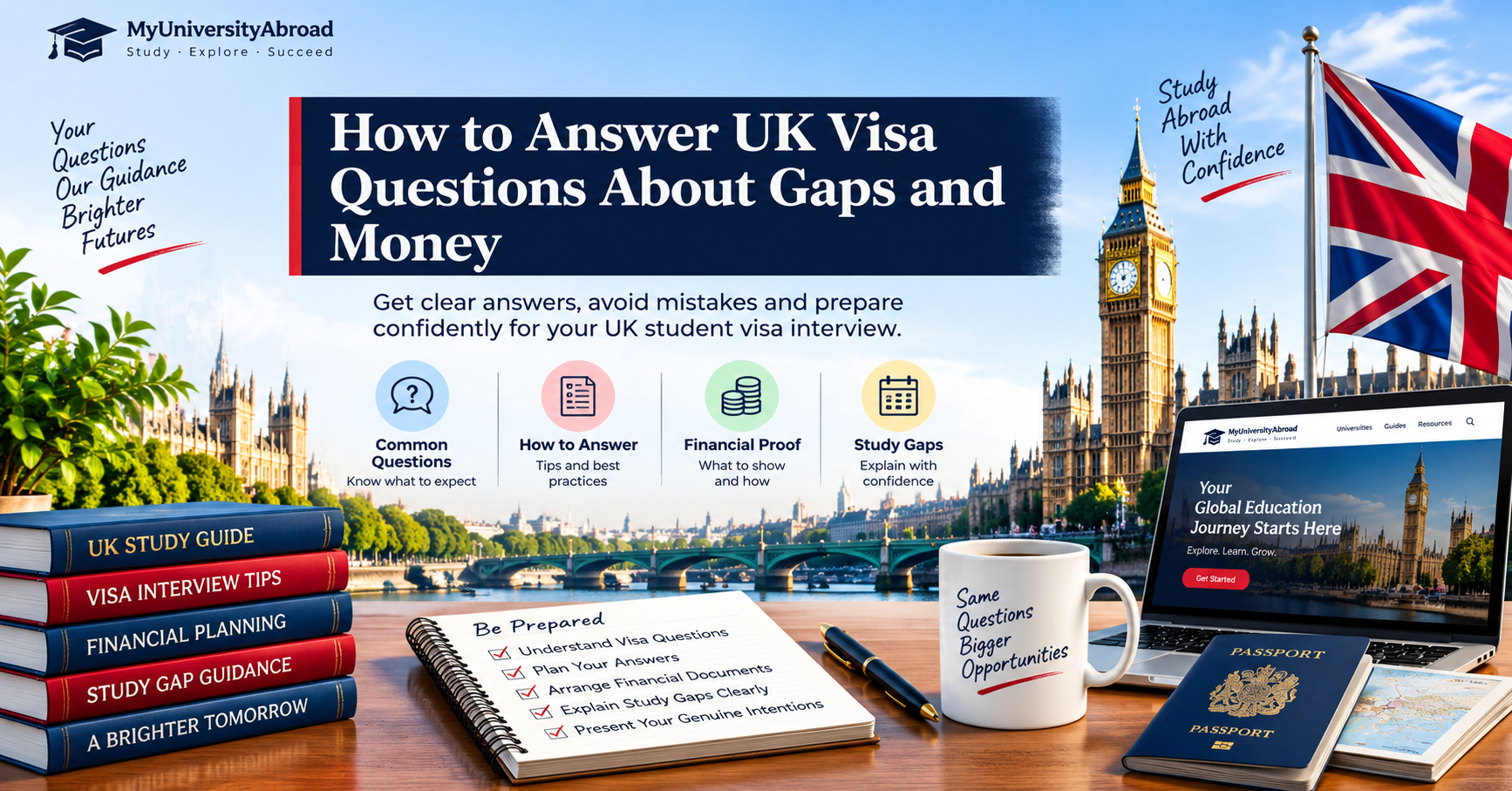
How to Answer UK Visa Questions About Gaps and Money
 Verified read
Most interview preparation coaches you on what to say. The stronger preparation is understanding what the rule actually requires — because an officer isn't testing whether your answer sounds confident, they're testing whether it satisfies a specific legal requirement. Once you understand what's actually being assessed, the right answer becomes obvious rather than something you have to memorise.
What the study gap question is actually testing
There's no rule that sets a maximum permitted gap. What you're actually being assessed against is the "genuine student" requirement — whether the Home Office is satisfied you genuinely intend to follow the course you've applied for, and that the course is a credible step in your academic and career trajectory. A gap is only relevant to that assessment insofar as it makes your intention harder to establish; it isn't a disqualifying fact on its own.
This distinction changes what a strong answer looks like. Rather than simply accounting for the time (what you did), the stronger answer directly addresses the genuine student criteria:
- Continuity of intent — does what you did during the gap connect logically to the course you're applying for now? A gap spent gaining relevant work experience, or preparing for a specific academic direction, directly supports genuineness. A gap you can't tie to your current course invites more questions, regardless of how you spent the time.
- Documented evidence over description — an officer weighs what you can show (an employment letter, a certificate, a business registration) more heavily than what you describe verbally. If you can document the gap, do so before you're asked, not only in response to a follow-up question.
- Consistency with your immigration and academic history — if you've applied for other visas or courses during the gap period, your account needs to be consistent with what's already on record. Inconsistency between what you say now and what's already documented is a stronger red flag than the length of the gap itself.
Since March 2026, updated Home Office caseworker guidance requires an interview before a genuineness-based refusal in most cases — meaning more applicants with a study gap are now getting a direct opportunity to address it in person rather than being refused on paper alone. That's a meaningful advantage if you're prepared to answer against the actual criteria, not just a rehearsed script.
What the financial question is actually testing
The maintenance funds requirement is precise, and vague answers are exactly what invite follow-up questions. The rule specifies:
- The exact amount, based on your course's first-year tuition (from your CAS) plus a fixed monthly living cost figure for your specific city — not a rounded estimate.
- Held continuously for a minimum 28-day period, ending no more than 31 days before you submit your application. A balance that dips below the required threshold at any point within that window, even briefly, doesn't satisfy the requirement, regardless of what it shows on the day you screenshot it.
- From a permitted source — your own funds, or funds from a parent or legal guardian, are treated differently to funds from another type of sponsor, which typically requires additional evidence of your relationship to that person.
Given this, three things should be checked before your interview, not discovered during it:
- Does your bank statement actually cover the full 28-day window without dipping below the threshold? This is worth checking line by line, not just confirming the current balance.
- Can you explain any large or recent deposit? A significant, undocumented deposit shortly before the 28-day window is one of the most commonly flagged patterns in financial evidence — not because large deposits are inherently suspicious, but because an unexplained one looks engineered specifically to pass the test. If a deposit exists, know exactly what it was for and be ready to explain it plainly.
- If the funds are from someone other than a parent or legal guardian, do you have proof of that relationship ready? This is commonly the single missing document that turns a straightforward financial answer into a follow-up interview.
Bringing the two together: what a strong interview actually sounds like
The strongest answers on both topics share the same structure: a plain, factual statement, backed by something you can show, that connects logically to the application you've actually submitted. Officers aren't looking for a persuasive narrative — they're checking whether your spoken account matches the paperwork already in front of them. A hesitant answer that matches your documents is a stronger sign than a fluent one that doesn't.
A few practical habits that reflect this:
- Answer only what's asked. Volunteering extra detail you haven't cross-checked against your own paperwork is how small inconsistencies get introduced.
- Know your own CAS and financial documents in detail before the interview, including the exact figures — not because you'll be tested on memorisation, but because a mismatch between what you say and what's on file is the actual trigger for further questioning.
- If something in your application genuinely doesn't have a clean explanation, prepare an honest one rather than a rehearsed one. Officers are experienced at distinguishing a genuine, slightly imperfect explanation from a scripted one.
Frequently asked questions
Is there a maximum study gap that gets automatically refused? No official maximum exists. What matters is whether you can connect the gap to your current application's genuineness — through documentation and a coherent link to your course — rather than the number of years involved.
What's the biggest financial evidence mistake applicants make? Failing to check that their account balance held above the required threshold continuously for the full 28-day period, not just on the day they took a screenshot. A brief dip below the threshold within that window can be as significant as an insufficient overall balance.
Do I need to explain every deposit in my bank account? Not every transaction, but any large or unusual deposit close to your 28-day evidencing window should have a ready, honest explanation, since undocumented large deposits are a commonly flagged pattern in financial evidence review.
Does a previous visa refusal affect how the gap or financial questions will be assessed this time? Yes — your immigration history is part of the overall genuine student assessment, so if you've been refused before, your current answers need to be consistent with, and ideally directly address, whatever was cited in that previous refusal.