
 Verified read
For an aspiring engineer, studying in the USA can feel like stepping into a world where classrooms connect directly to laboratories, startups, research centres and some of the world's biggest technology companies. From robotics to aerospace, biomedical engineering and renewable energy, American universities offer an enormous range of specializations. But choosing the right college is about much more than a famous name. Tuition, scholarships, location, course structure, internships, research opportunities and career prospects can all influence your experience and return on investment.
If you are planning to study engineering in the USA, this guide explores 20 of the best engineering colleges in the country, along with their popular courses, approximate costs, career opportunities and what makes each institution stand out.
Why Study Engineering in the USA?
The USA is home to several globally recognized engineering schools and a huge technology and industrial ecosystem. Students can gain exposure to research, internships, entrepreneurship and multidisciplinary projects while studying.
Some major advantages include:
- A wide selection of engineering specializations
- Strong research and laboratory facilities
- Access to technology and engineering companies
- Internship and exchange opportunities
- Flexible academic programs at many universities
- Opportunities to work on real-world projects
- Strong alumni networks
- Career opportunities across technology, automotive, aerospace, energy, healthcare and manufacturing
Engineering education in the USA can be expensive, particularly for international students. However, scholarships, financial aid, assistantships and lower-cost public universities can make the overall investment more manageable.
20 Best Engineering Colleges in USA
There are many great engineering schools, so it’s important to do your research to find the programs that are the best fit for you. The twenty engineering colleges listed below are among the top-ranked in the U.S. and could be a good starting point as you research engineering programs. However, it is important to not rely too heavily on such rankings and do your own research and choose an institution that suits you and your needs the most.
1. Massachusetts Institute of Technology (MIT)
Location: Cambridge, Massachusetts
Popular engineering courses: Mechanical Engineering, Electrical Engineering and Computer Science, Aerospace Engineering, Chemical Engineering, Civil and Environmental Engineering, Biological Engineering.
Massachusetts Institute of Technology is one of the world's most recognized institutions for engineering and technology. MIT combines intensive classroom learning with research, innovation and hands-on projects. For 2026–27, MIT lists undergraduate tuition at $66,720 per year, while its estimated overall undergraduate cost of attendance is around $93,730 before financial aid. MIT also emphasizes need-based financial aid, and many students pay substantially less than the published cost.
Career opportunities: Graduates can pursue careers in software, robotics, aerospace, biotechnology, finance, consulting, artificial intelligence and research.
2. Stanford University
Location: Stanford, California
Popular engineering courses: Computer Science, Electrical Engineering, Mechanical Engineering, Bioengineering, Civil Engineering, Materials Science.
Stanford University is particularly attractive for students interested in technology, entrepreneurship and innovation. Its location near Silicon Valley provides students with access to a major technology ecosystem. Stanford engineering also has strong connections with research institutions and industry. Stanford maintained its undergraduate tuition rate for the 2026–27 academic year. Students should check Stanford's current undergraduate cost calculator for the complete tuition, housing, food and other expenses.
Career opportunities: Technology, artificial intelligence, software development, engineering management, startups, consulting and research.
3. California Institute of Technology (Caltech)
Location: Pasadena, California
Popular courses: Mechanical Engineering, Electrical Engineering, Chemical Engineering, Aerospace, Computer Science, Bioengineering.
California Institute of Technology is known for its small student population, research-intensive environment and focus on science and engineering. Students often work closely with faculty and research teams. Caltech can be particularly suitable for students who enjoy mathematics, physics and experimental research.
Career opportunities: Aerospace, scientific research, robotics, engineering, technology, biotechnology and academia.
4. University of California, Berkeley
Location: Berkeley, California
Popular courses: Electrical Engineering and Computer Sciences, Mechanical Engineering, Civil Engineering, Chemical Engineering, Bioengineering.
University of California, Berkeley is one of the leading public universities for engineering. Its College of Engineering offers programs spanning computing, electronics, energy, materials, civil infrastructure and bioengineering. Berkeley's Bay Area location also creates access to technology companies and startups.
Cost: Public-university tuition varies significantly between California residents and non-residents. International students should budget for non-resident tuition and living expenses.
Career opportunities: Software, semiconductor technology, civil infrastructure, energy, consulting, biotechnology and research.
5. Georgia Institute of Technology
Location: Atlanta, Georgia
Popular courses: Mechanical Engineering, Aerospace Engineering, Computer Engineering, Electrical Engineering, Civil Engineering, Industrial Engineering.
Georgia Institute of Technology, commonly called Georgia Tech, is one of the strongest choices for students seeking an engineering-focused public university. Its Atlanta location provides access to technology, aerospace, logistics, manufacturing and business employers.
Cost: Generally lower than many elite private universities, although international and out-of-state students pay higher tuition than Georgia residents.
Career opportunities: Engineering, technology, aerospace, automotive, manufacturing, consulting and software.
6. University of Illinois Urbana-Champaign
Location: Urbana-Champaign, Illinois
Popular courses: Computer Engineering, Electrical Engineering, Mechanical Engineering, Civil Engineering, Aerospace Engineering, Computer Science.
University of Illinois Urbana-Champaign has a particularly strong reputation in computing and engineering. Students can choose from numerous engineering disciplines and participate in research, student organizations and industry projects.
Career opportunities: Software engineering, semiconductors, robotics, electrical engineering, aerospace and manufacturing.
7. University of Michigan, Ann Arbor
Location: Ann Arbor, Michigan
Popular courses: Mechanical Engineering, Electrical Engineering, Computer Engineering, Aerospace Engineering, Biomedical Engineering, Civil Engineering.
University of Michigan offers a broad engineering curriculum and strong connections to the automotive and manufacturing industries. Its location makes it particularly attractive for students interested in mobility, automotive engineering and advanced manufacturing.
Career opportunities: Automotive, aerospace, robotics, manufacturing, software, healthcare technology and research.
8. Carnegie Mellon University
Location: Pittsburgh, Pennsylvania
Popular courses: Computer Engineering, Electrical and Computer Engineering, Mechanical Engineering, Robotics, Civil Engineering, Materials Science.
Carnegie Mellon University is especially famous for computer science, robotics and artificial intelligence. Engineering students can benefit from the university's interdisciplinary approach, combining engineering with computing, robotics and other fields.
Career opportunities: AI, robotics, software, autonomous systems, cybersecurity, engineering research and technology consulting.
9. Purdue University
Location: West Lafayette, Indiana
Popular courses: Aerospace Engineering, Mechanical Engineering, Electrical Engineering, Civil Engineering, Computer Engineering, Biomedical Engineering.
Purdue University is a popular destination for students seeking a strong engineering education at a public university. Purdue has particularly strong traditions in aerospace and mechanical engineering.
Career opportunities: Aerospace, aviation, automotive, manufacturing, engineering consulting, software and research.
10. University of Texas at Austin
Location: Austin, Texas
Popular courses: Electrical and Computer Engineering, Mechanical Engineering, Aerospace Engineering, Civil Engineering, Chemical Engineering.
University of Texas at Austin offers extensive engineering programs in one of America's growing technology hubs. Austin's expanding technology sector makes the university attractive for students interested in software, electronics, semiconductor technology and engineering startups.
Career opportunities: Technology, semiconductors, energy, aerospace, software and engineering consulting.
11. Texas A&M University
Location: College Station, Texas
Popular courses: Mechanical Engineering, Aerospace Engineering, Petroleum Engineering, Civil Engineering, Electrical Engineering, Computer Engineering.
Texas A&M University has one of the largest engineering ecosystems among American universities. It offers a wide range of engineering disciplines and has strong connections to industries including energy, aerospace, manufacturing and construction.
Career opportunities: Energy, petroleum, aerospace, construction, manufacturing, engineering consulting and technology.
12. University of California, Los Angeles (UCLA)
Location: Los Angeles, California
Popular courses: Electrical Engineering, Computer Science, Mechanical Engineering, Civil Engineering, Aerospace Engineering, Bioengineering.
University of California, Los Angeles combines engineering education with access to a major metropolitan economy. Its location provides opportunities in entertainment technology, aerospace, healthcare, software and advanced manufacturing.
Career opportunities: Software, aerospace, electronics, biomedical engineering, AI and technology.
13. University of California, San Diego
Location: La Jolla, California
Popular courses: Computer Engineering, Electrical Engineering, Mechanical Engineering, Bioengineering, Aerospace Engineering, Structural Engineering.
University of California, San Diego is particularly attractive for students interested in biotechnology, healthcare technology, electronics and engineering research.
Career opportunities: Biotechnology, medical devices, software, electronics, aerospace and research.
14. Cornell University
Location: Ithaca, New York
Popular courses: Mechanical Engineering, Electrical and Computer Engineering, Civil Engineering, Chemical Engineering, Biomedical Engineering.
Cornell University offers a broad engineering curriculum through its College of Engineering. Its programs combine engineering fundamentals with research and interdisciplinary study.
Career opportunities: Technology, consulting, construction, energy, biomedical engineering, manufacturing and research.
15. Princeton University
Location: Princeton, New Jersey
Popular courses: Chemical and Biological Engineering, Electrical and Computer Engineering, Mechanical and Aerospace Engineering, Civil and Environmental Engineering.
Princeton University provides an engineering education with a strong emphasis on research and undergraduate learning. Its relatively small undergraduate environment can allow students to work closely with faculty.
Career opportunities: Research, technology, engineering, consulting, finance, biotechnology and academia.
16. University of Southern California (USC)
Location: Los Angeles, California
Popular courses: Computer Engineering, Computer Science, Electrical Engineering, Aerospace Engineering, Mechanical Engineering, Biomedical Engineering.
University of Southern California benefits from its location in Los Angeles and its extensive alumni network. Engineering students can access opportunities across technology, aerospace, entertainment technology, healthcare and business.
Career opportunities: Software, aerospace, electronics, robotics, biomedical engineering and technology management.
17. University of Pennsylvania
Location: Philadelphia, Pennsylvania
Popular courses: Bioengineering, Computer Engineering, Electrical Engineering, Mechanical Engineering, Chemical Engineering.
University of Pennsylvania offers engineering programs through its School of Engineering and Applied Science. Its interdisciplinary environment is especially useful for students interested in combining engineering with business, healthcare or entrepreneurship.
Career opportunities: Biomedical engineering, technology, consulting, healthcare, finance and research.
18. University of California, Davis
Location: Davis, California
Popular courses: Mechanical Engineering, Electrical Engineering, Civil Engineering, Computer Engineering, Biomedical Engineering.
University of California, Davis is a strong public-university option for students interested in engineering, sustainability, transportation and biological applications.
Career opportunities: Environmental engineering, agriculture technology, biotechnology, transportation, manufacturing and software.
19. Northwestern University
Location: Evanston, Illinois
Popular courses: Mechanical Engineering, Electrical Engineering, Computer Engineering, Biomedical Engineering, Chemical Engineering.
Northwestern University combines engineering with opportunities in business, medicine, materials science and other disciplines. Its proximity to Chicago also gives students access to a major business and technology market.
Career opportunities: Biomedical technology, engineering, consulting, manufacturing, software and research.
20. University of Maryland, College Park
Location: College Park, Maryland
Popular courses: Aerospace Engineering, Electrical Engineering, Computer Engineering, Mechanical Engineering, Civil Engineering.
University of Maryland, College Park is particularly well known for engineering and technology research. Its location near Washington, D.C., creates opportunities connected to government, aerospace, cybersecurity and technology organizations.
Career opportunities: Aerospace, defence-related engineering, cybersecurity, software, electronics and research.
How Much Does It Cost to Study Engineering in the USA?
The total cost depends heavily on whether you attend a public or private university, your degree level, location and lifestyle. For international students, a broad planning estimate for an undergraduate engineering degree at a highly ranked university can be $30,000 to $80,000+ per year for tuition, with some private institutions costing considerably more once housing, food, insurance and other expenses are included. Public universities can sometimes offer a lower tuition rate than private universities, but international students generally do not receive the same resident tuition rates available to qualifying in-state students.
MIT illustrates why students should distinguish between tuition and total cost. Its 2026–27 undergraduate tuition is $66,720, while its estimated total cost of attendance is approximately $93,730 before financial aid.
Students should budget for: tuition, university fees, accommodation, food, health insurance, books and supplies, transportation, personal expenses, visa-related expenses, travel between the USA and home country.
Important: Published tuition is not necessarily the amount every student pays. Tuition varies by program, degree level, residency and academic year. The costs above are broad planning estimates, not final fee quotes. Scholarships and need-based financial aid can substantially reduce the final cost. MIT, for example, states that it meets 100% of demonstrated financial need for eligible undergraduate students. Students should always check the university's official website before applying.
Scholarships and Financial Aid for Engineering Students
International students should investigate funding opportunities before applying as getting scholarships provide huge financial relief. A lot of scholarships are available for international students such as fully funded scholarships, partially funded scholarships, merit scholarships and more.
Potential sources include:
- University merit scholarships
- Need-based financial aid where available
- Department scholarships
- Research assistantships
- Teaching assistantships at the graduate level
- External scholarships
- Fellowships
- Internship and co-op earnings
Important: Not every university offers the same type of financial assistance to international students. Therefore, students should check eligibility rules carefully rather than assuming that a scholarship is automatically available.
Engineering Careers After Graduation
An engineering degree can lead to careers across multiple industries. Following are a few career options after getting degree from engineering colleges of USA:
Technology and Software
Computer science, computer engineering and electrical engineering graduates can pursue roles such as:
- Software engineer
- Machine learning engineer
- Data engineer
- Systems engineer
- Hardware engineer
- Cloud engineer
Aerospace
Aerospace and mechanical engineering graduates can work in:
- Aircraft design
- Space systems
- Propulsion
- Aerodynamics
- Manufacturing
- Engineering research
Automotive and Mobility
Mechanical, electrical and computer engineers are increasingly involved in:
- Electric vehicles
- Autonomous systems
- Battery technology
- Vehicle electronics
- Manufacturing
- Robotics
Healthcare and Biotechnology
Biomedical, chemical and electrical engineers can work in:
- Medical devices
- Biotechnology
- Pharmaceutical manufacturing
- Healthcare technology
- Biomedical research
Civil Infrastructure
Civil and environmental engineers can pursue careers involving:
- Construction
- Transportation
- Structural engineering
- Urban infrastructure
- Water management
- Sustainable development
Consulting and Management
Engineering graduates can also move into:
- Technology consulting
- Management consulting
- Product management
- Operations
- Supply-chain management
- Engineering management
What Should You Consider When Choosing an Engineering College in USA?
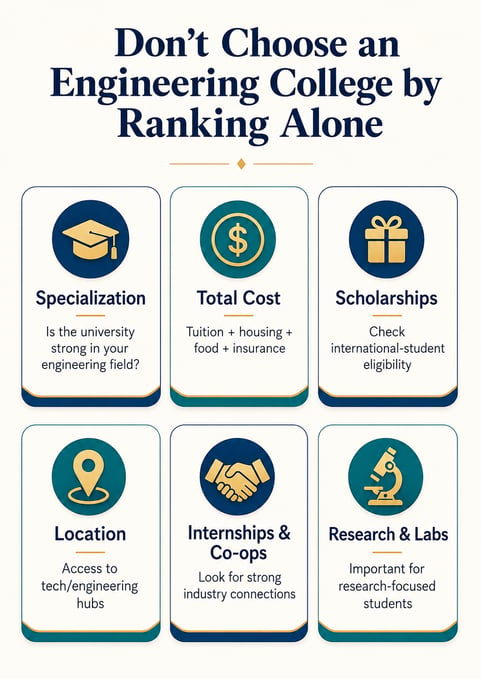
Choosing the right college to pursue engineering studies is a crucial decision that can significantly impact your academic and professional experience. In addition to accreditation, here are ten factors to consider when making this important decision as a university's ranking should not be your only deciding factor:
1. Specialization: Choose a university that is particularly strong in your intended engineering field. A college may be outstanding overall but less suitable for your specific specialization.
2. Total Cost: Compare the complete cost rather than tuition alone. Housing, food, insurance and transportation can significantly change your annual budget.
3. Scholarships: Check whether international students are eligible for university scholarships and financial aid.
4. Location: Think about proximity to technology hubs, manufacturing centres, engineering industries, research institutions and potential employers.
5. Internships and Co-ops: Practical experience can make a major difference when entering the job market. Check if the college has strong ties with industry partners and/or alumni and offers internship or co-op programs.
6. Research: If you want to pursue a master's degree, PhD or research career, investigate faculty research areas and laboratory opportunities. Engaging in research projects can deepen your understanding of your field and make you a more competitive candidate for graduate programs or jobs.
7. Career Support: Look at career services, employer recruitment, alumni networks and internship opportunities. Investigate the career services provided by the college, including job placement rates, alumni networks, and career counselling.
8. Campus Environment: Academic quality is important, but so are student organizations, campus culture, accommodation and personality development and overall student experience.
9. Networking opportunities: Consider the networking opportunities the college provides, such as career fairs, industry events, and alumni connections. Networking is crucial for future job prospects.
10. Facilities and resources: Evaluate the quality of the engineering facilities, laboratories, and resources available. State-of-the-art equipment and well-equipped labs contribute to a more comprehensive learning experience.
The best engineering college in the USA is not necessarily the one with the highest ranking. The right university depends on your intended specialization, academic profile, budget, career goals and preferred location. For students targeting cutting-edge technology and research, universities such as MIT, Stanford, Caltech and Carnegie Mellon can be particularly attractive. Students looking for major public engineering universities can explore UC Berkeley, Georgia Tech, Purdue, UIUC, University of Michigan, UT Austin and Texas A&M.
Before applying, create a shortlist of around 8–12 universities and divide them into ambitious, target and safer options. Compare course curriculum, tuition, scholarships, living costs, internship opportunities, career outcomes and admission requirements rather than relying on rankings alone. With the right combination of university, specialization and practical experience, an engineering degree from the USA can open doors to careers in technology, aerospace, healthcare, energy, infrastructure, manufacturing, robotics, artificial intelligence and many other rapidly developing fields.